EU Shelves High-Level Defense Panel After German and Italian Resistance
The canceled initiative underscores governance friction as Europe weighs faster defense investment, capability planning and budget priorities.
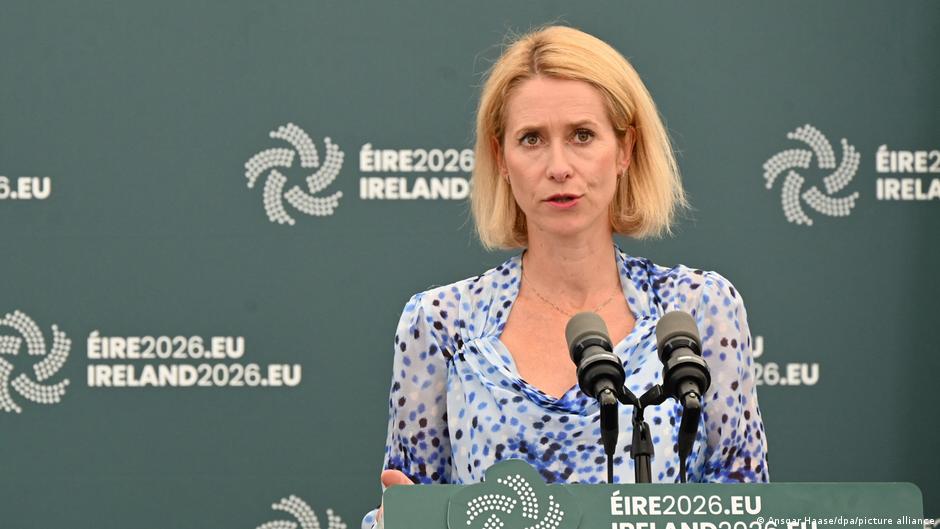
European Union foreign policy chief Kaja Kallas canceled at the last minute a planned launch of a high-level expert group on defense policy, according to dpa, after opposition from governments including Germany and Italy. The presentation had been scheduled for Monday, September 7, and was intended to set up a group that would develop proposals for strengthening European defense policy and closing capability gaps more quickly.
For investors, contractors and public-finance observers, the decision highlights a central uncertainty around Europe’s defense buildout: political agreement on spending goals does not automatically translate into coordinated procurement, streamlined planning or bankable program visibility. The canceled group was expected to produce concrete recommendations on how Europe could address weaknesses in military capacity faster and more efficiently, a process that could have shaped future budget allocations and procurement priorities.
An EU official in Brussels told dpa late on September 6 that the initiative would not proceed after consultations with defense ministers from EU member states. The official said some member states believed the step was not appropriate at this time.
“Some member states felt that this was not the right step at this moment,” the EU official said, according to dpa.
The group had been due to operate under Kallas’s leadership and include senior political and military representatives from several EU countries, as well as the United Kingdom and Ukraine. Its members were to be presented on the morning of September 7 at an opening event. Instead, the initiative was halted before launch, leaving the EU to consider other channels for defense-policy cooperation.
Planning Friction Meets Defense Spending Pressure
The cancellation comes at a time when European governments are under pressure to increase defense readiness while also managing constrained budgets, rising debt-service costs and competing domestic spending priorities. Although the source report did not identify any specific budget figures, the financial implications are clear: any mechanism designed to accelerate capability planning can influence procurement pipelines, industrial capacity decisions and medium-term fiscal commitments.
According to dpa, Germany and Italy were among the governments that had opposed creation of the expert group. One possible reason cited for Germany’s refusal was Berlin’s critical view of Kallas personally as head of the EU’s external action service. In defense policy, German authorities tend to rely on NATO planning processes. Berlin is also currently advocating a merger of a significant part of the European External Action Service, which Kallas oversees, with the European Commission.
That institutional question matters for financial reporting because it affects where defense-policy priorities are set, how they are translated into funding requests, and which bodies have influence over implementation. A process anchored in NATO planning may lead to different sequencing, governance and accountability than a process led by the EU’s foreign policy service. For companies exposed to European defense procurement, such differences can affect the timing and predictability of demand, even where the broad political direction remains unchanged.
The European body still intends to examine new possibilities for cooperation with EU countries on defense policy, according to the dpa source. The official stressed that the underlying assessment had not changed and that Europe still needed to move faster in defense.
“The diagnosis remains the same: Europe must move faster in defense,” the source said. “We do not want to look back in a few years and conclude that Europe was so focused on where it needed to be in 2035 that it missed the chance to do what was necessary in 2027.”
That framing points to a planning horizon problem familiar to finance ministries and corporate boards: long-term strategic targets can lose value if near-term execution is delayed. The reference to 2035 and 2027 suggests concern inside EU institutions that capability development could become overly tied to distant objectives, while urgent operational and procurement needs remain under-addressed.
Ukraine’s Role Was Central to the Proposal
Kallas had announced on September 1, after an informal meeting of EU defense ministers in Wicklow, Ireland, that Ukraine would be involved in identifying solutions to strengthen Europe’s defense capabilities. Kyiv was expected to join what she described as a new high-level group alongside senior political and military figures from EU countries and the United Kingdom.
At that meeting, a DW correspondent asked Kallas who would represent Ukraine in the new group, noting that former Ukrainian defense minister Mykhailo Fedorov had been brought in by Italy as a defense adviser. Kallas did not name the Ukrainian representative or representatives, saying instead that the full composition of the group would be presented on September 7.
The canceled launch means those appointments were not publicly presented as planned. It also leaves unresolved how Ukraine’s battlefield experience will be formally integrated into European defense planning through this specific channel. Kallas had argued that most EU countries are also NATO members, but that gaps remain in the alliance’s defense capabilities and must be filled by European states.
She also said Europe had acted too slowly despite a rising level of threats. Kallas explained that Ukraine was being included because it had significant experience, calling Kyiv a world leader in battlefield innovation. From a financial and industrial perspective, that experience could be relevant to decisions on military technology, production priorities, procurement cycles and the balance between legacy systems and newer battlefield-tested capabilities.
The shelving of the group does not reverse the broader European debate over defense investment, but it does show how difficult it may be to align EU institutions, national governments, NATO planning structures and non-EU partners such as the United Kingdom and Ukraine. For markets and companies tracking the sector, the key takeaway is that the direction of travel remains toward greater defense readiness, while the governance route remains contested.
Until a replacement process is clarified, the near-term impact is likely to be procedural rather than programmatic. No specific procurement package, funding amount or balance-sheet measure was announced in the source report. Still, the cancellation removes one planned forum for developing concrete recommendations, delaying a potential input into future European defense-policy coordination and spending decisions.