Latvia Says Leipzig Sabotage Suspect Lived in Russia as Probe Expands
Cross-border investigators are examining an alleged drone attack near Leipzig airport amid wider scrutiny of sanctions enforcement, logistics risk and EU security responses.
Latvia’s State Security Service said a Latvian citizen suspected of involvement in the sabotage case at Leipzig airport had been living permanently in Russia for the past several years, adding a new cross-border dimension to an investigation that is drawing attention from policymakers, transport operators and sanctions enforcers across Europe.
The security service’s statement, reported on Thursday, September 3, by Latvian news agency Leta, offered one of the few official comments from Riga on the case. The agency also confirmed that Latvian authorities are cooperating with German investigators and providing necessary support. It declined to comment further, citing the ongoing investigation.
Germany’s federal prosecutor has not yet issued an official public comment on the investigation.
For investors and corporate risk managers, the case is being watched less as a conventional criminal inquiry and more as a signal event for aviation security, trade flows and the operating environment for companies exposed to Eastern Europe, sanctions compliance and cross-border cargo movement. Leipzig airport is a major logistics hub, and the allegation that the incident involved multiple drones and an apparent attempt to strike a Ukrainian cargo aircraft raises broader concerns about infrastructure resilience and insurance, security and regulatory costs.
Suspects, visas and logistics implications
German investigators had earlier identified two suspects in the attempted sabotage case, according to reports cited from Süddeutsche Zeitung and broadcasters NDR and WDR. Those reports said the attempted attack on a Ukrainian transport aircraft involved a Russian-born man with Latvian citizenship and a Belarusian man with Russian citizenship.
The second suspect reportedly entered the Schengen area on an Italian tourist visa. That document was issued in late April by Italy’s diplomatic mission in Minsk. After that information became public, Rome said it would review the circumstances under which the visa had been granted.
The visa angle adds another layer of policy risk for businesses operating across the European Union. Any tightening of visa checks, border screening or cargo security procedures could translate into slower throughput, higher compliance costs and added uncertainty for air freight operators and firms dependent on time-sensitive supply chains. While no commercial impact has yet been quantified by authorities in connection with the case, the political response suggests that transport, customs and sanctions-related oversight may become more stringent.
“An investigation will be carried out. However, all this confirms that there are attempts by a number of countries to take action against the EU, including by involving people who have no criminal record and do not arouse suspicion. That is precisely why I am not without reason in calling for vigilance: I know what methods they use. I know what tools these countries have always used, even in the past, and therefore we must continue to remain on guard,” Italian Foreign Minister Antonio Tajani was quoted as saying by Euractiv.
That message is likely to resonate in boardrooms as much as in ministries. European companies have already had to adapt to war-related disruption, sanctions regimes, counter-sanctions and reputational screening of counterparties. The Leipzig case reinforces the possibility that security incidents can spill directly into logistics networks, diplomatic relations and enforcement policy.
Drone incident and political fallout
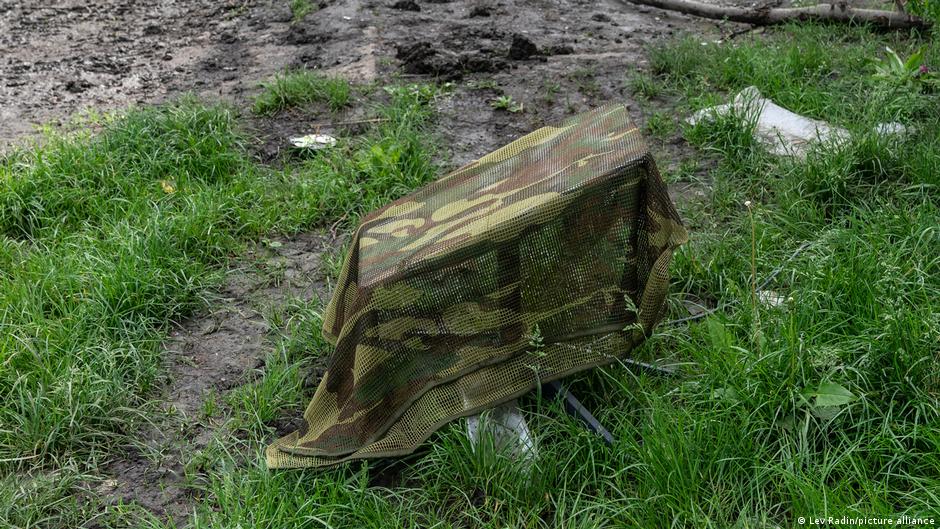
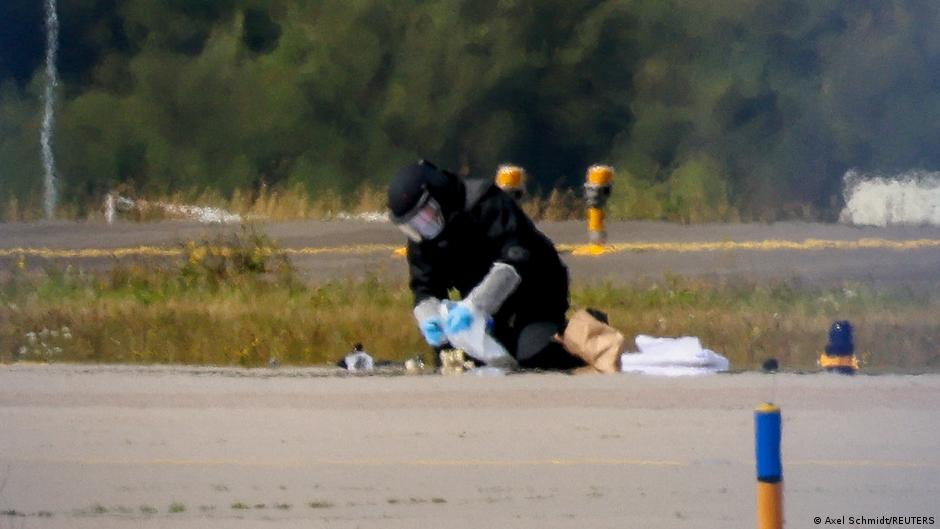
The suspected sabotage attempt against a Ukrainian Antonov An-124 cargo plane took place on August 4, according to investigators. At least three drones were involved, they said. One drone equipped with explosives was found near several Ukrainian cargo aircraft. A second likely crashed into a DHL cargo plane just minutes after the first was discovered. A third drone was found 10 days after the incident, on August 14, in a field west of the airport.
Investigators also found about 50 grams of a substance near the third drone which, by the initial assessment, was believed to be hexogen.
Berlin has blamed Russia for the incident. In response, the German government decided to close Russia’s consulate general in Bonn and terminate the agreement governing the operation of the Russian House in Berlin. Germany also said it would tighten checks on Russian citizens entering the country and step up measures against Russia’s “shadow fleet,” which Moscow uses to circumvent European Union sanctions imposed over Russia’s war against Ukraine.
From a financial and market perspective, the reference to the shadow fleet is notable. That network has been a recurring focus for governments, insurers, commodity traders and shipping intermediaries because of its role in moving sanctioned oil and related cargoes outside standard compliance channels. A tougher German stance could feed into broader EU enforcement measures, affecting shipping documentation, port scrutiny, trade finance controls and the due-diligence burden on firms exposed to high-risk freight routes or counterparties.
For logistics groups, the case also highlights the possibility that geopolitical confrontation can affect not only maritime transport and energy markets, but also air cargo operations. Even isolated incidents can increase pressure on operators to invest more heavily in surveillance, perimeter security, drone detection and incident response. Those outlays may not immediately alter quarterly earnings, but they can influence margins over time, particularly in capital-intensive transport and infrastructure businesses.
Moscow has denied the accusations of organizing the sabotage in Leipzig. In response to the closure of the Russian House in Berlin, Russian authorities said they would close the branches of the Goethe-Institut in Russia, located in Moscow, St. Petersburg and Novosibirsk.
For now, the official record remains limited: Latvia says one suspect had not been living in the country in recent years and had instead resided in Russia; Germany says Russia bears responsibility; Italy is reviewing the visa issue; and Russia rejects the allegations. But even without formal prosecutorial conclusions, the incident is already shaping the policy environment around sanctions enforcement, border checks and transport security.
That makes the Leipzig investigation relevant beyond diplomacy and criminal law. It is also a live indicator of how geopolitical risk can migrate into operational, regulatory and financial exposure for companies working across Europe’s trade and logistics system.