Oleshky Ceasefire Opens Humanitarian Corridor Amid Infrastructure Crisis
The temporary truce will support aid deliveries and civilian evacuations from a mined and flood-damaged area of Ukraine’s Kherson region.
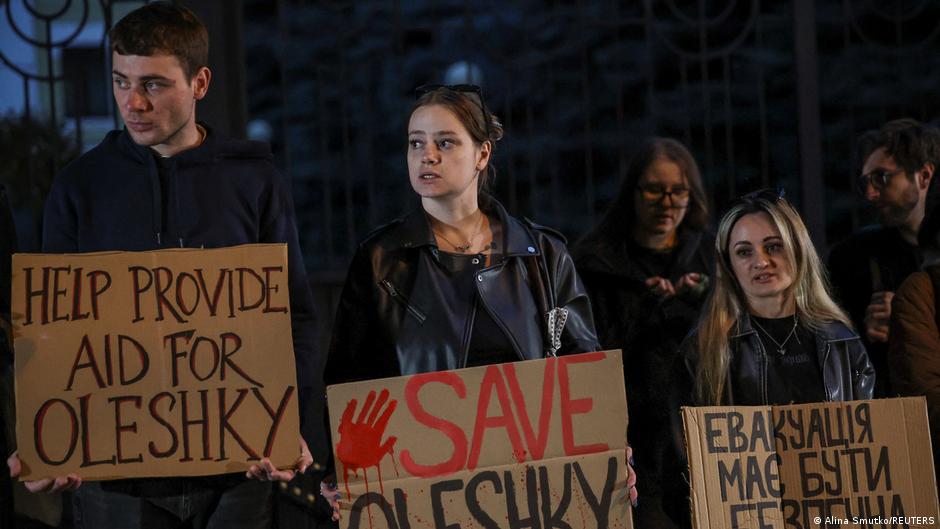
A bilateral ceasefire took effect at 03:00 Kyiv time on October 27 in and around Oleshky, a Russian-occupied city in Ukraine’s Kherson region, according to statements from the General Staff of the Armed Forces of Ukraine and Russia’s Defense Ministry. The pause in fighting is intended solely to enable a humanitarian operation involving aid deliveries and preparations for the evacuation of civilians.
Russia’s Defense Ministry said its forces had stopped firing on the Kherson front and introduced a “regime of silence” from 04:00 Moscow time on October 27. Ukraine’s General Staff confirmed the corresponding ceasefire from 03:00 Kyiv time, saying the arrangement would allow assistance to reach residents still inside the city and prepare for their unrestricted departure.
“The priority for Ukraine is to save the trapped residents and help them reach territory under Ukrainian control,” Ukrainian President Volodymyr Zelensky said.
The agreement creates a temporary operational window in an area where damaged infrastructure, limited access to drinking water and extensive mine contamination have complicated the delivery of basic supplies. Although the ceasefire is not an economic accord, its implementation will determine whether humanitarian resources, transport capacity and logistical support can reach a population isolated for several months.
Humanitarian operation scheduled for October 29
Zelensky said in an interview with TSN.Tyzhden presenter Alla Mazur that the ceasefire would begin on October 27, while the humanitarian mission itself would start on October 29. Under the arrangement, Russia is expected to clear mines from roads, and Ukraine is preparing to evacuate residents who remain trapped in Oleshky.
Zelensky said mediation by US first lady Melania Trump made it possible to reach the temporary truce, which Washington announced on October 23. The White House said Moscow and Kyiv would stop firing to permit humanitarian aid deliveries and prepare the evacuation of civilians through a specially organized safe corridor. A US administration statement indicated that the first lady’s team played a central role in negotiating the arrangement.
Melania Trump said civilian representatives from Russia and Ukraine would jointly visit Oleshky residents in their homes to assess what assistance they require. People choosing to leave would receive support and transportation to their preferred destination. She said some residents might choose Russia, while others might opt for Ukraine.
Representatives of an independent US media organization are expected to accompany officials from both countries during the visits and document the process, according to the first lady. That monitoring component could provide a measure of transparency around the deployment of aid, transport and other resources during the operation.
Ukraine’s military said it would do everything possible to assist Oleshky residents and implement the decisions needed to protect and rescue Ukrainian citizens. Zelensky nevertheless warned of a high risk that Russian forces could take actions intended to discredit the process. He said Moscow might try to persuade residents to go to the Russian side and use the evacuation to produce propaganda material.
Infrastructure damage raises logistical costs
Oleshky is a small city on the Russian-occupied eastern bank of the Dnipro River in the Kherson region, about nine kilometers from the Ukrainian-controlled regional capital, Kherson. Before Russia launched its full-scale war against Ukraine, the city had approximately 24,000 residents. Current estimates indicate that only 1,700 to 2,000 people remain, including at least several dozen children.
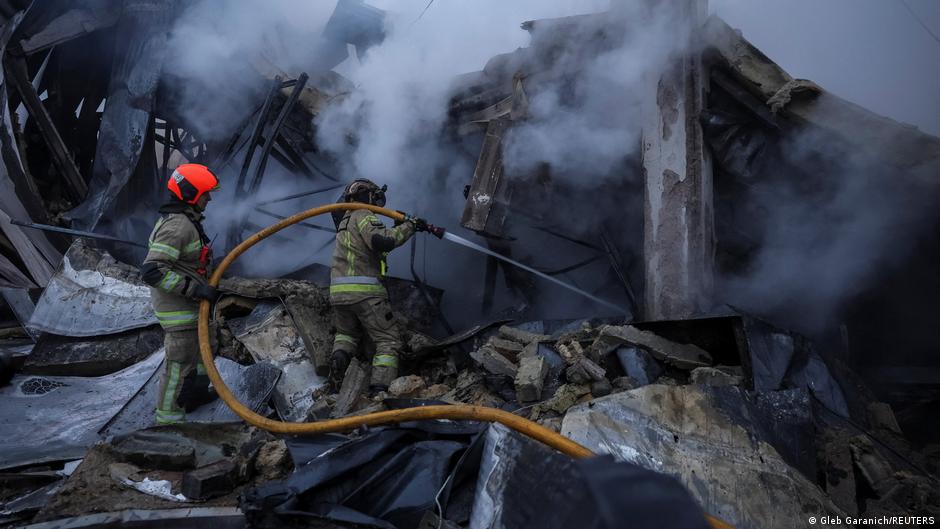
The surrounding territory is heavily mined, making departure in any direction potentially fatal. The requirement for road clearance is therefore central to the evacuation plan and represents a critical condition for the safe movement of vehicles, personnel and relief supplies.
Following Russia’s destruction of the Kakhovka hydroelectric power plant in June 2023, Oleshky was almost completely flooded. The aftermath created additional problems for local infrastructure and access to drinking water. The city has also been under blockade for the past several months, further restricting conventional supply routes.
Ukrainian forces previously reported delivering food and medicines with heavy drones, while Moscow also said it had organized its own supplies. Drone deliveries can provide emergency relief where roads are inaccessible, but they cannot match the capacity of a functioning ground corridor for transporting residents or moving larger volumes of food, water and medical materials.
Pope Leo XIV was among those who appealed to the Russian president for a ceasefire in the city. The immediate test for the agreement will be whether both sides maintain the pause, complete the required demining and allow the humanitarian mission to proceed as scheduled. For residents, the key metrics will be practical: the amount of aid delivered, the number of safe routes opened and the availability of transportation to destinations they choose.