Lula Wins Brazil Runoff as Bolsonaro Challenges Election Result
The contested presidential vote adds political uncertainty to Brazil’s already fragile economic and investment outlook.
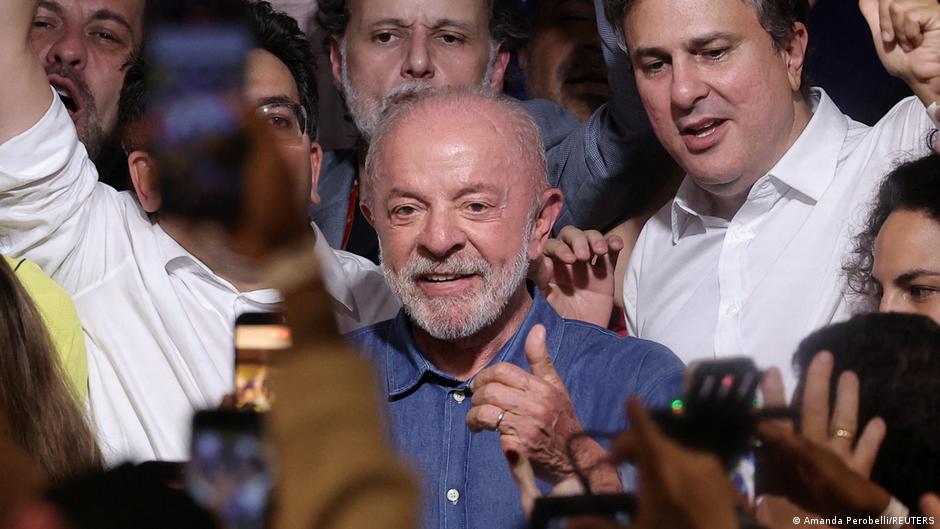
Brazilian President Luiz Inácio Lula da Silva has won re-election in a closely fought presidential runoff, while his opponent, Senator Flávio Bolsonaro, has refused to concede and called for the result to be annulled.
Official results showed the 80-year-old center-left incumbent receiving 51.8% of the vote in the second round, held on Sunday, October 25. Bolsonaro, a right-wing populist and the son of former far-right President Jair Bolsonaro, secured 48.2%.
The narrow 3.6-percentage-point margin places the election dispute at the center of Brazil’s political outlook. For investors and companies exposed to Latin America’s largest economy, the immediate focus will be on whether the challenge delays political normalization or affects expectations for policy continuity, government spending and business confidence.
Election challenge raises uncertainty
Flávio Bolsonaro declined to acknowledge defeat and demanded that the vote be invalidated, citing the extension of polling hours, according to the Associated Press. Both Lula and Bolsonaro had previously requested longer voting hours because of public transport problems and adverse weather conditions in some parts of Brazil.
Supreme Court Justice Cristiano Zanin ultimately ordered voting to be extended nationwide by two hours. The ruling came three minutes before polling stations had been scheduled to close.
Official results gave Lula 51.8% of the vote, compared with 48.2% for Flávio Bolsonaro.
The dispute introduces another variable for investors assessing Brazil’s fiscal position and economic trajectory. The source reported no direct market reaction, revised forecasts or new financial measures following the result. However, the challenge to the vote means that the political transition and its potential implications for economic decision-making will remain under scrutiny.
The election was held against a difficult domestic backdrop marked by economic instability, corruption scandals and allegations of interference by the United States. Voters were also concerned about the cost of living and rising crime, issues that complicated Lula’s campaign for another term.
Fiscal and corporate focus shifts to Lula’s fourth term
Lula is set to assume the presidency for a fourth nonconsecutive term. His victory gives the incumbent another mandate, but the tight result highlights a deeply divided electorate and may shape how his administration approaches economic policy and public finances.
From a financial-reporting perspective, companies and investors will be looking for clearer indications of the administration’s priorities, particularly where government policy could influence operating costs, household purchasing power and investment decisions. The concerns that dominated the campaign—including living costs and economic instability—are also relevant to corporate earnings, consumer demand and balance-sheet planning.
No fiscal targets, budget proposals, tax changes or spending commitments were detailed in the election report. As a result, the near-term financial implications cannot yet be quantified. Investor-relations teams at Brazilian companies are likely to face questions about political risk, while lenders and shareholders will watch for any effect on capital allocation, financing conditions and confidence.
The result is historically significant: it is the first time in Brazil that a candidate who finished second in the first round has gone on to win the election. That reversal underscores the competitiveness of the runoff and the importance of the final-stage campaign.
Celebrations follow close vote
News of Lula’s victory prompted celebrations in major Brazilian cities. Fireworks and vuvuzelas were heard in Rio de Janeiro, while thousands of people wearing red—the color associated with Lula’s Workers’ Party—took to the streets of São Paulo, according to AFP.
The public celebrations contrasted with Bolsonaro’s refusal to concede. The competing reactions reflect the polarization surrounding the election and leave attention focused on the institutional response to the demand for annulment.
For financial markets, the official vote count establishes the expected political outcome, but the challenge could prolong uncertainty until the electoral process is fully resolved. The next material signals for investors will be the handling of Bolsonaro’s objection and any subsequent announcements from Lula’s administration on budgets, economic management and policy priorities.
Until those details emerge, assessments of the election’s effect on earnings, sovereign risk and corporate balance sheets will remain preliminary. The confirmed figures show a close political mandate; they do not yet provide measurable guidance on Brazil’s fiscal or financial direction.