Bulgaria Presidential Vote Heads to Runoff as Turnout Falls Short
A November 1 runoff will determine a presidency with limited formal powers but material implications for policy continuity and investor confidence.
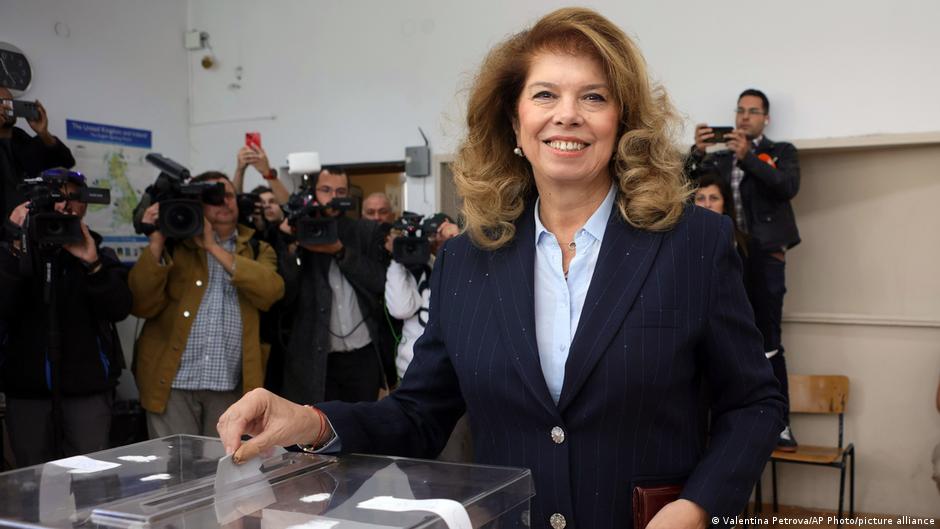
Bulgaria’s presidential election will proceed to a second round after no candidate secured the required absolute majority in the opening vote, extending a period of political uncertainty for businesses and investors assessing the country’s policy direction.
According to Bulgaria’s Central Election Commission, incumbent President Iliyana Yotova received 34.6% of the vote after 95.3% of ballots had been processed. Pro-Western former prime minister Andrey Gyurov placed second with 32%, leaving a narrow gap between the two leading candidates ahead of the runoff, which is expected to take place on November 1.
Voter turnout was only 22.2%, substantially below the required threshold of more than 50%. The low participation rate prevented the election from being decided in the first round and leaves the next ballot as the key test of each candidate’s ability to mobilize support.
Political Risk Enters the Investor Outlook
Although Bulgaria’s presidency has formally limited authority over economic management, the runoff carries implications for policy stability, international relations and perceptions of country risk. Those factors can influence investor confidence even when fiscal policy, public spending and most economic legislation remain primarily the responsibility of the government and parliament.
The president represents Bulgaria internationally, with certain exceptions, and serves as commander-in-chief. The office also signs decrees appointing the prosecutor general and the heads of the highest courts, names an acting prime minister from a constitutionally defined and restricted group of eligible officials, and can veto legislation passed by parliament.
These powers place the presidency at important institutional junctions. For companies and financial-market participants, the runoff will therefore be watched for indications of continuity in Bulgaria’s external alignment, the predictability of its legal environment and the potential for friction between the presidency, the government and parliament.
The 22.2% turnout left neither candidate with the mandate needed to settle the contest in the first round.
The second round has gained additional foreign-policy significance because of Bulgaria’s proximity to the war in Ukraine. During October alone, four merchant ships off Bulgaria’s Black Sea coast were reportedly struck by drones. A Starlink station near Sofia was also damaged in an arson attack.
Yotova and Bulgaria’s government, led by Rumen Radev, responded cautiously to those incidents. They did not provide an unequivocal assessment or identify those responsible, an approach that also affected the course of the presidential campaign.
Ukraine Policy Divides the Finalists
The early phase of the campaign featured few rallies, no televised debates and numerous personal attacks on the two main candidates. In the final weeks, however, differences between the frontrunners over support for Ukraine moved to the center of the contest.
Yotova has advocated a diplomatic end to the war. She also sought to reassure voters that Bulgarian troops would not be sent to Ukraine, even though the issue had not been the subject of broad public debate.
Gyurov has previously expressed support for Ukraine. While serving as prime minister, he signed a security cooperation agreement with Kyiv, underscoring a more explicitly pro-Western and pro-Ukrainian position.
For investors, the contrast is relevant primarily through its potential effect on Bulgaria’s relationships with international partners and on the government’s response to security incidents. The source election data do not indicate any immediate change to fiscal targets, corporate earnings, public borrowing or balance-sheet conditions. Still, geopolitical positioning can shape longer-term assessments of operating risk, trade exposure and capital allocation.
The close first-round result also means that neither candidate enters the runoff with a decisive advantage. Yotova’s 34.6% share leads Gyurov’s 32% by 2.6 percentage points based on the 95.3% count, making turnout and support from voters whose preferred candidates were eliminated especially important in the second round.
Markets and corporate stakeholders will be looking beyond the headline result to the next president’s use of veto authority, approach to institutional appointments and ability to work with the Radev-led government. While the office does not directly control corporate reporting, quarterly earnings or national budget execution, it can affect the broader governance environment in which financial decisions are made.
The November 1 runoff is therefore set to serve as both a choice between two distinct foreign-policy approaches and a measure of whether Bulgaria can produce a clearer political mandate after exceptionally low first-round participation.