Russia-Ukraine Talks Set for Abu Dhabi as Rebuilding Finance Looms
US-mediated working groups will address security, de-escalation and economic support for Ukraine during meetings on November 10-11.
Russia and Ukraine will hold a new round of US-mediated negotiations in Abu Dhabi on November 10 and 11, with the agenda extending beyond immediate security concerns to issues that could shape the financial framework for Ukraine’s eventual reconstruction.
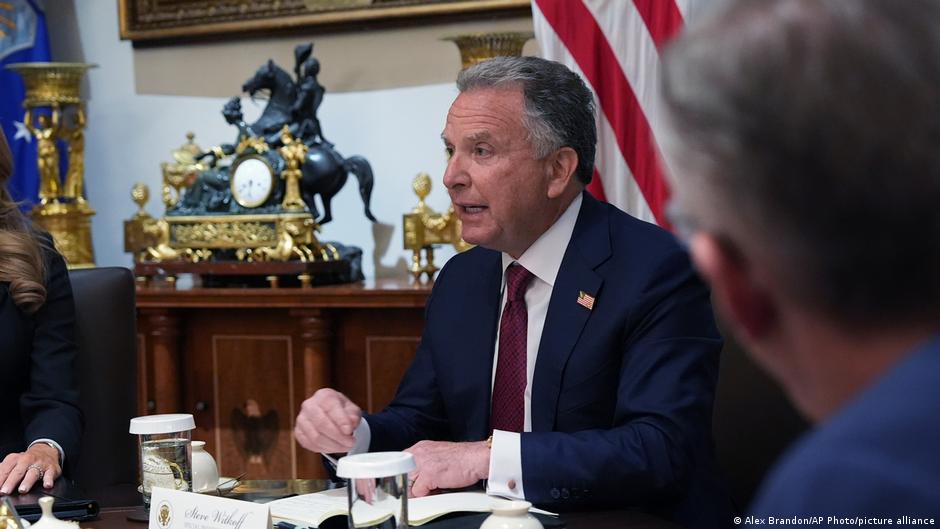
Steve Witkoff, US President Donald Trump’s special envoy, announced the meetings on Tuesday, November 3. He said the discussions in the capital of the United Arab Emirates would take place at the working-group level as part of Trump’s efforts to end Russia’s war against Ukraine.
“The discussions will focus on postwar security, de-escalation, humanitarian initiatives and the next steps toward peace,” Witkoff wrote on X.
Although the announced agenda does not include specific funding commitments, fiscal targets or reconstruction estimates, the talks may help define the political and security conditions under which governments, multilateral institutions and private investors could assess future financial support. A durable settlement and credible guarantees would be central considerations for any long-term reconstruction financing structure.
Economic support enters the diplomatic agenda
US negotiators are also scheduled to meet representatives of France, Germany, the United Kingdom, the European Union and NATO in Brussels this week. According to Witkoff, those discussions will cover security guarantees for Ukraine, Europe’s postwar security architecture and opportunities to provide economic support for Ukraine’s recovery.
The explicit inclusion of economic support places reconstruction finance alongside the diplomatic and security negotiations. The meetings could provide an early forum for aligning the governments and institutions likely to play major roles in supporting Ukraine after the conflict, although Witkoff did not announce any amounts, financing instruments or division of responsibilities among the participants.
For financial reporting purposes, the sequencing is significant. Security guarantees and de-escalation measures would affect the risk assumptions behind sovereign assistance, lending programs, infrastructure investment and private-sector participation. Humanitarian initiatives, meanwhile, could influence near-term public spending needs before a broader recovery framework is agreed.
The outcome may also matter for European budget planning. France, Germany, the UK and EU institutions are expected to discuss how security arrangements and economic assistance fit within a wider postwar architecture. NATO’s participation underscores the connection between defense commitments and the financial resources that governments may need to allocate over time.
No balance-sheet commitments have been disclosed, and the meetings are not expected to produce conventional corporate-style earnings or quarterly results. Nevertheless, investors and financial institutions will be watching for evidence of reduced geopolitical risk, clearer policy coordination and a more defined path toward funding Ukraine’s reconstruction.
Negotiators seek to build on earlier meetings
Witkoff said the United States hopes to consolidate progress made in Kyiv, Oslo and St. Petersburg and move toward a comprehensive and durable peace agreement intended to provide long-term security for future generations.
“We hope to consolidate the progress achieved in Kyiv, Oslo and St. Petersburg on the path toward a comprehensive and lasting peace agreement,” he said.
In October, Trump’s special envoy met Ukrainian President Volodymyr Zelenskyy in Oslo. He subsequently traveled to St. Petersburg, where he held talks with Russian President Vladimir Putin. Those meetings preceded the planned working-group negotiations in Abu Dhabi and this week’s consultations with European and NATO representatives in Brussels.
The previous round of US-mediated negotiations between Russia and Ukraine took place in February 2026, shortly before the beginning of the US and Israeli war against Iran. The interval between formal rounds highlights the broader geopolitical environment confronting policymakers as they consider security guarantees and financial support.
Financial details remain unresolved
The announced meetings have not yet produced a reconstruction budget, aid package, timetable or agreed funding mechanism. There is also no disclosed information on how potential economic support would be divided among grants, loans, guarantees or private investment. Those details would be necessary before governments or investors could evaluate the impact on public finances and institutional balance sheets.
For now, the financial significance of the Abu Dhabi and Brussels discussions lies in their potential to establish the conditions for more detailed planning. Progress on security, de-escalation and a durable agreement could allow participants to move from broad statements of support toward measurable commitments, reporting structures and funding schedules.
The November 10-11 negotiations will therefore be monitored not only for diplomatic developments but also for signals about the governance of Ukraine’s recovery. Any subsequent clarity on security guarantees, economic assistance or reconstruction responsibilities could become material for public-sector budgets, multilateral lenders and companies assessing future exposure to the region.