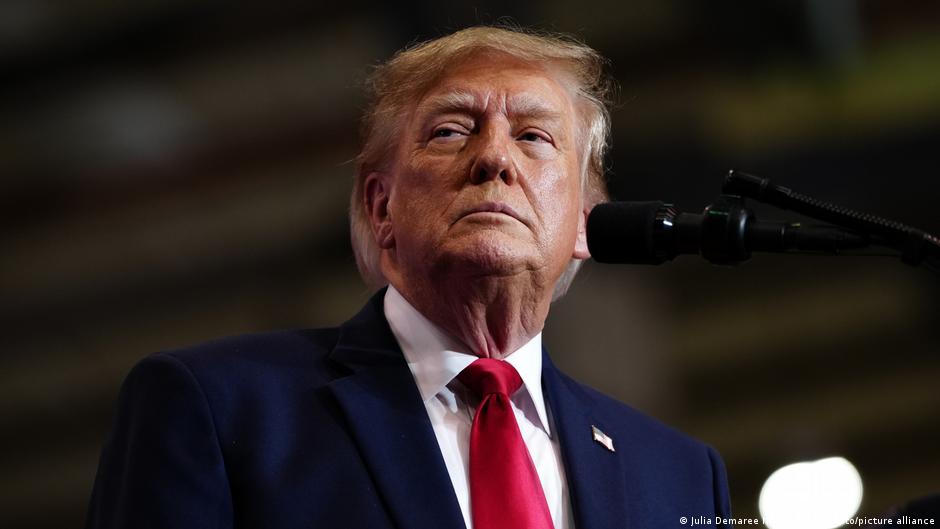
US Court Rejects Trump Bid to Block Alaska Senate Vote Certification
The ruling keeps Alaska’s election certification process on track as control of the US Senate remains contested ahead of the November 3 vote.

A US federal court has rejected an attempt by President Donald Trump’s administration to prevent certification of Alaska’s Senate election results if incumbent Republican Senator Dan Sullivan loses, removing an immediate legal obstacle from a race that could help determine control of the upper chamber of Congress.
The decision, issued on Sunday, November 1, centered on the candidacy of Daniel J. Sullivan Jr., a retired teacher who shares a surname with the incumbent senator. The administration argued that his presence on the ballot could confuse voters and affect the outcome of the contest.
Federal Judge Sharon Gleason concluded that the US Department of Justice lacked the necessary legal grounds to bring the case. In a 20-page ruling, she also said federal authorities had not presented a practical way to determine voter intent without violating ballot secrecy.
Certification risk recedes, but appeal remains pending
The Justice Department had sought an order that would stop officials from certifying the result if Democrat Mary Peltola defeated Senator Sullivan. Under the requested procedure, authorities would have been required to establish whether voters who supported Daniel J. Sullivan Jr. had actually intended to vote for the incumbent senator.
The ruling rejected that approach, finding no workable mechanism for such a review that would preserve the confidentiality of individual votes. The decision therefore reduces the immediate risk of a court-ordered delay to the official certification process, although the Justice Department said after the ruling that it intended to appeal.
For investors and companies following US policy risk, the case matters less as a direct balance-sheet event than as a potential source of uncertainty around congressional control. The Alaska contest is considered one of the key races in the battle for the Senate, where the eventual majority could influence the legislative environment facing businesses and financial markets.
Any extended dispute over certification could prolong uncertainty about the chamber’s composition. That, in turn, would leave companies, shareholders and investor-relations teams waiting longer for clarity on the political backdrop to future legislation. The court’s decision narrows that risk for now, but the planned appeal means the legal process has not necessarily concluded.
Dispute follows report about namesake candidate
The litigation followed a report by The New York Times that political consultants connected to Peltola may have been involved in recruiting the candidate who shares Senator Sullivan’s surname. Peltola has denied the allegations. Reuters said it was unable to independently confirm the newspaper’s reporting.
The Trump administration maintained that the similar names could mislead voters and potentially alter the result. Its proposed remedy focused on ballots cast for Daniel J. Sullivan Jr., but the court found that officials had not explained how they could reliably investigate those votes without compromising the secret ballot.
The court found that federal authorities had offered no practical method to examine voter intent while protecting ballot secrecy.
Following the decision, Trump wrote on his Truth Social platform that the “fake Daniel J. Sullivan Jr. has disappeared,” while again criticizing his political opponents. The source article did not provide further details about the candidate’s status or quantify how many votes could be affected by the namesake issue.
Senate control remains the central political variable
The US midterm elections for the House of Representatives and Senate are scheduled for November 3. Alaska’s Senate race is viewed as a significant contest in the wider struggle for control of the upper chamber.
From a financial-reporting perspective, the ruling does not alter corporate earnings, quarterly results or balance sheets by itself. Its relevance lies in the political uncertainty surrounding the Senate majority and the timetable for establishing that majority. Public companies frequently discuss legislative, regulatory and tax risks in filings and earnings calls, particularly when changes in congressional control could affect their operating assumptions.
The judgment provides a clearer near-term path toward certification in Alaska by rejecting the administration’s requested restriction. However, the Justice Department’s announced appeal preserves the possibility of further legal proceedings. No timetable for an appeal, financial impact estimate or additional remedy was disclosed in the source material.
Until voting is completed and results are formally certified, the Alaska race will remain a closely watched component of the national Senate picture. For market participants, the principal issue is whether the election produces a clear outcome or whether litigation extends uncertainty over congressional control beyond election day.