US Chargé d’Affaires in Ukraine to Depart Amid Diplomatic Strains Under Trump Administration
Julie Davis plans to leave Kyiv due to disagreements with President Trump’s reduced support for Ukraine, impacting key diplomatic roles.
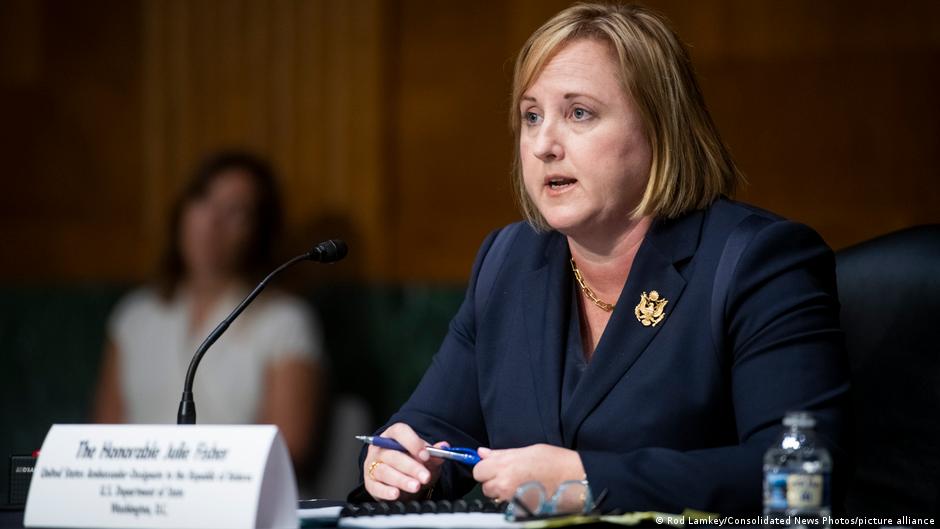
The US Chargé d’Affaires in Ukraine, Julie Davis, is set to leave Kyiv in the coming weeks, according to reports. This departure reflects ongoing tensions within the US administration regarding support for Ukraine under President Donald Trump’s leadership.
Diplomatic Turnover Amid Shifting US Ukraine Policy
Julie Davis, who has held various diplomatic posts including US Ambassador to Belarus (a post Minsk refused to accept) and Special Envoy for Belarus in Lithuania, has announced her intention to retire from the diplomatic service after a 30-year career. She reportedly informed the State Department of her decision to step down from her current role as Chargé d’Affaires in Ukraine.
"She has consistently supported the efforts of the current US administration to achieve durable peace between Russia and Ukraine," a US State Department spokesperson stated, denying claims that her departure was due to disagreements with President Trump.
Despite official denials, sources indicate that Davis’s exit is tied to disagreements with Trump, who after his return to the White House has curtailed American support for Ukraine. Her departure will leave a crucial diplomatic vacancy at a time when Russia is preparing for a significant military offensive and peace negotiations have stalled.
Davis began serving as Chargé d’Affaires in Kyiv in May 2025, following a brief tenure as US Ambassador to Cyprus starting February 2023. Her exit follows the resignation of US Ambassador to Ukraine Bridget Brink in April 2025, who stepped down citing pressures from the Trump administration that favored Russia over Ukraine in the ongoing conflict.
Historical Context: US-Ukraine Diplomatic Challenges
The diplomatic challenges under Trump’s administration are not new. In 2019, Ambassador Marie Yovanovitch was recalled under pressure from Trump, who allegedly sought Ukrainian investigations into political rivals. Yovanovitch later became a key witness during Trump’s impeachment hearings related to a phone call with Ukrainian President Volodymyr Zelensky.
Brink’s resignation in 2025 was reportedly prompted by clashes between Trump, Vice President James David Vance, and President Zelensky over US policy. These internal disagreements contributed to a temporary suspension of US military aid and intelligence sharing with Kyiv.
These high-profile diplomatic departures and policy reversals have generated uncertainty for investors and international partners monitoring the geopolitical risks in Eastern Europe. The evolving US stance on Ukraine could influence global markets, energy prices, and defense sector equities.
Financial Implications and Market Reactions
The shift in US diplomatic personnel and policy towards Ukraine introduces additional volatility to markets already sensitive to the conflict’s trajectory. Investors are closely watching developments as the potential for renewed hostilities could impact commodity prices, particularly in energy and agricultural sectors where Ukraine and Russia are key players.
Furthermore, the US’s wavering commitment may affect confidence among European allies and investors considering exposure to Ukrainian reconstruction efforts and regional stability projects. The uncertainty could weigh on capital inflows, bond yields, and foreign direct investment prospects.
Maintaining a strong diplomatic presence is critical for coordinating international support and ensuring transparency in financial and military assistance flows. As the US adjusts its approach, stakeholders will be seeking clarity on policy continuity and the implications for geopolitical risk premiums.
In summary, Julie Davis’s planned departure underscores the complex interplay between US domestic politics and international diplomacy, casting a shadow on the stability of US-Ukraine relations at a critical juncture with significant financial and strategic consequences.