White House Says U.S. Envoys Discussed Ukraine Peace Details in Moscow
The diplomatic initiative led by Steven Witkoff and Jared Kushner now moves to Kyiv, with plans expected to be made public in the coming weeks.
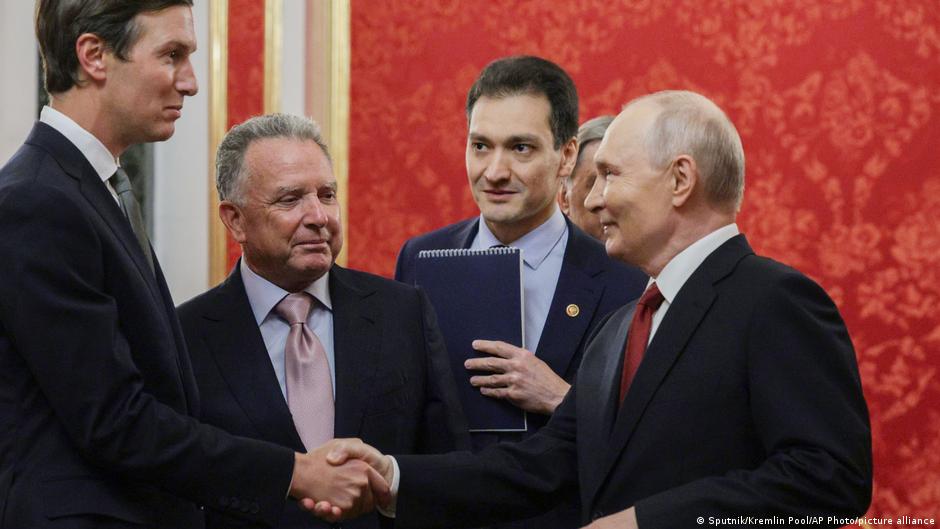
The White House said U.S. representatives held detailed discussions with Russian President Vladimir Putin on possible next steps to end the war in Ukraine, setting up a follow-on round of talks in Kyiv that investors and policy watchers are likely to monitor for implications across energy, defense, reconstruction and sovereign risk.
According to a White House official cited by AFP in the early hours of Sunday, September 6, U.S. presidential special envoy Steven Witkoff and Jared Kushner, the son-in-law of Donald Trump, discussed “concrete plans” during their meeting with Putin. Those plans, the official said, are intended to guide further steps toward ending the war in Ukraine and are expected to be made public “in the coming weeks.”
“U.S. ambassadors look forward to no less productive meetings that will take place in Ukraine,” AFP quoted its Washington source as saying.
For financial markets, the substance and sequencing of any peace proposal matter because the war has shaped commodity prices, defense spending assumptions, sanctions exposure, logistics routes and investor risk models tied to Eastern Europe. The White House comments did not provide financial terms, reconstruction commitments, sanctions conditions or territorial provisions, leaving key variables unresolved for companies, creditors and governments assessing the region.
Diplomatic Timetable Moves Toward Kyiv
Trump also announced a new diplomatic initiative aimed at ending the war and said Witkoff and Kushner had brought with them a plan “to end the war,” AFP reported. The White House chief did not specify whether the plan would involve transferring Ukrainian territory to Russia. He said only: “We have an idea for peace.”
After the Moscow visit, Kushner and Witkoff are due to travel to Kyiv for their first talks there with Ukrainian President Volodymyr Zelensky. Data from flight-tracking service Flightradar24 showed that a Boeing C-32A carrying the U.S. special envoys landed at 01:30 local time at the airport in Rzeszow, Poland. The aircraft departed from Moscow’s Vnukovo airport and headed west while avoiding Belarus, then crossed Latvian, Lithuanian and Polish airspace. The envoys are expected to continue to the Ukrainian capital by train.
The route and timetable underscore the logistical constraints still imposed by the war, including closed or restricted airspace and reliance on overland travel into Ukraine. Those constraints have become part of the operating environment for diplomats, insurers, transport companies and international institutions with exposure to the country.
Moscow Describes Talks as Useful
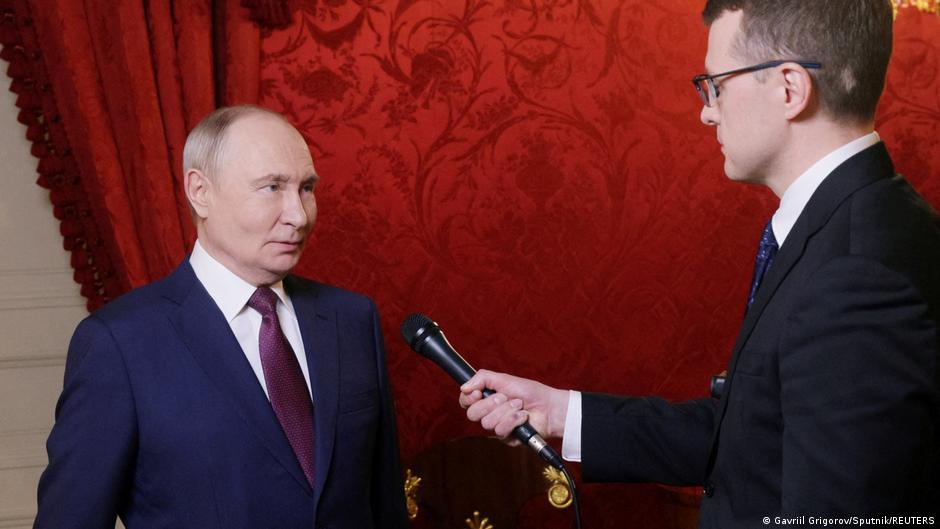
In Moscow, officials said Putin held “extremely frank” talks in which the U.S. delegation presented “several ideas” on how the war in Ukraine might be brought to an end. Russian presidential aide Yuri Ushakov told Russian journalists that the American representatives had prepared carefully for the visit.
“They not only expressed interest in ending the hostilities as soon as possible, but also presented several ideas on possible paths to a solution,” Ushakov said.
Ushakov, quoted by Interfax, described the negotiations as timely and useful for both sides. He said Putin had confirmed his readiness to continue working jointly with the Americans to search for political and diplomatic outcomes.
Those remarks suggest that Moscow is framing the initiative as a process rather than a concluded agreement. From a financial reporting perspective, that distinction is material: companies and investors generally cannot reprice geopolitical exposure on the basis of process alone. They are likely to look for published terms, implementation mechanisms, ceasefire verification arrangements and any indication of how sanctions policy might be handled before changing forecasts or disclosures tied to Russia or Ukraine.
At the same time, Russian state-facing commentary signaled that the military dimension remains central to Moscow’s position. According to RBC, the Russian side gave the Americans its assessment of the course of military operations in Ukraine, noting successes by the Russian army and expressing “confidence in achieving the set goals.” The report said Trump’s special envoys promised to use that information during talks in Kyiv.
That creates a potentially difficult negotiating context for Kyiv. Any proposal that incorporates Russian military assessments could face close scrutiny from Ukrainian officials, Western allies and domestic constituencies. It also leaves open how the diplomatic process would address the status of occupied territories, security guarantees, future aid flows and the durability of any halt in fighting.
Zelensky Signals Readiness for Talks
Zelensky said earlier that he had held a phone conversation with the U.S. presidential envoys who had arrived in Russia. He also announced readiness to halt strikes on Moscow for the next three days.
“The plan of diplomatic measures for tomorrow in Kyiv with the participation of the American team has been approved. We are waiting for Steve Witkoff and Jared Kushner and are ready for a substantive conversation,” Zelensky said on social media.
The Ukrainian president’s statement gives the Kyiv leg of the talks a defined diplomatic opening, though it does not indicate agreement with the U.S. plan. The coming meetings may therefore determine whether the initiative becomes a formal negotiating track or remains an exploratory effort between Washington, Moscow and Kyiv.
For businesses and investors, the immediate financial readout remains limited. No figures were announced for reconstruction financing, budget support, military aid, sanctions relief, frozen assets, energy transit or compensation mechanisms. The White House statement that plans could be disclosed in the coming weeks gives markets a rough reporting window, but not enough detail to model outcomes.
Until the proposal is published, the main measurable development is diplomatic momentum: U.S. envoys have held talks with Putin, Moscow has described the exchange as frank and useful, and the same delegation is now moving to direct consultations with Zelensky in Kyiv. Whether that sequence produces a framework capable of altering the financial outlook for Ukraine, Russia-linked assets and war-sensitive sectors will depend on the specifics still withheld.