Armenia’s Ruling Party Leads Parliamentary Elections Amid Rising Investor Uncertainty
Prime Minister Pashinyan’s Civil Contract party secures majority in parliamentary vote, signaling potential shifts in Armenia’s economic and foreign policy landscape.
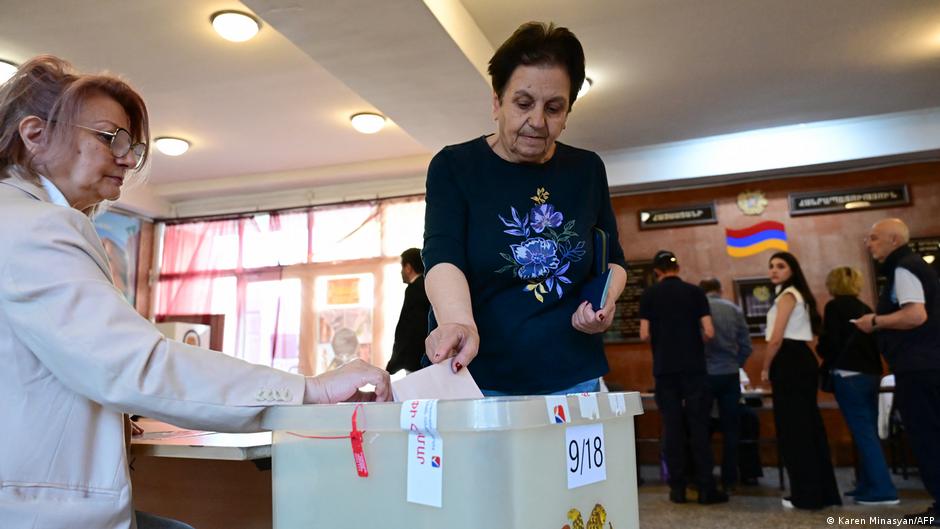
On June 7, Armenia held a pivotal parliamentary election that will shape the country's foreign policy and economic direction for the coming years. Preliminary results released by the Central Election Commission (CEC) after processing nearly 56% of ballots show Prime Minister Nikol Pashinyan’s party, Civil Contract, leading with 50.86% of votes.
Election Results and Political Landscape
The main opposition bloc, Strong Armenia, led by Russian-Armenian businessman Samvel Karapetyan, garnered 23.19% of the vote, while the Armenia bloc under former President Robert Kocharyan received 9.6%. Other opposition parties that passed the electoral threshold include Prosperous Armenia with 4.1%, and the Wings of Unity party with 2.3%. Voter turnout was recorded at 58.97%, higher than in the 2018 and 2021 elections, indicating robust electoral engagement.
The Armenian National Assembly consists of 105 seats, including four reserved mandates for national minorities such as Yezidis, Russians, Kurds, and Assyrians. The election employed a proportional representation system with a 4% threshold for parties, and higher thresholds for electoral blocs depending on their size.
"The Civil Contract party will form the government alone," declared Prime Minister Pashinyan shortly after preliminary results were announced, despite less than 20% of ballots being counted at that time.
This statement provoked immediate criticism from opposition factions, with the Armenia bloc denouncing it as a step toward power usurpation and interference in CEC activities. Arman Tatoyan, leader of Wings of Unity, called Pashinyan’s remarks unconstitutional and beyond the prime minister’s authority.
Financial and Economic Implications
From a financial analysis perspective, the election results bear significant implications for Armenia’s economic trajectory and investor relations. Since 2025, Pashinyan’s government has legally anchored a policy orientation towards closer integration with the European Union, signaling a strategic pivot that could reshape Armenia’s trade partnerships and investment climate.
While the prime minister has emphasized maintaining balanced relations with Russia, the pivot toward the EU has strained ties with Moscow. Russia’s response ahead of the elections — including bans and restrictions on Armenian imports such as alcohol, agricultural products, flowers, and fish — has already introduced economic headwinds. These trade barriers threaten sectors critical for Armenia’s export revenues and could affect the country’s balance of payments.
Investors will be monitoring the new parliamentary composition closely to assess the durability of the pro-EU stance and potential risks associated with geopolitical tensions. The opposition’s call for preserving close ties with Russia represents an alternative economic outlook, which may appeal to investors favoring stability in Eurasian markets.
Furthermore, the higher voter turnout signals political engagement that may translate into greater policy continuity or reform momentum. Stability in the National Assembly majority — requiring at least 54% of seats — will be essential for implementing economic policies and reforms valued by international financial institutions and foreign investors.
Looking Ahead
Should the Civil Contract party secure a stable majority, Armenia is expected to continue its European integration agenda, which could lead to new trade agreements, regulatory reforms, and diversified foreign investment flows. However, the ongoing geopolitical tensions with Russia underscore the importance of cautious navigation to avoid exacerbating economic disruptions.
Analysts and investors will be watching subsequent parliamentary sessions and government formation closely for indications of policy shifts affecting fiscal discipline, international cooperation, and market confidence.