Canada Seeks Role in EU’s €90 Billion Ukraine Loan Ahead of October Summit
Ottawa is negotiating a contribution to the EU-backed Ukraine loan as Mark Carney looks to deepen financial and strategic ties with Europe.
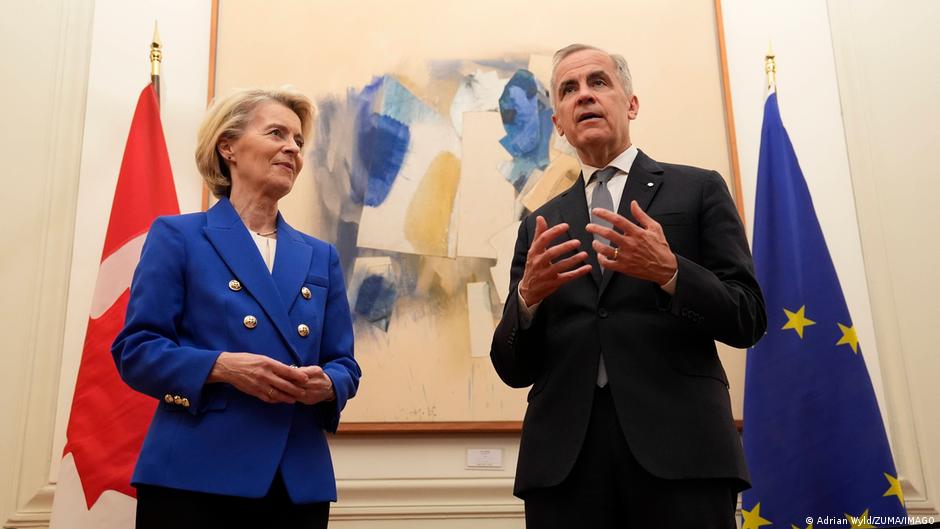
Canada is in talks to join the European Union’s €90 billion loan program for Ukraine, a move that would add another non-EU participant to a major Western financing effort and signal Ottawa’s intention to align more closely with Europe on long-term support for Kyiv.
The size of Canada’s potential contribution has not yet been agreed. According to the Russian-language source article citing the Financial Times, the parties aim to settle the amount before the EU-Canada summit scheduled for late October in Montreal. The timing gives Ottawa and Brussels a defined diplomatic window to translate political intent into a financial commitment.
For investors and policy watchers, the negotiations matter not only because of the scale of the EU facility, but also because they point to how governments are structuring multiyear support for Ukraine through loan programs, defense cooperation and broader strategic partnerships. Canada’s participation would place additional fiscal weight behind the European package while reinforcing Ottawa’s posture as a committed backer of Ukraine.
A Potential Canadian Contribution to a €90 Billion Facility
The EU loan program for Ukraine is valued at €90 billion. Canada is discussing joining that framework, though the article does not specify the mechanism of participation or the expected Canadian share. The absence of an agreed figure means the near-term focus will be on the financial terms that Ottawa is prepared to accept and how those terms fit within Canada’s existing commitments.
Canada has already allocated military assistance to Ukraine worth 6.5 billion Canadian dollars, equivalent to about $4.7 billion. Any new contribution to the EU loan would therefore sit alongside an established package of military support, increasing the importance of transparency around budget treatment, repayment expectations and the broader fiscal implications for Ottawa.
At this stage, the available details do not indicate whether Canada’s involvement would be recorded as a direct bilateral contribution, a participation in an EU-administered instrument, or another structure. That distinction will be important for financial reporting, investor relations and public-sector balance sheet analysis, especially if the commitment becomes material relative to Canada’s current Ukraine-related allocations.
Canada and the EU intend to agree on the size of Ottawa’s contribution before the summit in Montreal at the end of October.
The only non-EU country that has already joined the loan program is the United Kingdom. Canada’s entry would therefore broaden the pool of external participants and could increase pressure on other aligned governments to consider similar financial commitments.
Carney’s Transatlantic Strategy
The talks are also part of a wider political and economic strategy being pursued by Canadian Prime Minister Mark Carney. According to the article, Carney wants Canada’s participation in the loan program to demonstrate to Europe his commitment to strengthening transatlantic ties. That effort is connected to a broader goal of reducing Canada’s dependence on the United States.
The Financial Times, as cited in the source, describes Carney’s idea as creating an alliance of liberal powers committed to a multilateral order that it says was damaged by U.S. President Donald Trump. In financial terms, that strategy may carry consequences beyond Ukraine assistance. A closer Canada-EU alignment could shape trade policy, technology cooperation and future cross-border investment frameworks.
The October summit in Montreal is therefore likely to be watched not only for the Ukraine loan figure, but also for whether Canada and the EU can convert political alignment into measurable agreements. For markets, the relevant questions include how far Ottawa is willing to diversify economic partnerships away from Washington and whether new EU-facing initiatives will have meaningful budgetary or commercial impact.
Canada is seeking European support amid a trade conflict with the United States. In that context, Ottawa hopes to conclude additional agreements with the European Union. The article identifies two areas under discussion: potential Canadian participation in the EU supercomputer network for joint work on artificial intelligence, and a digital trade agreement with Brussels.
Both areas have a financial dimension. Access to high-performance computing infrastructure could affect research, industrial policy and AI-related investment, while a digital trade pact could influence market access, regulatory alignment and cross-border services activity. The article does not provide values for those potential agreements, so their fiscal or commercial scale remains unclear.
Ukraine Partnership Expands Beyond Financing
Canada’s prospective participation in the EU loan follows a recent deepening of ties with Ukraine. On September 10, Carney and Ukrainian President Volodymyr Zelensky signed a declaration on a 100-year partnership. The declaration includes cooperation in defense innovation, among other areas.
The 100-year partnership framework suggests that Ottawa is positioning its Ukraine policy as a long-duration strategic commitment, not a short-term crisis response. Combined with the previously allocated 6.5 billion Canadian dollars in military aid and the possible role in the EU loan program, Canada’s exposure to Ukraine-related policy is expanding across defense, finance and innovation.
For financial analysts, the key unknown remains the size and structure of Canada’s contribution to the EU’s €90 billion Ukraine loan. Until that figure is announced, it is difficult to assess the direct budgetary impact. Still, the negotiations already indicate that Ottawa is prepared to consider another layer of support for Kyiv while using the process to advance broader economic and diplomatic objectives with Europe.
The coming EU-Canada summit in Montreal is now the next major deadline. If the parties finalize Canada’s contribution before then, the announcement could provide a clearer view of how Ottawa intends to balance Ukraine support, fiscal commitments, trade diversification and its effort to build stronger institutional ties with the European Union.