Ukraine Sanctions 44 Over Russian Duma Vote in Occupied Territories
Kyiv’s latest sanctions decision expands legal and financial pressure on figures tied to Russia’s disputed parliamentary vote in occupied regions.
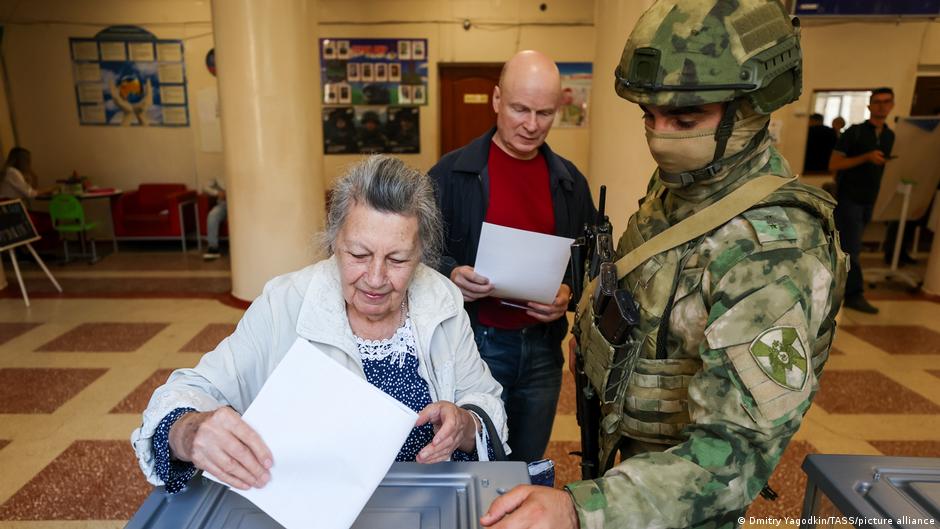
Ukrainian President Volodymyr Zelensky has imposed sanctions on individuals involved in organizing Russian State Duma elections in occupied Ukrainian territories, adding another layer of financial and legal restrictions tied to Moscow’s political activity in areas under occupation.
The decree, issued on Saturday, September 27, targets 44 people. According to the Office of the President of Ukraine, 38 of those sanctioned hold both Ukrainian and Russian citizenship. Ukrainian authorities said some of the individuals had already been “elected” as so-called deputies of illegally formed local councils in temporarily occupied parts of Ukraine.
The sanctions are part of Kyiv’s broader effort to raise the financial and political cost of Russia’s governance structures in occupied areas. While the source announcement does not specify the individual penalties in detail, Ukrainian sanctions typically function as a compliance and risk signal for financial institutions, counterparties, and foreign governments reviewing exposure to sanctioned persons.
Sanctions Risk Extends Beyond Politics
For investors, banks, and companies with regional exposure, the sanctions add to an already complex risk environment around any activity linked to occupied Ukrainian territories. Sanctioned individuals can face restrictions that affect assets, transactions, official dealings, and access to financial systems, depending on the precise terms applied and whether allied governments adopt matching measures.
The European Union had previously stated that it was ready to add people who facilitated the elections in occupied Ukrainian territories to its own sanctions lists. That potential alignment matters for compliance departments because EU listings can broaden the impact from a domestic Ukrainian measure into a wider cross-border financial constraint.
Ukraine and its Western allies have recognized both the process and the results of the vote as illegal.
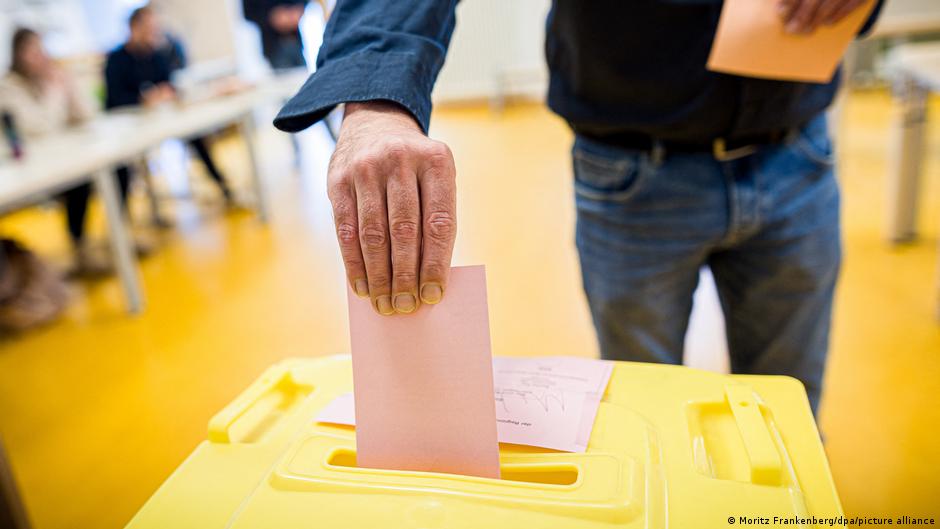
The Russian State Duma elections were held from September 18 to 20. For the first time in parliamentary elections, Russian authorities organized voting in occupied parts of Ukraine’s Kherson, Zaporizhzhia, Donetsk, and Luhansk regions.
Ukraine and Western countries allied with Kyiv rejected the voting process and its results as unlawful. The EU also said it was prepared to impose sanctions on individuals who helped conduct the elections in occupied Ukrainian territories.
New Districts for Occupied Regions
For the 2026 State Duma elections, Russian authorities for the first time created separate single-mandate districts for Ukrainian regions occupied after 2022. The move gave the voting process a formal electoral structure inside Russia’s parliamentary system, even as Kyiv and its allies refused to recognize the legitimacy of the vote.
Following the elections, Russia announced winners in single-mandate districts in the self-proclaimed “DNR” and “LNR,” as well as in occupied areas of Zaporizhzhia and Kherson. In the “DNR,” Russia declared First Channel military correspondent Irina Kuksenkova and Alexander Borodai, a former “head” of the self-proclaimed republic, elected. In the “LNR,” it named local parliament “deputies” Denis Kolesnikov and Ivan Sanayev.
In the occupied parts of Zaporizhzhia region, Russia declared Alexei Tikhomirov elected. In Kherson, it named Elena Dmitruk, described as a deputy chair of the local parliament. All of these candidates were nominated by United Russia.
In addition to single-mandate candidates, eight more representatives of the “authorities” in occupied Ukrainian territories entered the Russian State Duma through federal party lists. Among them was Serhiy Arbuzov, a former first deputy prime minister of Ukraine under President Viktor Yanukovych and former head of the National Bank of Ukraine. Arbuzov was nominated by the party A Just Russia.
Financial Reporting Implications
From a financial reporting perspective, the sanctions create additional disclosure and counterparty-screening considerations for organizations operating in or near the affected jurisdictions. Companies preparing quarterly results, risk factors, or investor-relations materials may need to assess whether any business relationships, receivables, assets, suppliers, or beneficial owners have links to newly sanctioned individuals.
The development is also relevant to banks and payment intermediaries because dual citizenship among 38 of the 44 sanctioned people may complicate identity screening. Individuals with Ukrainian and Russian citizenship can appear in records under different document sets or transliterations, increasing the burden on sanctions compliance teams.
For issuers with exposure to Eastern Europe, the sanctions may not create a new financial metric by themselves, but they reinforce the operating risks already associated with the war, occupation-related governance structures, and the prospect of overlapping sanctions regimes. The potential for EU action means companies may need to monitor whether Ukrainian designations are followed by broader European restrictions that could affect asset freezes, banking relationships, travel, and contractual performance.
Kyiv’s move also carries an investor-relations signal: Ukraine is continuing to treat participation in Russian political structures in occupied territories as a sanctionable activity. That approach keeps legal risk attached not only to military or security actors but also to administrative and electoral figures participating in Russia’s institutional expansion into occupied areas.
The sanctions announcement therefore sits at the intersection of politics, law, and finance. It does not change the underlying status of the elections in the view of Ukraine and its allies, which have already rejected them as illegal, but it formalizes Ukraine’s response against a defined group of individuals and may set the stage for further international restrictions.