EU Adds €710 Million in Humanitarian Funding With Africa as Budget Focus
The European Union’s new allocation expands 2026 humanitarian spending, with migration support, emergency relief and Ukraine winter preparations among the main items.
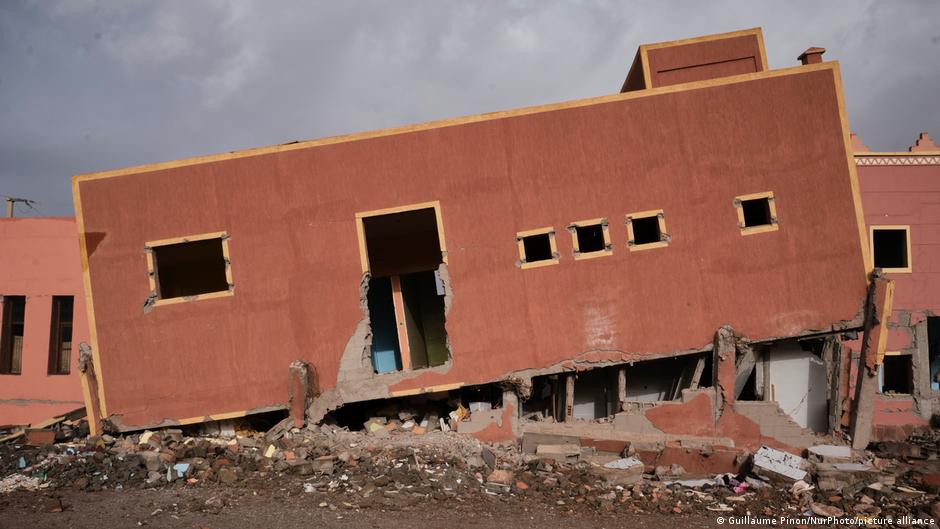
The European Union will allocate an additional €710 million in humanitarian assistance for people affected by conflicts, natural disasters and other crises worldwide, European Commission President Ursula von der Leyen said. The announcement adds a significant new layer to the bloc’s 2026 humanitarian financing and places particular emphasis on sub-Saharan Africa, where the largest share of the newly detailed funding is tied to migration-related measures.
Von der Leyen announced the package on Saturday, September 26, in a video address to participants of the Global Citizen Festival in New York. The festival was later canceled because of bad weather. Her remarks framed the funding as an expansion of EU support for populations under pressure from war, displacement, epidemics and climate-related emergencies, while the allocation details point to a broader budgetary approach that combines emergency response with longer-term migration and reintegration spending.
Special attention will be given to Africa, as well as to forcibly displaced people and the communities hosting them.
For EU budget watchers and humanitarian finance analysts, the new commitment is notable not only for its headline amount but also for the way it is distributed across policy areas. Approximately €380 million will go toward migration-related measures in sub-Saharan African countries. That envelope includes support for the most vulnerable groups of migrants, as well as assistance for return to countries of origin and reintegration.
Allocation Breaks Down Across Migration, Conflicts and Disasters
A further €252 million is earmarked for emergency assistance connected to active armed conflicts, forced population displacement, epidemics and natural disasters. Within that emergency line, €97 million will be directed to countries in sub-Saharan Africa. Another €103 million will go to the Palestinian territories and Lebanon, while €52 million is allocated to Ukraine, including measures linked to preparation for winter.
Smaller amounts are also planned for the Great Lakes region of Africa and for efforts to combat an Ebola outbreak in eastern Democratic Republic of Congo. While those allocations are smaller than the main regional envelopes, they remain part of the EU’s wider humanitarian risk management strategy, which often requires rapid financing for health emergencies before they create larger cross-border consequences.
The new €710 million package should be read alongside the European Union’s broader 2026 humanitarian budget. For 2026, the EU has budgeted about €1.9 billion for humanitarian aid worldwide, according to European Commission data. The largest spending categories in that budget are €557 million in support for sub-Saharan African countries and €463 million for the Middle East and North Africa.
Those figures show that the latest announcement is not a standalone pledge but an additional budget commitment within a larger annual humanitarian spending framework. The emphasis on Africa is consistent across both the previously budgeted 2026 funds and the new allocation. Sub-Saharan Africa appears both as the largest regional item in the broader humanitarian budget and as the main focus of the new migration-related funding.
Ukraine Funding Rises Above Initial 2026 Provision
Ukraine remains a separate and financially significant component of the EU’s humanitarian planning. The European Union initially provided €145 million in humanitarian aid for Ukraine in 2026. Over recent months, however, the volume of humanitarian assistance for Ukraine and Moldova was increased to €248 million.
The funds are being used for food purchases, medical assistance, housing reconstruction, cash payments and winter preparations. Since the start of the full-scale war launched by Russian authorities, the European Commission has allocated more than €1.4 billion to Ukraine for humanitarian assistance programs.
The latest €52 million allocation for Ukraine, including winter-related preparation, comes on top of the broader increase in EU humanitarian support for Ukraine and Moldova. For financial reporting purposes, that makes Ukraine one of the clearer examples of how initial budget lines can be revised upward during the year as operational conditions change and humanitarian needs remain acute.
The package also illustrates the balancing act facing EU institutions as they distribute humanitarian funds across simultaneous crises. Funding is being spread across active conflict zones, displaced populations, disease outbreaks and disaster response, while also being aligned with migration management priorities. That mix creates a complex budget profile in which humanitarian assistance is linked to immediate relief, host-community support and reintegration spending.
From an investor-relations and public-finance perspective, the announcement is another data point in the EU’s expanding external spending commitments. Although humanitarian aid is not a corporate balance-sheet item, it is highly relevant to sovereign and supranational budget analysis because it reflects spending priorities, regional exposure and the fiscal implications of geopolitical instability.
The European Commission’s 2026 humanitarian budget of roughly €1.9 billion, together with the additional €710 million now announced, signals sustained pressure on EU crisis-response financing. The largest allocations remain concentrated in sub-Saharan Africa, the Middle East and North Africa, and Ukraine-related humanitarian programs, with targeted funding also directed to the Great Lakes region and the Ebola response in eastern Democratic Republic of Congo.