CDU State Chief Resigns After Mecklenburg-Vorpommern Election Loss
Daniel Peters stepped down after the CDU fell below the 5% threshold, leaving investors and policy watchers to assess coalition risks.
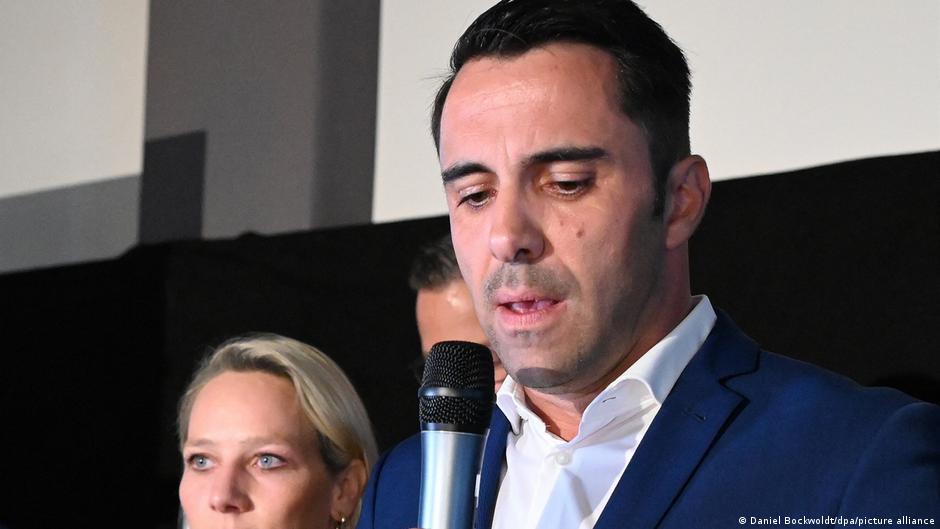
Daniel Peters, the head of the Christian Democratic Union in Mecklenburg-Vorpommern, resigned after the party recorded a historic electoral collapse that left it outside the state parliament for the first time in the history of the Federal Republic of Germany. The result is a political event, but for investors, public-sector lenders and companies tracking German regional policy, it also carries financial reporting implications: coalition formation, budget priorities and state-level investment programs may now be reassessed without the CDU at the table.
Peters announced his departure after a meeting of the CDU state executive in Schwerin on Monday, September 21. The 45-year-old politician said he was personally taking responsibility for what he described as a crushing defeat for the conservatives. The CDU, the party of German Chancellor Friedrich Merz, received just 4.9% of the vote in the previous day’s election, narrowly missing the 5% threshold required to enter the Landtag.
The immediate leadership vacancy will be filled on an interim basis by Philipp Amthor, 33, the state minister responsible for cooperation between Germany’s federal states and the federal government. His task is likely to be less about rapid repositioning and more about stabilizing the state organization, assessing the electoral failure and preserving working relationships with federal party leadership at a time when the CDU’s regional footprint has suffered a visible setback.
Amthor said the Christian Democrats in Mecklenburg-Vorpommern now need time to reflect on the result, adding that it would be inappropriate to immediately present an analysis or draw conclusions about the future balance of power given the scale of the historic defeat.
Election Result Alters the Policy Balance Sheet
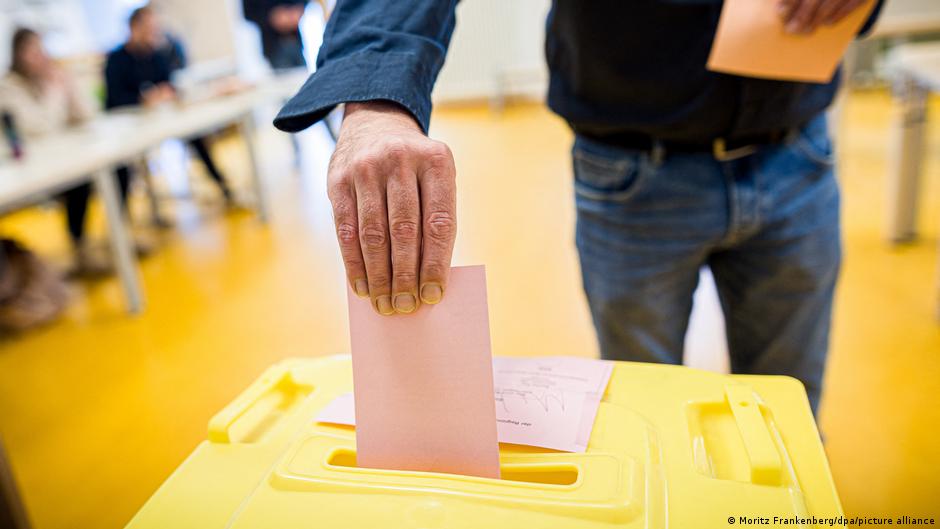
The Alternative for Germany, or AfD, finished first in the Mecklenburg-Vorpommern Landtag election with 38.2% of the vote. The Social Democratic Party of Germany, led in the state by incumbent premier Manuela Schwesig, came second with 35.5%. The Left Party entered parliament with 6.5%, while Alliance 90/The Greens cleared the threshold with 5.7%. Other parties did not cross the 5% barrier.
For financial audiences, the most important near-term metric is not only the CDU’s 4.9% result, but the resulting coalition arithmetic. The SPD has already announced the start of talks with both the Left Party and the Greens, with the stated aim of forming a governing coalition without the AfD. That would keep the far-right party out of government despite its first-place finish, while positioning Schwesig’s SPD as the central actor in negotiations over the next state budget and governing program.
State-level governments in Germany influence spending priorities in areas such as infrastructure, education, administration, policing, regional development and climate-related investment. While the article does not report specific budget figures, the political composition of the next government will matter for stakeholders that depend on state contracts, public investment cycles or regulatory direction. The absence of the CDU from parliament also means that one of Germany’s two major national parties will have no formal legislative voice in Mecklenburg-Vorpommern during the next term.
The CDU’s result is particularly striking because it represents a failure to meet a basic institutional threshold rather than a conventional loss of market share. In corporate reporting terms, the party did not merely underperform expectations; it lost access to the state legislature as a platform for oversight, committee work and policy influence. That creates a reputational liability for the national CDU at a time when Chancellor Friedrich Merz’s party will be measured not only by federal performance but by resilience across Germany’s regional political map.
Leadership Change Begins Internal Review
Peters’ resignation provides a clear accountability signal to party members and outside observers. By leaving the state chairmanship immediately after the executive meeting, he framed the result as a leadership failure requiring a formal response. Amthor’s interim appointment, however, suggests the party is not yet ready to present a full recovery plan. His remarks, as reported by dpa, emphasized reflection rather than instant strategic conclusions.
That sequencing is significant for investor relations-style analysis of political parties. A failed election campaign often produces pressure for rapid messaging, but Amthor’s comments point to a controlled review process. The CDU will need to evaluate whether its failure was driven by candidate positioning, federal brand weakness, competition from the AfD, local campaign execution or broader voter realignment. The source article does not provide such an analysis, and Amthor explicitly cautioned against immediate conclusions.
The AfD’s 38.2% first-place result will draw national attention because it shifts the headline risk around eastern German politics. But the governing equation remains dependent on the SPD’s ability to build a majority with the Left Party and the Greens. If successful, the next coalition would combine parties with differing fiscal and policy preferences while excluding the largest vote-getter. That structure may preserve continuity under Schwesig while still requiring negotiated compromises on spending and policy priorities.
For businesses and public-finance observers, the relevant reporting period now begins with coalition talks. The CDU’s balance sheet in Mecklenburg-Vorpommern has been marked down sharply: no parliamentary seats, a departing state chairman and an interim leader tasked with managing the aftermath. The SPD, by contrast, retains negotiating leverage despite finishing second, while the AfD gains the symbolic and political asset of first place without an immediate route into government.
The election therefore leaves Mecklenburg-Vorpommern with a fragmented political ledger. The CDU has booked a historic loss, the AfD has posted the strongest result, and the SPD is moving to assemble a governing majority with smaller parties that cleared the parliamentary threshold. The financial consequences will depend on the coalition agreement that emerges, but the governance signal is already clear: the state’s policy agenda is being reset without CDU participation in the Landtag.