China Warns U.S. Against Space War Preparations as Military Assets Draw Scrutiny
Beijing’s warning follows the first U.S. confirmation of orbital weapons capabilities, raising investor focus on defense spending and strategic risk.
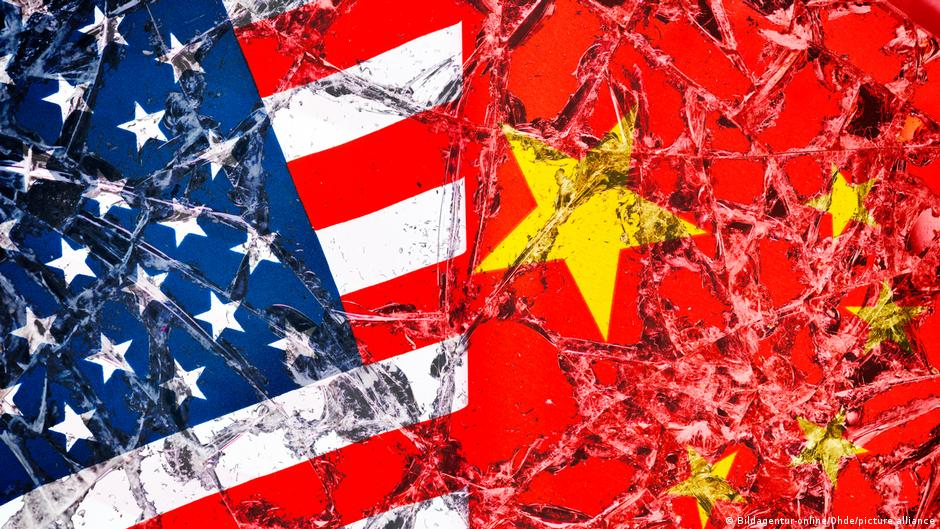
China has urged the United States to stop preparing for potential combat operations in space after Washington confirmed for the first time that it has weapons systems deployed in orbit. The statement adds a new layer of geopolitical risk for investors tracking defense budgets, aerospace contractors, satellite operators and companies exposed to military communications, surveillance and navigation infrastructure.
The U.S. Space Force confirmed that it has assets in orbit capable of both defensive and offensive roles. In its statement, the service referred to threats in space from China and Russia. Beijing responded on Tuesday, September 15, with a warning against what it described as the militarization of space, the transformation of space into a battlefield and an arms race beyond Earth’s atmosphere.
“We urge the American side to stop building up military capabilities and preparing for war in space,” Chinese Foreign Ministry spokesman Guo Jiakun said at a briefing.
The day before, on September 14, U.S. Air Force Secretary Troy Meink said the United States has “space control assets that are on orbit.” He said those assets, operated by the U.S. Space Force, are capable of protecting the joint force from hostile actions. He did not provide details about the systems themselves.
For financial markets, the confirmation is notable because space has become a growing category in defense appropriations, contractor backlogs and long-term capital allocation. The disclosure does not include contract values, procurement timetables or platform specifications, but it points to an area where governments may direct further spending as military reliance on satellites increases.
Defense Spending and Investor Risk
The Space Force statement said space control includes capabilities needed to secure and protect control of space and that such capabilities may be used for both offensive and defensive purposes. It also referred to the use of kinetic and non-kinetic means. The language underscores that the space domain is no longer treated only as a support layer for military operations, but also as an operational environment in its own right.
That shift has direct relevance for investors following aerospace and defense companies, cybersecurity firms, satellite communications providers and launch-related businesses. Military space programs can create demand across hardware, software, sensors, ground systems and secure communications networks. At the same time, they can increase regulatory, operational and geopolitical risks for commercial satellite operators whose infrastructure may become more exposed in a crisis.
The U.S. statement specifically named China and Russia. It said China is developing and operating space-related capabilities and counterspace defense systems as part of a broader military modernization strategy. Russia, according to the statement, views space as a theater of war and believes dominance in space will become a decisive factor in future conflicts.
The reference to both countries places the disclosure within a larger strategic competition that has already influenced budget priorities in Washington and other capitals. For investors, such language can indicate a potential pipeline of procurement needs, but it can also increase uncertainty around sanctions, export controls, supply chains and the insurance costs associated with satellite operations.
The U.S. Space Force was established in 2019 during Donald Trump’s first presidential term as a separate branch of the armed forces, amid concerns about potential threats from Russia and China. Since then, space-based military infrastructure has become increasingly central to command, control, communications, observation and navigation.
Treaty Limits and Commercial Exposure
Historically, the largest concern around weapons in space centered on the possible deployment of nuclear arms. The 1967 Outer Space Treaty prohibits such placement. The United States, Russia and China are among the parties to that treaty, which requires the exploration of space to be conducted for peaceful purposes. However, the treaty does not cover conventional weapons placed on satellites or spacecraft.
That distinction matters for balance-sheet risk across the space economy. Commercial satellite networks, private launch services and defense-oriented space technologies occupy a market in which legal boundaries, national security requirements and military demand increasingly overlap. Companies involved in dual-use technologies may face rising opportunities, but also higher compliance costs and greater exposure to geopolitical shocks.
Current concerns extend beyond traditional weapons. Activities such as hacking satellites and interfering with their operations are becoming more important. Russia, in particular, is suspected of developing weapons against Starlink satellites used by the Ukrainian military. Russia, as well as the United States, China and India, are studying capabilities outside the treaty framework, including strikes against adversaries’ satellites that play important roles in military communications, surveillance and navigation, AFP noted.
For investors, the issue is therefore not limited to whether space weapons exist. It is also about how governments classify threats, how they allocate capital to space control, and how quickly commercial infrastructure becomes entangled with military priorities. The latest exchange between Beijing and Washington may sharpen attention on quarterly disclosures from defense contractors and satellite firms, particularly any commentary on backlog, government demand, cyber resilience, launch schedules and risk factors tied to conflict in orbit.
China’s statement did not include new financial data or procurement figures. The U.S. confirmation likewise did not identify systems, contractors or program costs. Still, the policy signal is significant: both the risk profile and the spending outlook for the space sector are likely to remain closely tied to the strategic competition among the United States, China and Russia.