Drone Strike Hits Russia’s Yamal Gas Region, Raising Infrastructure Risk
The reported attack on an industrial site in Novy Urengoy brings wartime disruption closer to a core region for Russian gas output.
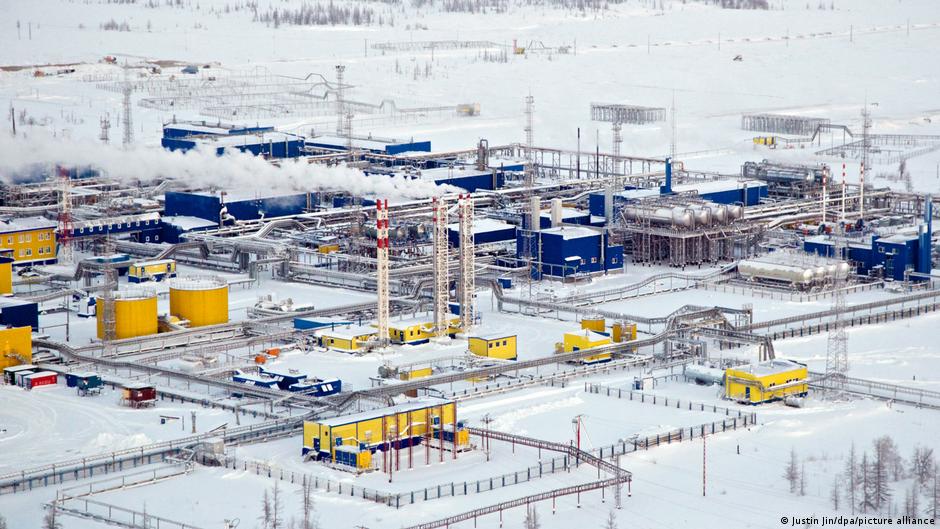
Ukrainian drones attacked Russia’s Yamalo-Nenets autonomous district for the first time, according to regional officials, striking an industrial site in Novy Urengoy and starting a fire in a region that accounts for the bulk of Russia’s natural gas production.
Dmitry Artyukhov, the governor of the region, said on Wednesday, September 9, that the attack had been repelled but that debris from unmanned aerial vehicles fell on the grounds of an enterprise, causing a blaze. Official reports said there were no deaths or injuries. Artyukhov said the scale and nature of the damage were still being assessed.
For energy investors and analysts tracking Russian commodity infrastructure, the incident adds a new layer of operational risk to assets far from the Ukrainian border. Novy Urengoy lies roughly 2,800 kilometers in a straight line from the Russia-Ukraine border. If confirmed as launched from Ukrainian territory, the attack could represent the longest known Ukrainian Armed Forces strike inside Russia since the start of the full-scale war.
Strategic Gas Region Comes Into Focus
The Yamalo-Nenets autonomous district is one of the most important producing regions in Russia’s energy balance. It is estimated to account for about 80% of Russian natural gas production, making any disruption there relevant not only for military and political assessments, but also for financial reporting, export outlooks, production continuity, and balance-sheet risk across the Russian fuel and energy sector.
Artem Zhoga, the Russian presidential envoy to the Ural Federal District, said the target of the attack was a fuel and energy complex facility in Yamal. He added that the facility’s personnel had been evacuated in advance.
Russian officials said there were no casualties, while the extent of damage to the industrial site remained under assessment.
Russian authorities did not specify which enterprise had been attacked. However, several media outlets and analytical projects that monitor strikes on Russian territory reported that the possible target was a condensate preparation plant in Novy Urengoy that is part of Gazprom’s gas infrastructure. The facility is considered one of the key regional assets for processing gas condensate.
The Novy Urengoy plant processes gas condensate from the Urengoy, Yamburg and other fields in the region. Its design capacity is estimated at about 19.5 million tons of feedstock per year. That capacity figure makes the site financially material in any assessment of regional midstream and processing exposure, even though officials have not disclosed the confirmed name of the affected enterprise or any quantified damage.
Investor-Relevant Exposure Remains Unclear
The immediate financial implications remain uncertain because authorities have not reported whether production, processing, transport, or deliveries were affected. No estimate has been released for repair costs, downtime, lost throughput, or potential insurance exposure. The official statement that there were no casualties limits the direct human impact, but the lack of detail on physical damage leaves open questions for operators, creditors, counterparties, and analysts following Russia’s gas sector.
The possible connection to Gazprom infrastructure is especially relevant because the company’s assets are central to Russia’s gas production and processing chain. Still, the available information does not confirm that a Gazprom-owned facility was struck. Reports from media and monitoring projects identify the condensate preparation plant as a possible target, while Russian authorities have only described the location as an industrial site and, separately, as a fuel and energy complex facility.
From a financial reporting perspective, the key variables are the eventual damage assessment, whether the site remains operational, and whether any interruption affects condensate processing from major fields including Urengoy and Yamburg. Until those details are disclosed, the event is best understood as a significant expansion of perceived infrastructure risk rather than a confirmed production shock.
The strike also broadens the geography of drone-related risk inside Russia. Previous attacks have placed increasing pressure on energy assets and logistics infrastructure, but Yamal’s distance from the front line makes this incident notable. A confirmed Ukrainian-origin launch would suggest that strategic energy facilities deep inside Russia may face a wider threat perimeter than previously reflected in standard operational assumptions.
For companies and agencies preparing quarterly or annual disclosures linked to Russian energy operations, the attack may sharpen scrutiny of risk factors covering security, asset integrity, emergency response, and continuity planning. The evacuation of personnel before the reported impact may mitigate labor and safety consequences, but it also indicates that operators and authorities considered the threat credible enough to act before debris fell on the site.
The event does not, based on the available official information, establish a measurable effect on Russia’s gas output. The region’s role in producing about four-fifths of the country’s natural gas, however, means that any confirmed damage to processing infrastructure in Novy Urengoy will be closely watched. Investors and market observers will be looking for follow-up disclosures on the identity of the enterprise, the condition of the condensate processing chain, and whether any repair timeline or financial estimate is provided.