Georgia Detains Ex-Defense Minister Baramidze in Treason-Sabotage Case
Prosecutors say remarks about the 1992-1993 Abkhazia war damaged state interests as Georgia widens criminal scrutiny of former officials.
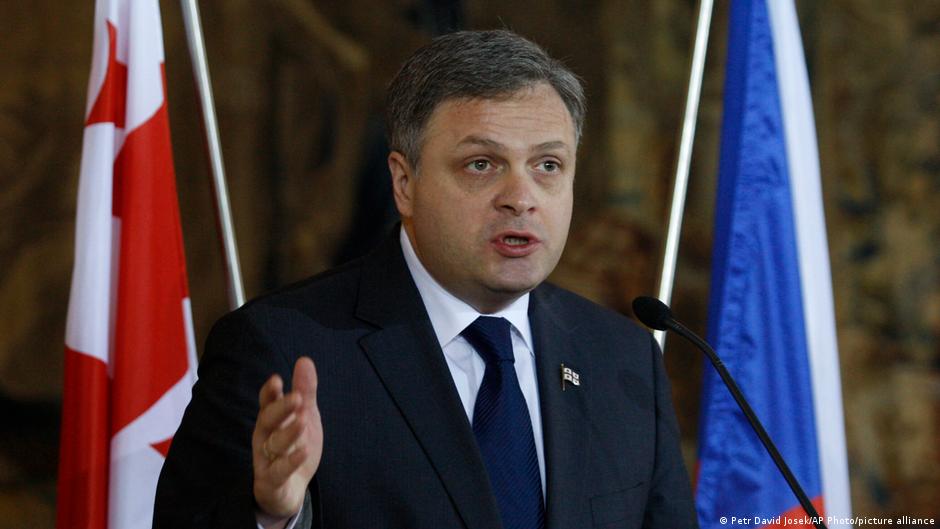
Georgian authorities have detained Giorgi Baramidze, a former acting prime minister and former defense and interior minister, on an accusation of “treason against the motherland, namely sabotage,” in a case that adds political and institutional risk to an already sensitive governance landscape for investors watching the country.
Baramidze, 58, is one of the leaders of the United National Movement, the party associated with former president Mikheil Saakashvili. Deputy Prosecutor General Amiran Guluashvili said Baramidze would face the charge under a court ruling. Georgia’s Prosecutor General’s Office published the relevant statement on Friday, September 11.
The case centers on comments Baramidze made about the 1992-1993 war in Abkhazia. The remarks were aired on July 18 in the program “Birth of Georgia,” broadcast on the YouTube channel of the same name run by Iago Khvichia, leader of the opposition libertarian party New Political Center - Girchi.
According to prosecutors, Baramidze said during the interview that, at the beginning of the war in Abkhazia, Georgian soldiers did not take prisoners, but shot them on the spot. Prosecutors said he linked this to the Georgian side’s lack of an exchange fund, unlike the Abkhaz side.
Governance Risk Enters the Investor Lens
For a publication focused on financial reporting, the immediate relevance of the case lies less in direct corporate earnings and more in the broader operating environment. Political prosecutions, allegations involving former senior defense officials and disputes over state institutions can influence how investors assess sovereign risk, the rule-of-law environment and the predictability of policymaking.
The source material does not cite any market reaction, budget impact, debt effect or corporate financial exposure tied to Baramidze’s detention. It also does not report any company-specific financial metrics, balance-sheet consequences or quarterly earnings implications. The available facts instead point to an institutional and political development that could be material for investors evaluating Georgia’s governance profile.
Law enforcement authorities opened an investigation into Baramidze’s statement on August 7, after a complaint from the state service for veterans’ affairs. The Prosecutor General’s Office later said it had not found facts confirming that prisoners were shot by the Georgian army.
Prosecutors described Baramidze’s statement as “groundless and fabricated” and said the investigation would continue.
Authorities said the remarks had an “intentional ideological and propaganda character” and contributed to undermining Georgia’s state and national interests, external security, defense capacity and state institutions. They also argued that the comments damaged Georgia’s image, harmed the reputation of the country’s Defense Forces and offended the honor and dignity of veterans of the war in Abkhazia and fallen servicemen.
The Prosecutor General’s Office further said the remarks threatened the process of reconciliation and confidence-building among populations affected by the conflict, undermined Georgia’s policy on peace and de-occupation, and complicated the normal work of state agencies.
Prosecutors now intend to ask a court to place Baramidze in custody. Law enforcement officials said the investigation is continuing and that the public will be informed about its progress and results.
Former Defense Officials Face Multiple Criminal Cases
Baramidze has become the fifth former Georgian defense minister against whom a criminal case has been opened in the country. That pattern is significant for financial audiences because repeated legal action involving former senior officials can shape perceptions of institutional stability, political continuity and public-sector governance, even when the cases do not directly concern fiscal accounts or listed companies.
In July, Bacho Akhalaia, an associate of Saakashvili, was sentenced to two and a half years in prison. He was found guilty of publicly calling for the overthrow of the government after a speech at a court hearing.
In November 2025, Irakli Okruashvili, a former interior and defense minister who supported Saakashvili until 2007, was sentenced to seven years in prison in connection with the high-profile killing of 19-year-old Amiran Robakidze during a police inspection in 2003.
Former members of the government of the ruling Georgian Dream party are also in custody. They include Juansher Burchuladze, who headed the Defense Ministry until February 2024, and Irakli Garibashvili. Garibashvili served as defense minister from 2019 to 2021, prime minister from 2021 to 2024, and chairman of Georgian Dream from 2024 until April 2025.
Burchuladze is accused, in particular, of taking bribes. Garibashvili is accused of money laundering. The article does not provide monetary amounts, alleged transaction values, asset details or balance-sheet figures connected to those accusations.
The accumulation of cases involving former defense ministers and senior government figures creates a political backdrop that financial analysts may factor into country-risk assessments. In emerging and frontier markets, questions around institutional independence, the handling of opposition figures and the treatment of former officeholders can affect the perceived durability of reforms and the credibility of public administration.
At the same time, the reported facts do not establish any immediate macroeconomic or corporate-finance consequence. There is no reported impact on Georgia’s budget, currency, credit rating, government bond yields, foreign direct investment flows or banking-sector indicators. The financial significance is therefore indirect: the Baramidze case adds another data point to the legal and political environment in which investors, lenders and counterparties assess exposure to Georgia.
For now, the next procedural step is the prosecution’s effort to secure Baramidze’s detention through the court. The progress of the case, including whether charges are formally advanced and how the court rules on custody, will determine whether the matter remains a domestic legal dispute or becomes a broader signal in investor relations discussions about Georgia’s institutional trajectory.