German Far-Right AfD Leads in Popularity Amid Divided Public Opinion on Ban
Poll shows 45% of Germans oppose banning AfD despite the party leading CDU/CSU by 8 percentage points.
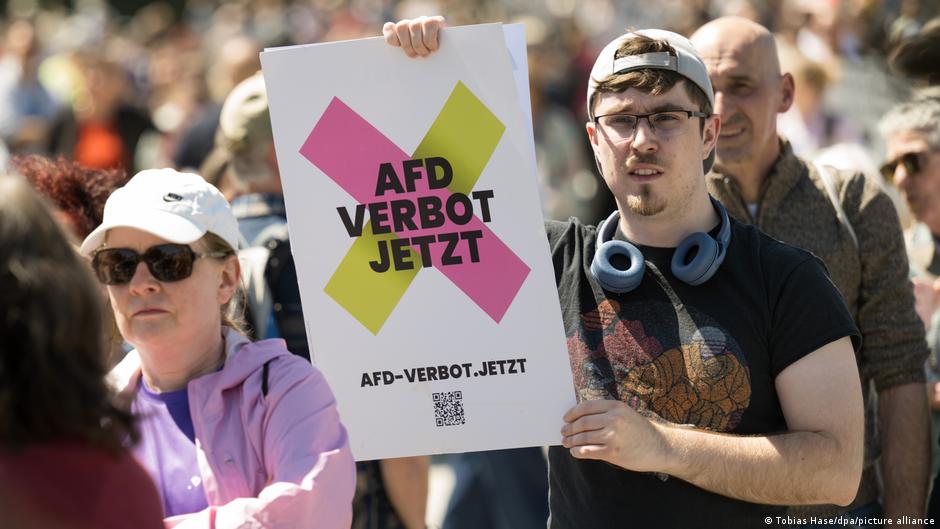
Recent polling data from the Insa institute reveals a divided German public opinion towards the potential banning of the far-right party Alternative for Germany (AfD). According to the survey, 45% of respondents oppose a ban on the party, while 40% support such a measure and 15% remain undecided. The poll underscores a significant political dynamic as AfD maintains a commanding lead over the conservative CDU/CSU bloc in voter support.
AfD's Rising Popularity and Political Ambitions
The Insa poll, commissioned by Bild am Sonntag and published on July 5, indicates that AfD currently enjoys 29% voter support, outpacing CDU/CSU's 21%, which represents a 1 percentage point decline for the conservative bloc compared to the previous week. This 8 percentage point lead for AfD marks one of the largest gaps recorded in recent months.
Other parties see varied support levels with the Social Democratic Party (SPD) and the Greens each at 13%, while The Left party garners 10% support. Notably, the Greens recently surpassed the SPD in some polls, highlighting shifting dynamics on the political left.
"We are the new people's party in Germany," claimed Alice Weidel, AfD co-chair, asserting the party's ambition for political leadership during the recent Erfurt party congress.
Alice Weidel's statement reflects AfD's growing confidence as the party positions itself as a major challenger to Germany’s traditional political establishment. The AfD has been under surveillance by the Federal Office for the Protection of the Constitution (BfV) for suspected right-wing extremism since February 2021, yet this scrutiny has not deterred its electoral rise.
Public Sentiment on Political Isolation Strategies
The survey also explored attitudes towards the "Brandmauer" (firewall) strategy, which calls for complete political isolation of AfD by other parties. Forty-two percent of respondents support this approach, while 39% oppose it and 19% are undecided.
This division within the electorate indicates an ongoing debate about how to manage the far-right presence in the Bundestag and whether exclusion or engagement is the appropriate political response.
Meanwhile, approval ratings for the federal government remain low, with only 13% of Germans satisfied with its performance according to an ARD Deutschlandtrend poll published on July 2. Chancellor Friedrich Merz’s approval rating has also fallen to a new low of 13%, down 3 percentage points.
Financial Implications and Political Stability
From an investor relations perspective, the AfD’s ascendancy and the fragmented political landscape pose challenges for financial markets and policy predictability in Germany. The uncertainty around coalition formations and government stability could affect fiscal policy decisions and economic reforms.
Market watchers should monitor the evolving political balance, especially given Germany’s central role in the European economy. The AfD’s positioning as a "new people's party" with significant voter backing may influence future legislative agendas and budgetary priorities.