Germany Deploys Eurofighters to Latvia as NATO Air Security Costs Rise
The short-term deployment underscores how Baltic air defense commitments are becoming a recurring operational burden for NATO members.
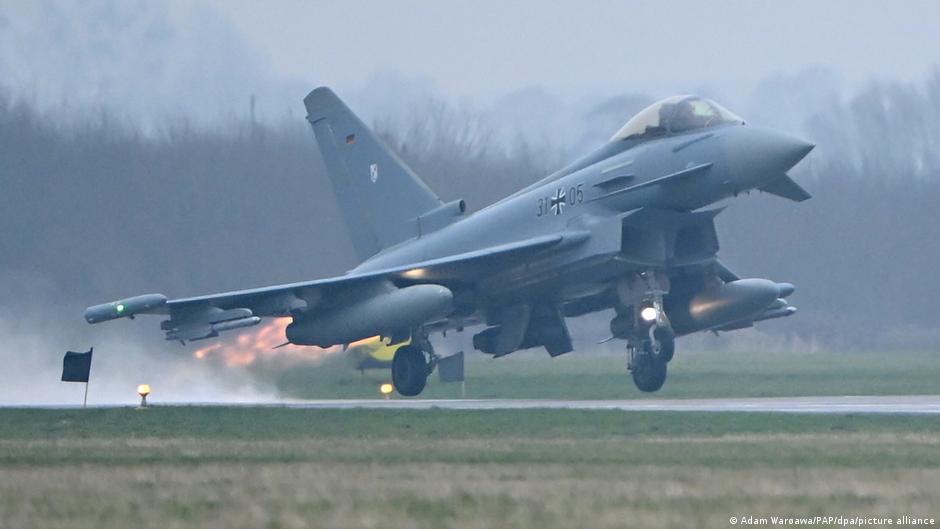
Germany has deployed four Eurofighter jets to Latvia for slightly more than a week to help secure the country’s airspace during parliamentary elections scheduled for October 3, a move that highlights the continuing financial and operational demands placed on NATO members along the alliance’s northeastern flank.
The aircraft, drawn from the Bundeswehr’s 74th Tactical Air Wing and transferred from Neuburg an der Donau Air Base, arrived at the Lielvarde military airfield in central Latvia. Latvia’s defense ministry in Riga announced the deployment on Thursday, September 24.
The Eurofighters will support NATO’s integrated air and missile defense system while Latvia holds elections to the Saeima, the country’s parliament. Although the mission is limited in duration, it comes against a backdrop of repeated violations of Baltic airspace and illustrates how short-notice security requirements can translate into additional military activity, personnel commitments and asset utilization for NATO governments.
Security Commitments With Budget Implications
Latvia requested support from NATO allies following repeated incursions into the airspace of Baltic states, the dpa news agency noted. For defense ministries and budget planners, such deployments are more than symbolic gestures. They require the movement of high-value aircraft, crews, maintenance support and related operational infrastructure, even when the mandate lasts only a short period.
The Latvian government framed the German move as a concrete allied commitment. Prime Minister Andris Kulbergs thanked Germany on X for its “willingness to help and close cooperation.”
“This is a concrete sign of NATO solidarity and our shared commitment to protecting Latvia’s airspace and the security of Latvia’s population,” Kulbergs said.
For Germany, the mission adds another visible task to the Bundeswehr’s NATO commitments at a time when European governments are under pressure to align defense readiness with budget priorities. The source article did not provide cost figures for the deployment, but the use of Eurofighter aircraft for election-period air security points to the kind of recurring operational obligations that can affect defense planning, aircraft availability and long-term procurement assumptions.
The Eurofighter is a major European defense asset, and deployments involving the aircraft typically carry implications for maintenance cycles, pilot hours and readiness management. In financial reporting terms, the Latvian mission does not represent a new procurement announcement or a disclosed contract, but it does show how existing defense platforms continue to be used intensively in response to regional security risks.
Baltic Air Policing Remains a Recurring Mission
NATO has protected the airspace of Estonia, Latvia and Lithuania since the three Baltic states joined the alliance in 2004. The mission has become more significant since Russia’s full-scale war against Ukraine began, as drones have repeatedly entered the airspace of Baltic countries.
In August, NATO fighter jets shot down a drone that violated Latvian airspace. That incident added urgency to Latvia’s appeal for allied support and reinforced the importance of integrated air and missile defense coverage in the region.
For investors and defense-sector analysts, repeated airspace violations and the need for rapid allied responses may help explain why European governments continue to emphasize air defense, surveillance and combat aircraft readiness in public policy. While this specific deployment did not include financial disclosures, it fits into a broader pattern in which NATO readiness requirements can shape future spending priorities and sustain demand for maintenance, training and operational support across allied air forces.
The German Eurofighters now in Latvia are expected to remain there for just over a week. Their role is to support NATO’s existing defense architecture rather than to establish a permanent German presence in Latvia for this election period.
Germany’s involvement in Baltic air defense will continue beyond the Latvian election mission. From December 2026, Eurofighters are scheduled to again take on longer-term NATO airspace surveillance from Estonia under the NATO Air Policing mission.
Through March 2027, five Eurofighter jets and their flight crews are set to be stationed at Amari Air Base in northwestern Estonia. That planned deployment indicates that the current Latvia operation is part of a wider cycle of NATO air policing rotations rather than an isolated event.
For Latvia, the immediate objective is election-period air security. For NATO and its member states, the broader issue is the durability of defense commitments on the alliance’s eastern and northeastern borders. As airspace violations continue to shape security planning, the financial burden of maintaining credible air defense coverage remains a live issue for governments, defense ministries and companies tied to European military aviation.