Germany Links Ukraine Support to Domestic Defence Industry Participation
Foreign Minister Johann Wadephul said German defence companies should benefit from Berlin’s financial and military backing for Kyiv.
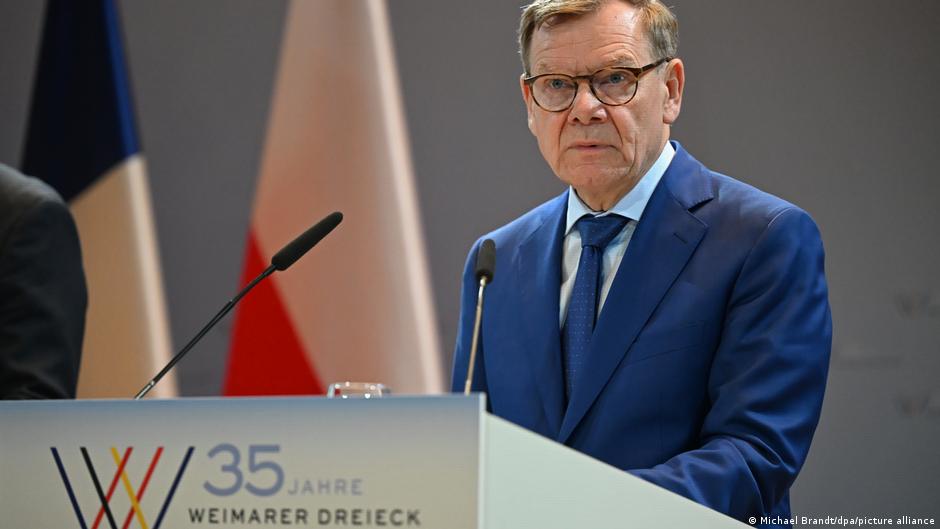
German Foreign Minister Johann Wadephul has urged Kyiv to pay closer attention to Germany’s interests as Berlin continues to provide major financial and military support to Ukraine, framing the issue in terms that directly concern public spending, procurement policy and the domestic defence industrial base.
In an interview with Bild published on Tuesday, Sept. 8, Wadephul criticised Ukrainian President Volodymyr Zelensky and said Germany’s defence industry should see a return from the scale of Berlin’s support. His comments add a sharper financial and industrial-policy dimension to Germany’s Ukraine assistance, which has included both direct aid commitments and contributions through NATO-linked mechanisms.
“At the moment, we are Ukraine’s strongest supporter in terms of financial and military assistance,” Wadephul said, adding that “naturally, the German defence industry must benefit from this.”
The foreign minister said he had raised the matter directly with Zelensky during a recent visit to Kyiv. According to Wadephul, his message was that Germany remains on Ukraine’s side, but that Berlin also has to justify the cost and structure of that support to German taxpayers.
“We are on your side, we support you. But I also have to explain this to German taxpayers, and at a minimum it is necessary that the German defence industry participates in all procurements,” Wadephul said, recounting his appeal to Zelensky.
Procurement Becomes Part of the Aid Debate
Wadephul’s remarks place procurement participation at the centre of the political and financial debate over Ukraine support. Rather than presenting military aid solely as a foreign-policy or security commitment, the minister linked it to industrial benefit and taxpayer accountability inside Germany.
For investors and companies following Europe’s defence sector, the statement is notable because it points to a potential expectation that German manufacturers should be included in procurement processes tied to Berlin’s support. The source article does not identify specific companies, contracts or procurement volumes, but the minister’s wording suggests that participation by German defence firms is becoming a condition or benchmark in the political argument for continued support.
That framing matters for defence-sector earnings visibility. If German suppliers are involved in more Ukraine-related procurements, the impact could appear over time through order books, production planning and revenue recognition. However, Wadephul did not announce individual contracts, nor did he provide figures beyond the aid amounts disclosed during his Kyiv visit. Any financial effect for companies would depend on procurement decisions that were not detailed in the interview.
The comments also underscore a balance-sheet question for the German government. Berlin’s Ukraine policy carries budget implications, and Wadephul explicitly tied his position to the need to explain support to taxpayers. In practical terms, that puts attention on how aid is structured, whether funds flow through German industry, and how the government communicates the economic rationale for continued commitments.
Additional Aid Announced in Kyiv
Wadephul visited Kyiv on Aug. 22. At a joint press conference with Ukrainian Foreign Minister Andrii Sybiha, he announced additional assistance for Ukraine worth 60 million euros. The source article did not break down that amount by programme, contractor or timeline, but the announcement forms part of the broader package of German support that Wadephul later referenced in his Bild interview.
Germany will also transfer a further 10 million euros to a NATO fund. According to the source, money from that fund is used in particular for supplies of energy resources, medical equipment and systems to protect against drones. Those categories indicate that the support is not limited to conventional weapons procurement, but also includes infrastructure, health-related and defensive technologies relevant to Ukraine’s wartime operating needs.
From a financial reporting perspective, the NATO fund contribution is a separate channel from the 60 million euros of additional assistance announced in Kyiv. The article does not state whether the 10 million euros is included in, or additional to, the wider aid figure, so the amounts should not be combined beyond the wording provided in the source.
Wadephul also announced further talks with partners from various countries on supplying Ukraine with additional air defence systems. No financial value, supplier list or delivery timetable was provided. The absence of those details limits any direct read-through for company-level revenue forecasts, but the political signal remains relevant: air defence remains a focus of future procurement discussions.
Investor Relations Angle for Defence Suppliers
The minister’s public emphasis on German industry participation may be watched closely by defence companies and their investors. Government-backed demand has been a central factor for the sector since Russia’s full-scale war against Ukraine, and comments from senior officials can shape expectations around future orders, procurement eligibility and capacity planning.
Still, Wadephul’s statement stops short of announcing a formal procurement rule. He said that, at a minimum, German defence industry should participate in all procurements connected to the support Germany provides. The wording presents a political demand rather than a disclosed contractual mechanism.
For financial officers and investor relations teams, that distinction is important. Participation in procurement processes does not automatically translate into awarded contracts, recognised revenue or margin expansion. Tender structures, delivery capacity, product fit, export controls and partner-country decisions would all influence the eventual financial impact. The source article provides no details on any of those factors.
What the interview does clarify is the policy rationale now being attached to German support: Berlin wants continued backing for Ukraine to be defensible to domestic taxpayers and beneficial to Germany’s defence production base. Wadephul’s criticism of Zelensky and his appeal for greater attention to Germany’s interests suggest that the politics of aid are increasingly being tied to industrial return.
That creates a more explicit linkage between foreign assistance and domestic economic benefit. For Ukraine, it signals that continued support from a leading backer may come with greater scrutiny over where procurement spending lands. For Germany, it reflects an effort to align fiscal commitments, military assistance and industrial policy at a time when aid packages remain politically and financially significant.