Moscow Region Drone Strike Raises Infrastructure and Operating Risk Questions
Regional officials reported two deaths, airport suspensions and damage to energy and logistics assets after a large drone attack near Moscow.
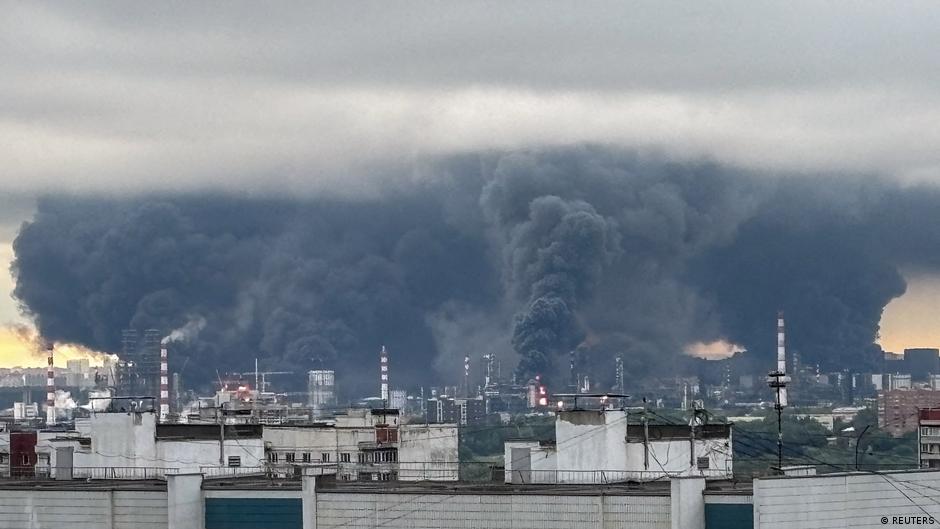
A large drone attack on Moscow and the surrounding region on Sunday, September 20, left two people dead and at least six injured, according to Moscow Region Governor Andrei Vorobyov, and highlighted renewed operational risks for energy, logistics and transport infrastructure in one of Russia's most economically significant areas.
Vorobyov wrote on Telegram on Sunday morning that 249 Ukrainian drones had been shot down over the Moscow region. Moscow Mayor Sergei Sobyanin separately reported that 186 drones had been intercepted on approach to the capital. The figures were presented by regional and city officials as part of a broader account of a mass unmanned aerial vehicle attack affecting residential buildings, warehouse facilities, airport operations and an oil refinery site.
The immediate human toll was the central fact of the incident. Vorobyov said two people were killed and at least six were injured in the Moscow region. He also said drones had struck or caused fires in three apartment buildings and one private house. The disruption comes as investors, insurers and companies with exposure to Russian transport, warehousing, fuel distribution and industrial assets continue to assess the financial consequences of attacks reaching deeper into critical infrastructure.
Energy and Logistics Assets Report Damage
One of the most financially relevant details was the reported damage to an asset on the territory of the Moscow oil refinery. Sobyanin said an object at the refinery site had been damaged and that there were no casualties. The anonymous Telegram channel VChK-OGPU claimed that the oil refinery in Moscow's Kapotnya district was on fire. The same refinery had already been attacked in June, according to the source text.
The Moscow refinery is an asset of clear operational significance because any damage to refining, storage or associated infrastructure can affect fuel supply chains, maintenance budgets, insurance assumptions and working capital needs for businesses dependent on petroleum products. The official statement cited damage but did not quantify the scale, give an assessment of production impact, or provide estimates for repair costs.
Officials reported damage at an object on the territory of the Moscow oil refinery, while saying there were no casualties at that site.
In Sofyino, Vorobyov said a warehouse complex caught fire after the attack. VChK-OGPU claimed that a logistics complex with an area of around 850,000 square meters was fully engulfed in flames. That figure, if accurate, would point to a major warehousing and distribution disruption, but the claim was not accompanied in the source material by a company name, tenant list, damage estimate or insurance position.
For companies operating in or serving the Moscow consumer market, a large warehouse fire can have balance-sheet and income-statement implications even when ownership is unclear. Potential exposures include inventory write-offs, delayed deliveries, higher replacement logistics costs, impairment of fixed assets, and possible claims under property, cargo or business interruption insurance. The source article did not provide financial metrics, valuation estimates or details of affected corporate entities.
Transport Disruption Adds to Cost Pressure
The attack also affected aviation operations. The Moscow airports Vnukovo, Domodedovo and Zhukovsky suspended work, according to the source article. Temporary airport shutdowns can create direct and indirect costs for carriers, airport operators, passengers, cargo companies and service providers. These may include aircraft rerouting, crew scheduling changes, delays in cargo handling, and additional fuel and ground-service expenses.
The article did not specify how long the suspensions lasted or whether financial losses were expected to be material. Still, the interruption is relevant for financial reporting because repeated closures can become a measurable operational risk for transport and logistics businesses. For listed issuers, bondholders and lenders, the frequency and duration of such disruptions matter when assessing earnings visibility, covenant headroom and risk disclosures.
Additional infrastructure claims came from VChK-OGPU, which asserted that drones attacked a thermal power plant in Lyubertsy and that a drone hit a residential building in Kotelniki. The Telegram channel Ostorozhno, Novosti, citing local residents, reported a fire in a residential complex in Kotelniki. In Istra, municipal head Tatyana Vitusheva said fragments of a drone damaged an apartment in a residential building.
Residential damage does not usually translate directly into the type of market-moving disclosure associated with listed companies, but it can still drive public-sector expenditures, emergency response costs and insurance claims. When combined with reported fires at industrial and logistics sites, the incident illustrates the widening range of assets that may require higher security spending, more frequent repairs and contingency planning.
Investor Relations Questions Remain Unanswered
From a financial reporting perspective, the most important missing information concerns ownership, insured values, repair timelines and operating continuity at the affected assets. The official statements in the source article established casualties, drone interception figures and the existence of fires or damage, but they did not provide a balance-sheet view of the losses.
Investors and creditors would likely focus on several questions: whether the refinery damage affected production or only auxiliary infrastructure; whether the warehouse fire destroyed inventories or mainly building structures; whether airport suspensions produced measurable revenue loss; and whether affected companies will disclose exceptional costs, asset impairments or insurance recoveries in future reporting periods.
The reported scale of the attack also raises broader questions for companies with Russian exposure about risk premiums and the cost of capital. Even without immediate quantified losses, repeated incidents can influence insurance pricing, logistics contracts, inventories held as buffers, supplier diversification and capital expenditure for asset protection. These are financial effects that may appear gradually rather than as a single reported charge.
For now, the article's confirmed official claims are limited to the deaths, injuries, drone interception counts, fires in residential buildings and a private home, warehouse fire in Sofyino, damage at the Moscow refinery site, and temporary suspensions at three Moscow airports. Additional claims about the refinery fire, the scale of the warehouse blaze, attacks on a thermal power plant and a residential-building hit came from Telegram channels cited in the source text.
The financial impact therefore remains unquantified. What is clear is that the incident adds another data point for analysts tracking infrastructure vulnerability around Moscow, particularly in sectors where physical disruption can quickly become a reporting issue: fuel, logistics, aviation, real estate and utilities.