Russian Drone Attacks Hit Ukraine’s Odesa and Zaporizhzhia Regions
The overnight strikes killed at least three civilians in Zaporizhzhia and targeted port and civilian infrastructure in Odesa region.
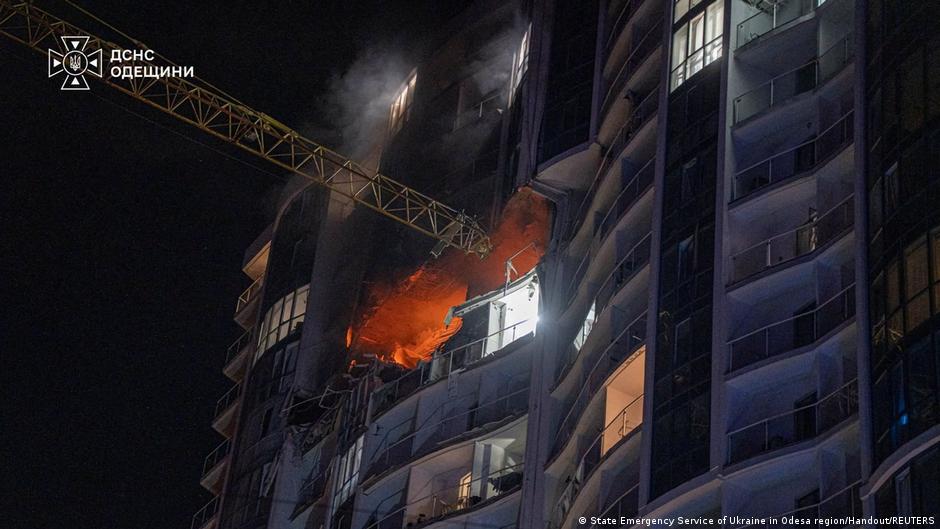
Russian attack drones struck Ukraine’s Odesa and Zaporizhzhia regions overnight on September 27, killing at least three people and injuring four others in Zaporizhzhia region, according to preliminary information from local authorities.
The attacks add another operational shock to areas of Ukraine where civilian settlements and transport-linked infrastructure remain exposed to repeated wartime disruption. From a financial reporting perspective, the strikes underscore the continued risk to regional infrastructure, local balance sheets, emergency spending, insurance exposure, and the broader cost of maintaining public services under wartime conditions.
Acting head of the Zaporizhzhia military administration Mykhailo Semykin said Russian forces used strike drones against the settlement of Kamyshevakha and the village of Novotavriiske. According to preliminary data cited by the authorities, three civilians were killed and four others were wounded.
Russian forces struck Kamyshevakha and Novotavriiske, with preliminary reports indicating three civilian deaths and four injuries.
In Novotavriiske, Russian troops attacked a car that was traveling through the village, Semykin said. After the strike, the vehicle caught fire. A man and a woman died at the scene, according to the account provided by regional officials.
In Kamyshevakha, one house was destroyed and several neighboring homes were damaged, authorities added. No monetary estimate of the damage was provided in the initial reports, and officials did not publish a detailed assessment of repair costs, compensation needs, or insured losses.
Port and Civilian Infrastructure Targeted in Odesa Region
Russia also carried out strikes on port and civilian infrastructure in the city of Kiliia in Odesa region, the Izmail district administration reported. Preliminary information indicated that no one was injured in that attack.
A fire broke out at the site of the strike but was extinguished by emergency services, according to the district administration. Authorities did not provide figures on the scale of property damage, the extent of any operational interruption, or the potential effect on local logistics assets.
The reported targeting of port and civilian infrastructure is significant for investors, lenders, insurers, and public finance observers because Odesa region is tied to Ukraine’s transport and export capacity. Even where casualties are avoided, damage to port-adjacent assets can create direct repair costs and indirect costs through delays, rerouting, emergency response, and heightened security requirements.
The latest attack therefore has both humanitarian and economic implications. In Zaporizhzhia region, the immediate cost is measured first in civilian deaths, injuries, and destroyed homes. For local authorities, however, the financial burden also includes emergency response, debris removal, temporary support for affected residents, and eventual reconstruction planning.
For Ukraine’s public sector, repeated strikes on residential and infrastructure assets create a recurring liability that is difficult to quantify in real time. Local administrations often release casualty and damage information before full engineering surveys or budgetary assessments are completed. In this case, the information remained preliminary, and no official financial estimate accompanied the reports.
Financial Disclosure Remains Limited
No balance-sheet impact, insurance figure, reconstruction allocation, or formal loss estimate was disclosed in the initial statements from the Zaporizhzhia military administration or the Izmail district administration. That leaves investors and analysts without the type of quantified data typically needed to assess the fiscal effect on municipal budgets, state-owned infrastructure operators, or private property owners.
The absence of financial metrics does not mean the impact is immaterial. Wartime reporting often begins with casualty counts, damaged assets, and emergency response updates, while detailed financial information follows later, if at all. For financial observers, the key point is that Russia’s continued use of strike drones against civilian and infrastructure targets maintains uncertainty around Ukraine’s regional capital needs and operating resilience.
In Zaporizhzhia region, the confirmed damage included a destroyed house, several damaged neighboring homes, and a burned vehicle following the attack in Novotavriiske. In Odesa region, the reported damage centered on port and civilian infrastructure in Kiliia, with a fire extinguished by emergency personnel. Authorities said there were no casualties in the Odesa region strike based on preliminary information.
The latest overnight attacks illustrate the challenge of evaluating wartime financial exposure when the available disclosures are primarily operational and humanitarian. The facts released by local officials identify the affected locations, the casualty figures, and the categories of damaged assets, but they do not yet establish the full cost of repair, the duration of any disruption, or the funding mechanisms that may be used to address the damage.
For financial reporting audiences, the incident is another reminder that Ukraine’s regional infrastructure and civilian property base remain subject to sudden impairment. Until authorities publish fuller damage assessments, the financial consequences of the September 27 strikes will remain unquantified, even as the human toll in Zaporizhzhia is already clear.