Russian-Flag Vessel Register Expands 36% as Sanctions Pressure Rises
A CREA analysis says sanctioned tankers are shifting into Russia’s registry as open registries tighten controls on shadow-fleet activity.
Russia’s vessel register expanded by 36% between January 2025 and June 2026 as mounting diplomatic pressure narrowed options for ships linked to the country’s so-called shadow fleet, according to an analysis by the Centre for Research on Energy and Clean Air, or CREA, published on Friday, September 25.
The increase reflects a shift with direct implications for sanctions enforcement, insurance exposure, maritime risk and the financial flows tied to Russian energy exports. CREA said 107 vessels were added to the Russian-flag register over the period, with the sharpest monthly rise recorded in December 2025, when 25 new entries were added.
The trend comes as open registries have become less willing to allow sanctioned cargo to be moved on shadow-fleet vessels. That has pushed shipowners and operators toward a narrower set of choices: continue operating under false or unstable flags and risk detention, or move vessels into the Russian register, where the flag itself becomes part of the sanctions-avoidance infrastructure.
Registry Shift Follows Tighter Controls
CREA said Barbados and Palau had fully cleared their registries of sanctioned vessels. Panama, one of the world’s most important ship registries, reduced the number of such vessels by almost two-thirds from its May 2025 peak. The world’s largest ship registries also launched a shared database, known as RISC, intended to counter flag-hopping and other forms of sanctions evasion.
Those steps appear to have reduced the availability of traditional flagging options for ships carrying Russian cargo subject to restrictions. By June 2026, 46 vessels that had previously sailed under the flags of the Comoros or Gambia had been registered in Russia, according to CREA. Other vessels moved to the flags of Sierra Leone and Equatorial Guinea, while some continued operating without a recognized flag.
The compliance signal is significant for companies exposed to maritime trade, commodity finance, marine insurance and logistics. Registry status affects due diligence, counterparties’ risk assessments and the willingness of banks, insurers and ports to process transactions connected with a ship or cargo. A movement of sanctioned vessels into the Russian flag may simplify oversight for enforcement agencies, but it also concentrates risk in a registry that CREA describes as offering little practical accountability.
Of the 107 vessels added to the Russian register, 93 had already been sanctioned, while 90 were subject to restrictions by more than one jurisdiction. CREA also found that vessels carrying Russian oil before the first sanctions were imposed changed flag three times more often than they had previously. Sixteen of those vessels also transported Iranian or Venezuelan oil.
Energy Revenue Remains the Core Financial Question
For investors and policymakers, the central issue is not only where the vessels are registered, but whether the change in registry allows Russian energy revenues to continue flowing. CREA said that after moving under the Russian flag, vessels continued carrying Russian fuel around the world. Oil worth 5.2 billion euros was delivered primarily to China, according to the analysis.
The report also points to the continued use of ship-to-ship transfer schemes in Egypt and the Red Sea. Such practices can complicate tracking, blur cargo origin and increase operational risk, particularly when vessels have limited access to mainstream insurance, classification and emergency response services.
The financial-reporting angle is increasingly material. Sanctions have turned maritime logistics into a balance-sheet and disclosure issue for companies across the energy supply chain. Banks financing commodity trades, insurers underwriting maritime risks, traders booking cargoes and port operators handling vessel calls may all face elevated compliance costs and reputational exposure when sanctioned or reflagged vessels are involved.
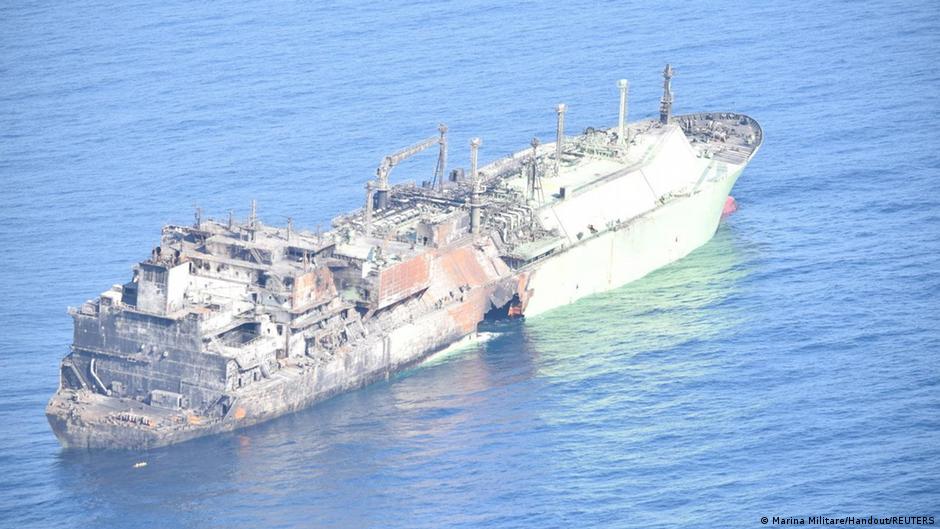
The March fire aboard the Russian-flagged liquefied natural gas carrier Arctic Metagaz in the Mediterranean underscored the operational risk. Libya, Malta and Italy were left to handle the crisis independently, according to the source article. The vessel is one of about ten gas carriers used to transport sanctioned LNG from Russia’s Arctic LNG 2 terminal to the port of Beihai on China’s southern coast.
“The Arctic Metagaz incident showed the Russian flag for what it really is: a shield for dangerous vessels, providing no support in the event of a catastrophe and leaving coastal states to manage the risks and clean up the consequences,” analyst Luke Wickenden said.
In February 2026, Arctic Metagaz left the port of Murmansk after loading and was likely headed toward the Egyptian port of Suez, gCaptain reported, according to the source article. The ship has been under U.S. and U.K. sanctions since 2024.
The broader pattern described by CREA suggests that Russia’s registry is absorbing assets that other flag states are increasingly unwilling to host. For the energy market, that means sanctions pressure has not necessarily stopped trade flows, but has altered their structure, increasing reliance on higher-risk vessels, less transparent routing and jurisdictions with weaker enforcement or limited crisis-management capacity.
For financial institutions and investors, the data points to a growing need to monitor maritime registry changes as part of sanctions screening and counterparty risk review. A flag change, especially into the Russian register, may now serve as a key indicator of sanctions exposure, potential cargo-risk opacity and future liabilities tied to environmental, safety or enforcement events.