Russian Strikes Hit Sumy Mall Area and Mykolaiv Port Infrastructure
Regional officials reported fatalities, injuries and damage to civilian, warehouse, postal and port assets after Russian attacks on September 9.
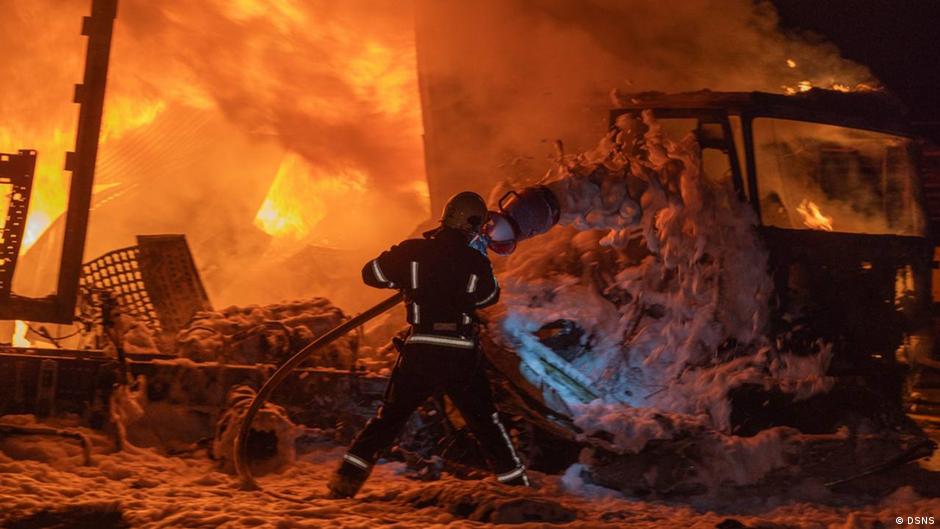
Russian forces struck civilian and commercial areas in the Ukrainian cities of Sumy and Mykolaiv on Wednesday, September 9, causing multiple deaths and injuries while also damaging infrastructure with economic relevance, including port facilities, warehouses and a postal office.
In Sumy, a Russian strike hit a parking area near the Manufaktura shopping center on Wednesday evening. Oleg Grigorov, head of the Sumy regional military administration, said two young people were confirmed dead: a 21-year-old man and a 21-year-old woman. Preliminary information indicated that around 20 other people were injured.
The casualty figures included several people in serious condition. Two men and one woman were reported to be in grave condition, while another Sumy resident was described as being in extremely grave condition. Officials also said teenagers were among those injured in the strike.
Regional authorities said the threat of repeat attacks in Sumy region remained in place after the strike near the shopping center.
Rescue workers and municipal services operated at the site after the attack. The Sumy regional administration said emergency response efforts were underway while the wider region remained exposed to the risk of additional strikes.
Port and Civilian Assets Damaged in Mykolaiv
Russian forces also continued attacks on Mykolaiv, a southern Ukrainian city with important port infrastructure. According to Georgiy Reshetilov, head of the Mykolaiv regional military administration, attacks throughout the day on September 9 damaged port infrastructure, killed two people and injured at least 12 others.
Among the injured in Mykolaiv was a one-year-old child. The reported damage adds to the direct human cost of the attacks and underscores the recurring exposure of civilian and commercial infrastructure in regions that are relevant to logistics, trade and local economic activity.
Ukraine's State Emergency Service said part of the Russian strikes hit warehouse premises where vegetables were being stored, as well as a postal office. Those details are significant from a financial reporting perspective because the affected assets are tied to supply chains, distribution and basic commercial services rather than military facilities.
The destruction or disruption of warehousing capacity can affect local food storage, inventory handling and delivery schedules. Damage to postal infrastructure can also impair payments-related correspondence, business shipments, household deliveries and administrative communication. The source article did not provide a monetary estimate of the damage, and no balance sheet impact was reported.
The Mykolaiv region had already been subjected to a major Russian attack during the night of September 9. Authorities said drones and ballistic missiles damaged port and civilian infrastructure, as well as residential buildings. At that time, officials reported one woman killed and four people injured.
Financial Reporting Context
The attacks described by Ukrainian regional officials point to recurring risks for assets that would normally be tracked in municipal budgets, corporate insurance files, port operating reports and logistics-sector disclosures. The source information does not identify individual companies, insurers, port operators or specific public-sector balance sheet entries affected by the strikes.
However, the reported damage categories are financially material in the broader sense. Port infrastructure can support cargo movement, storage, handling and regional commercial activity. Warehouses containing vegetables represent inventory and storage assets. A postal office is part of service infrastructure used by residents and businesses. Residential buildings and shopping-center-adjacent property also carry potential repair, compensation and emergency expenditure implications.
For investors and creditors monitoring Ukraine-related exposure, the attacks illustrate the continued operational risk surrounding civilian and commercial assets in regions targeted by Russian forces. The immediate disclosures available from regional officials focused on casualties, infrastructure damage and emergency response rather than financial metrics, claims reserves, asset impairments or quarterly reporting consequences.
Any financial assessment would therefore require later statements from local administrations, infrastructure operators, logistics providers, retailers, insurers or state agencies. As of the source report, authorities had provided casualty figures and descriptions of affected sites but had not disclosed repair costs, revenue disruption, insurance recoveries or compensation mechanisms.
The Sumy strike occurred at a parking area near a shopping center, while the Mykolaiv attacks affected port infrastructure, warehouses used to store vegetables, a postal office, civilian infrastructure and residential buildings. Together, the incidents show that the latest reported Russian attacks created both immediate humanitarian losses and additional pressure on physical assets used by households, businesses and public services.