Serbia Hosts First Joint Military Exercises with NATO Amid Strategic Partnership Framework
Around 600 troops from Serbia and NATO countries engage in the inaugural 'NATO-Serbia' drills under the Partnership for Peace program.
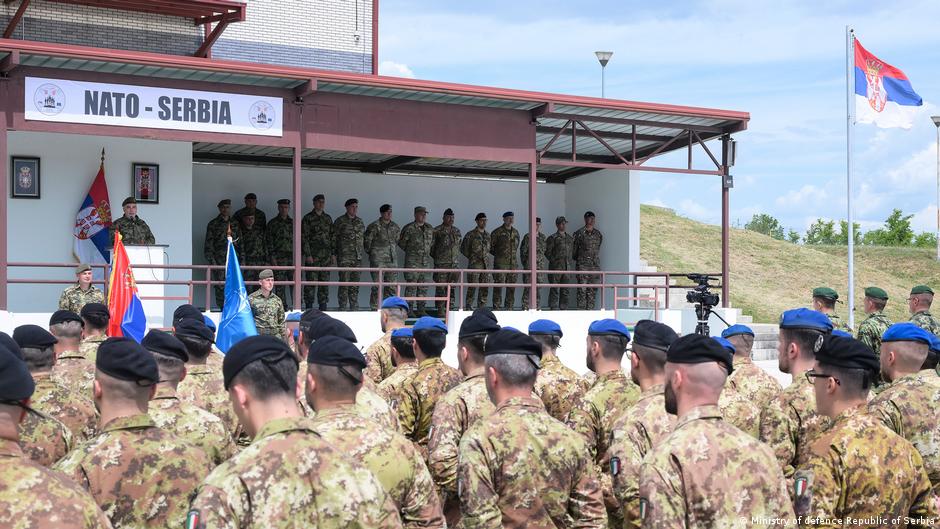
Serbia is conducting its first-ever joint military exercises with NATO forces, marking a significant milestone in its long-standing partnership within the NATO 'Partnership for Peace' framework. The drills, named "NATO-Serbia," involve approximately 600 military personnel from Serbia, Italy, Romania, Turkey, and observers from other NATO member states including Germany. They are scheduled to continue until May 23.
Strategic Financial and Political Implications of the Joint Exercises
The exercises are orchestrated by the Serbian Land Forces Command in collaboration with the NATO Allied Joint Force Command Naples, based in Italy. Conducted at the Borovac training ground near the central Serbian city of Bujanovac, these maneuvers represent a notable evolution in Serbia's defense relations with NATO, despite its declared policy of military neutrality.
From a financial perspective, the joint exercises may influence Serbia’s defense budget allocations and military procurement strategies. Collaborating closely with NATO could lead to increased expenditures on interoperable equipment and training while potentially attracting foreign military investments and aid. This cooperation also positions Serbia to better leverage international partnerships, which can impact investor confidence in the country’s political stability and defense sector modernization.
"These are important exercises. Serbia is the host country, and the drills are conducted fully respecting Serbia’s policy of military neutrality," a NATO representative stated, underscoring the delicacy of balancing military cooperation with neutrality commitments.
Historically, Serbia has remained outside the North Atlantic Treaty Organization, contrasting with many Balkan neighbors. Nonetheless, Serbia has participated in the Partnership for Peace program for nearly two decades, regularly engaging in NATO-led exercises. This partnership signifies a strategic compromise, allowing military collaboration without formal alliance membership.
The timing of these joint exercises also occurs against the backdrop of sensitive geopolitical dynamics. Since the 1999 NATO intervention during the Kosovo conflict, relations between Serbia and NATO have been complex, complicated further by Serbia’s ongoing non-recognition of Kosovo’s independence and the presence of NATO-led peacekeeping forces in Kosovo (KFOR).
Investors and analysts monitoring Serbia’s defense spending and geopolitical posture will note that enhancing interoperability with NATO forces could signal a gradual alignment with Western military standards and frameworks. Such developments may inform credit ratings, foreign direct investment flows, and bilateral defense procurement contracts, all critical metrics for evaluating Serbia’s financial and political trajectory.
In summary, these inaugural joint exercises represent a calculated step in Serbia’s defense policy and international relations, with potential ripple effects on fiscal planning, international partnerships, and regional security dynamics. The financial implications tied to military modernization and cooperation with NATO are poised to influence investor sentiment and Serbia’s broader economic outlook.