Spain Transport Minister Resigns After Toledo Rail Disaster
Óscar Puente stepped down as Spain approved €30 million in aid and new rail safety measures following the crash that killed 69 people.
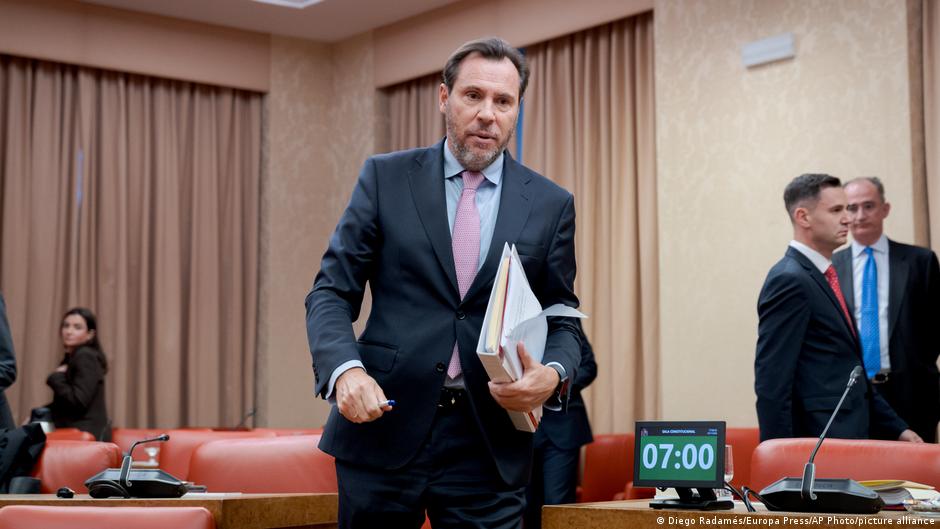
Spain’s Transport Minister Óscar Puente has resigned and withdrawn from the country’s snap parliamentary elections following the railway disaster near Toledo that killed 69 people, creating a significant change in political oversight of the national transport system.
Puente announced his decision on the evening of Tuesday, Nov. 3, while appearing before a parliamentary commission in Madrid, almost a week after the crash. His departure came after opposition parties had unanimously demanded that he leave office.
“A minister cannot remain in office after two disasters of this magnitude in less than one year. It is a matter of political dignity, responsibility and political sensitivity,” Puente said.
The resignation was unexpected because Puente and Spanish Prime Minister Pedro Sánchez had repeatedly ruled out such a step. Puente’s decision also removes him from the forthcoming early parliamentary election, adding a political dimension to the operational and financial consequences of the accident.
Government Approves €30 Million Aid Package
Several hours before Puente’s announcement, the Spanish government approved measures intended to improve railway safety. At its weekly cabinet meeting, the government also authorized a €30 million assistance package for people injured in the disaster and for the families of those killed.
The package represents the first disclosed direct fiscal response to the Toledo crash. The government did not provide a breakdown of how the €30 million would be distributed, nor did it disclose the expected cost of the newly approved safety measures. The decisions nevertheless place the financial consequences of the accident alongside the intensifying scrutiny of railway management, infrastructure safeguards and ministerial accountability.
For investors and other financial stakeholders following Spain’s transport sector, the next material questions will concern the implementation and funding of the safety program, as well as whether the investigation produces further financial or operational implications. No additional compensation totals, infrastructure spending commitments or balance-sheet effects for the rail operators were disclosed in the announcement.
Collision on Madrid-Seville High-Speed Line
The accident occurred at 8:53 a.m. on Oct. 28 near the village of Urda in Toledo province, on the Madrid-Seville high-speed railway. An AVE 2080 passenger train struck the final carriage of Iryo 6076, which was stationary on the tracks.
The collision killed 69 people and injured more than 50. It was one of seven railway accidents in Spain since the beginning of 2026 in which passengers were hurt, underscoring the scale of the safety challenge now facing the government and the country’s rail system.
Another major accident took place on Jan. 18 near the village of Adamuz on the Madrid-Málaga high-speed line and involved two trains. That crash killed 46 people and left another 150 with injuries of varying severity.
Puente explicitly linked his resignation to the occurrence of two disasters of such magnitude within less than a year. His statement framed the decision as an issue of political responsibility, while the cabinet’s aid package and safety measures highlighted the immediate public-finance and operational response.
Investigation Focuses on Protection System
The two crashes are being examined under different potential causal scenarios. In the Adamuz disaster, damage to the railway tracks is considered one possible cause. The investigation into the Urda collision is focused on a failure of the automatic train protection system and possible errors in instructions issued by the dispatch center.
Those findings will be central to determining whether the Toledo accident primarily reflected a technology failure, an operational breakdown or a combination of factors. The outcome could also shape the scope of any subsequent safety investment, although authorities have not yet published financial estimates for potential system upgrades or other remedial work.
Puente’s departure transfers responsibility for the transport portfolio at a sensitive moment, with the government required to implement the newly approved safety measures while investigations continue. The political transition will also be closely watched for its effect on the timing of railway decisions and communication with passengers, operators and other stakeholders.
The immediate disclosed financial commitment remains the €30 million aid package for victims and bereaved families. Beyond that allocation, the full economic impact of the Toledo disaster—including the cost of safety changes and any wider consequences for Spain’s high-speed rail network—has not been quantified.