White House to Review Oleshky Truce and Humanitarian Mission
Melania Trump will meet Russian and Ukrainian representatives as attention turns to the mission’s results and accountability.
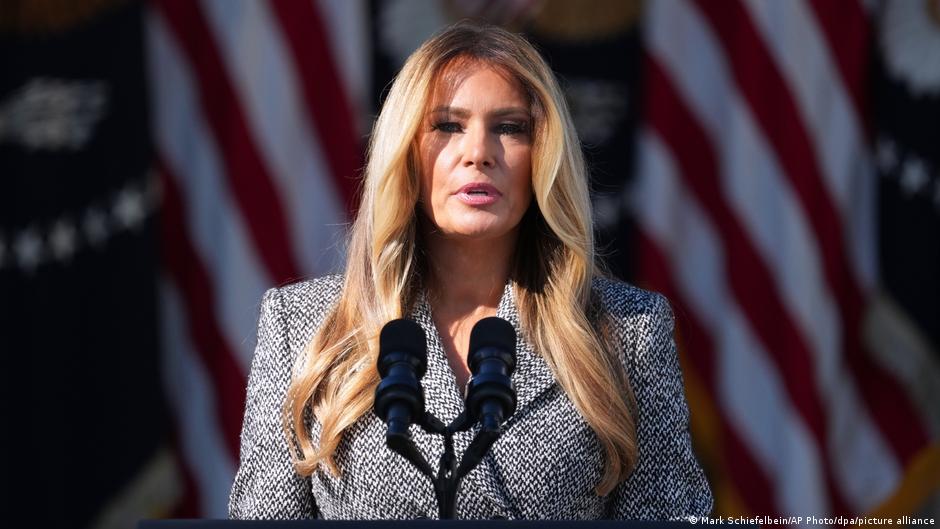
US first lady Melania Trump is expected to discuss the ceasefire in Russian-occupied Oleshky with representatives of Ukraine and Russia at the White House, bringing renewed attention to the humanitarian mission’s reported results and the limited public detail available about its resources and execution.
The planned talks concern the temporary cessation of hostilities in Oleshky, known in Russian as Alyoshki, and surrounding areas of Ukraine’s Kherson region. According to an announcement published on the official White House website on Tuesday, November 3, Trump will also deliver a formal statement on the outcome of the humanitarian mission in the city.
Her statement is scheduled for Thursday, November 5, at 11 a.m. Eastern time. The announcement did not clarify whether the meeting with representatives from Kyiv and Moscow would take place on the same day.
Mission Results Set for Public Review
For institutions and observers assessing humanitarian operations through a financial-reporting lens, the forthcoming statement could serve as an important disclosure event. The source report did not provide a budget for the mission, identify its funding sources or quantify the value of the humanitarian supplies delivered to Oleshky. It also did not disclose transportation costs, implementing organizations or other operational metrics normally used to evaluate the efficiency of a relief program.
The information released so far focuses instead on the mission’s direct humanitarian output. Hundreds of civilians were evacuated from the city during the operation, while humanitarian cargo was delivered into Oleshky. No more precise evacuation total was given, and no breakdown was provided for the type, volume or value of the supplies.
Those omissions do not diminish the reported humanitarian outcome, but they limit any assessment of cost efficiency, resource allocation or financial accountability. Trump’s scheduled remarks may provide additional operational context, although the White House announcement cited in the report did not indicate that financial figures would be released.
The operation reportedly evacuated hundreds of civilians from Oleshky and delivered humanitarian supplies to the city.
Delegations Expected in Washington
RBC-Ukraine reported that the Ukrainian delegation traveling to the White House would include David Arakhamia, head of the Servant of the People parliamentary faction, and Dmytro Lubinets, the Ukrainian parliament’s commissioner for human rights.
Russia is expected to be represented by Kirill Dmitriev, a special representative of Russian President Vladimir Putin, and ombudsperson Yana Lantratova, according to the same report. Their participation places political and human-rights officials at the center of the review, rather than finance ministry officials or representatives of international funding institutions.
The composition of the delegations suggests that the immediate agenda will focus on the ceasefire, civilian protection and humanitarian access. Even so, any future continuation or expansion of the mission would carry financial and logistical implications, including the need to document assistance, coordinate deliveries and measure results. No new funding commitments or financial arrangements were reported.
Temporary Ceasefire Enabled Operation
The ceasefire in Oleshky and nearby districts began early on October 27 and ended at 10:59 p.m. on November 1. It resulted from agreements reached by the parties with the participation of Melania Trump. Moscow and Kyiv have described the first lady as a key mediator in arranging the cessation of hostilities.
The limited duration of the truce created a defined operational window for evacuations and aid deliveries. From a reporting perspective, that timeframe offers a clear basis for measuring the mission’s activity, although the currently available disclosure does not include daily evacuation figures, delivery schedules or comparisons between planned and completed work.
The White House event will therefore be closely watched for evidence of how the mission’s success is being measured. The central confirmed indicators remain the evacuation of hundreds of civilians and the delivery of humanitarian cargo during the ceasefire period. There has been no public indication in the source material of an audited report, a mission balance sheet or a detailed account of expenditures.
Further disclosure could help officials, donors and the public distinguish between the diplomatic achievement of securing temporary access and the operational performance of the humanitarian effort itself. For now, the planned Washington discussions represent a review of the truce and its humanitarian results, with financial metrics still absent from the public account.