Trump Says U.S. Will Remove Tariff on Irish Whiskey Imports
The announcement signals a potential shift for spirits exporters as Irish producers await full implementation of the tariff rollback.
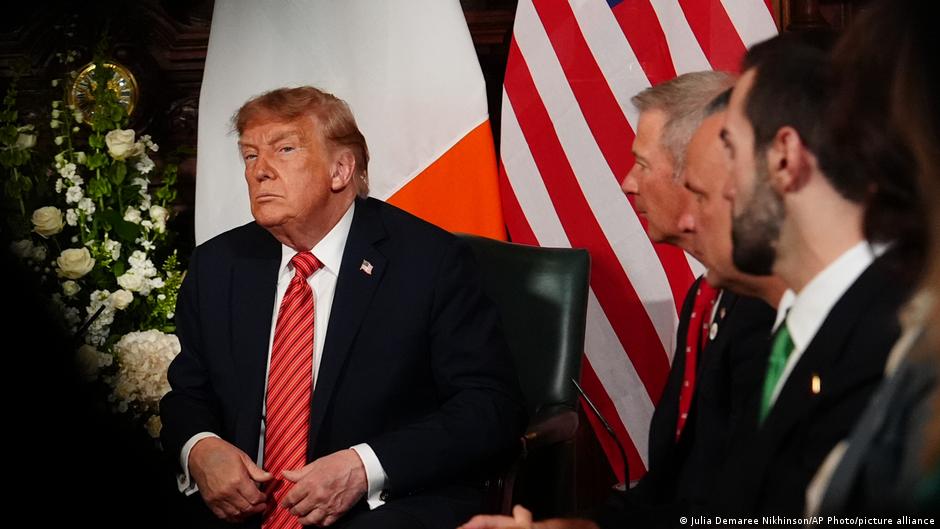
U.S. President Donald Trump said the United States will remove a 10 percent tariff on Irish whiskey, a move that could ease pressure on one of Ireland’s most visible consumer export categories and reshape the near-term outlook for producers selling into the American market.
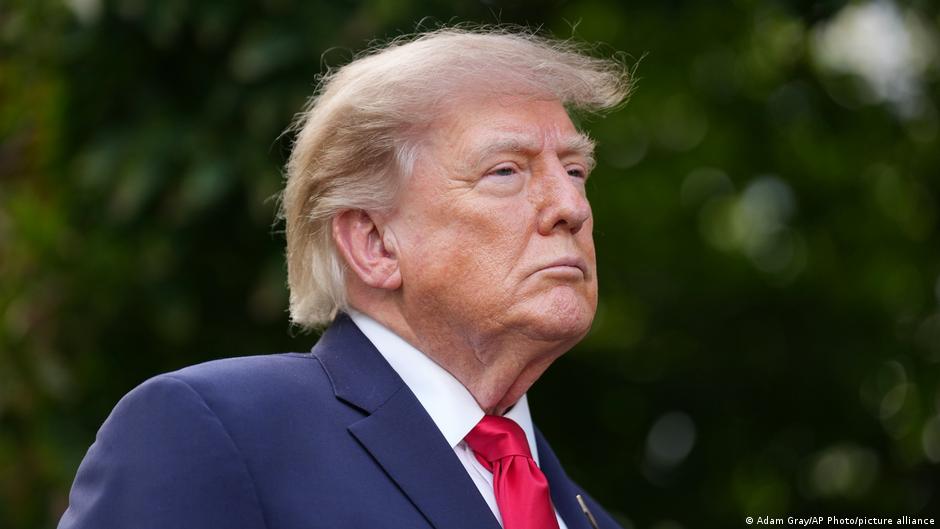
Trump made the announcement on Sunday, September 13, as he concluded a visit to Ireland. Speaking before a cheering crowd of Irish golf enthusiasts at a tournament held at a golf club owned by his family, he said he had responded to multiple requests to cancel the duty on Irish whiskey imports into the United States.
The tariff currently applies as part of broader U.S. duties on wine and spirits exports from the European Union. Its removal, if fully implemented, would be watched closely by distillers, distributors, retailers and investors with exposure to premium spirits, where even modest trade costs can affect margins, pricing strategy and shipment planning.
Trade Relief for a High-Profile Export
According to Trump, those who urged him to remove the tariff included Irish Prime Minister Micheál Martin and leading Irish golfer Shane Lowry. The president presented the decision as a response to repeated appeals during a visit that blended political diplomacy, trade messaging and public appearances at a family-owned venue.
For Irish whiskey producers, the United States is a strategically important market because the category is tied closely to brand positioning, international distribution and premium consumer demand. While the source report did not provide export volumes, revenue figures or company-level exposure, the decision points to a potentially favorable change in the cost base for companies shipping Irish whiskey to the United States.
Tariffs can work through financial statements in several ways. Import duties may be absorbed by producers or distributors, compressing gross margins, or passed on to wholesalers, retailers and consumers, with possible effects on demand. They may also complicate inventory decisions, contract negotiations and investor guidance where companies rely on stable cross-border trade conditions.
“Nothing characterizes U.S.-Ireland trade relations better than Irish whiskey,” Irish Whiskey Association director Eoin O’Cathain said in a statement.
The Irish Whiskey Association welcomed Trump’s announcement and said it hoped the decision would be fully implemented, according to Reuters. That caveat matters for market participants: an announcement can improve sentiment, but earnings forecasts and balance-sheet assumptions typically depend on the timing, legal form and operational execution of any tariff change.
Investor Focus Turns to Implementation
From a financial reporting perspective, the central question is not only whether the tariff is removed, but when companies can reflect the change in budgets, pricing models and forward-looking commentary. Producers and brand owners may need to assess whether lower import costs support improved margins, increased promotional investment, more competitive pricing or a combination of those choices.
Distributors and retailers could also be affected. If the duty is eliminated at the import stage, the benefit may move unevenly across the supply chain depending on contracts, inventory already held in the United States and the bargaining power of brand owners. Companies may also face a timing mismatch if products were imported under the tariff before any policy change takes effect.
The announcement comes against the backdrop of U.S. duties covering wine and spirits exports from across the European Union, not just Ireland. That broader structure means the Irish whiskey decision could be interpreted as a targeted adjustment within a wider trade regime. The source article did not report whether equivalent relief would apply to other EU spirits or wines.
For investor relations teams, the development may create questions during earnings calls and quarterly updates. Analysts are likely to ask whether companies expect a direct profit benefit, whether any savings will be passed to consumers, and how quickly shipment volumes could respond if the U.S. market becomes less costly to serve.
The sector’s response will also depend on certainty. The Irish Whiskey Association’s statement welcoming the announcement while expressing hope for full implementation underlines that the industry is waiting for the policy change to move from public commitment to practical effect. Until then, companies may be cautious about revising forecasts or changing official financial guidance.
Trump’s remarks nevertheless provide a clear signal to Irish whiskey producers that trade conditions in the U.S. market may improve. If the 10 percent duty is removed as stated, the change would reduce a direct cost attached to Irish whiskey imports and could support stronger commercial flexibility for exporters operating between Ireland and the United States.
For now, the financial significance lies in the gap between announcement and execution. The market impact will become clearer once authorities specify the mechanics of the tariff removal, including timing and scope. Irish producers, their U.S. partners and investors will be watching for those details before translating the decision into earnings expectations.