Trump Threatens EU Trade Curbs Over Proposed Canada Partnership
The U.S. president warned that expanded EU-Canada ties could trigger higher tariffs or a halt to trade with Europe.
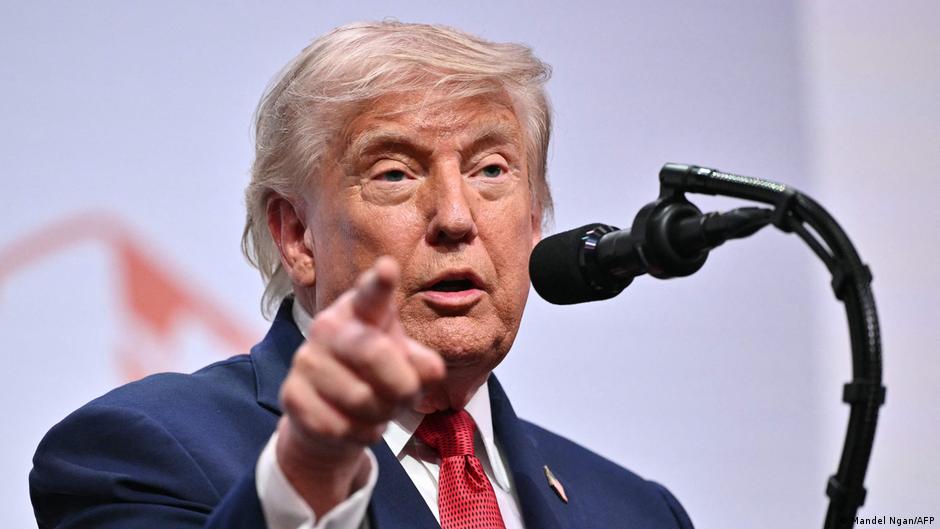
U.S. President Donald Trump has threatened to cut off trade with the European Union if the bloc moves ahead with a deeper partnership with Canada, injecting fresh uncertainty into transatlantic commerce and corporate planning at a time when tariffs are already weighing on cross-border supply chains.
Speaking on Wednesday, September 16, at a campaign event in North Carolina, Trump responded to questions about European Commission President Ursula von der Leyen’s proposal to make Canada the EU’s “first associate member.” The U.S. president called the idea “ridiculous” and said he would respond with punitive trade measures if he concluded the initiative was hostile to the United States.
“If they do that and I consider it in the slightest degree an unfriendly act, I will impose very high tariffs or stop trade with Europe,” Trump said.
For investors and corporate finance teams, the comments add another layer of policy risk to revenue forecasts, procurement strategies and margin assumptions for companies with exposure to U.S.-EU and U.S.-Canada trade. The warning also comes amid an escalating tariff dispute between Washington and Ottawa, with several recent measures already affecting goods ranging from cheese and steel to furniture and lighting.
Tariff Risk Returns to the Center of Financial Planning
Trump framed his potential response to the EU-Canada proposal around intent. He said that if the arrangement was made in good faith, “everything is fine,” but if the intentions were “bad,” Europe could face “very high tariffs,” describing that as one possible course of action.
The financial implications of such a move would depend on the scope of any tariffs or trade restrictions. The source article does not provide figures for U.S.-EU trade exposure or estimate the cost to companies. However, the president’s language signals the possibility of broad measures rather than narrow product-specific duties, which would be closely watched by manufacturers, retailers, exporters and investors assessing quarterly earnings risk.
The remarks also matter for investor relations teams because they may increase the likelihood of tariff-related questions during earnings calls. Companies with European supply chains, Canadian inputs or North American sales exposure could face renewed pressure to explain pricing power, inventory buffers, cost pass-through and contingency planning.
Von der Leyen presented the Canada proposal on September 16 in the European Parliament, in the presence of Canadian Prime Minister Mark Carney. She said the EU wants to raise relations with Canada to “the highest possible level” and said she wanted to work with Carney so that Canada could become the first associate member of the EU.
The European Commission president did not provide details on what such a partnership would include. She did, however, mention cooperation in technology and the defense industry. Von der Leyen also emphasized that joint work between Canada and the EU would “not be directed against others,” but would instead aim to make both sides stronger.
Canada Measures Add to Corporate Cost Pressure
The U.S. warning to Europe comes as Washington is already tightening trade measures against Canada. The White House said Trump signed a memorandum on September 16 banning Canadian goods from participation in federal government procurement. According to the release cited in the source article, Washington is taking the measures in response to Canada, which it says “unreasonably introduced new barriers” for U.S. companies seeking access to the public procurement market.
That procurement ban may affect companies that depend on public-sector contracts or sell into government supply chains. The source article does not identify individual companies or contract values, but the policy creates another compliance and revenue-planning variable for businesses operating between the U.S. and Canada.
Separately, from September 15, the Trump administration introduced additional 50% tariffs on Canadian cheese, steel, aluminum, paper, furniture, lighting fixtures and other goods. Administration representatives said the move was a direct response to new tariffs imposed by Ottawa.
Canada’s tariffs on U.S. exports worth about $20 billion also took effect on September 15. Those measures were themselves a response to U.S. tariffs that entered into force on August 22, applying a 50% rate to Canadian goods worth $20 billion.
The escalation shows how trade measures can quickly become reciprocal and financially material for companies on both sides of the border. A 50% tariff can alter landed costs, pricing strategies, contract economics and working capital needs, especially for firms with limited ability to switch suppliers or pass higher costs to customers.
Canada had already withdrawn from trade negotiations with the United States on August 21. That breakdown now sits alongside the EU-Canada partnership proposal, giving markets another reason to monitor whether trade tensions remain bilateral or expand into a broader confrontation involving Europe.
Investor Focus Shifts to Exposure and Disclosure
AFP, as cited in the source article, noted that Canada, like the EU, is suffering from the unpredictable trade and foreign policy of President Trump, and that this is why Canada and the European Union are looking at new alliances.
From a financial reporting perspective, the key question is how companies will quantify the exposure. Businesses affected by the newly imposed tariffs may need to revisit guidance assumptions, segment profitability and risk disclosures. Those with EU operations could also face investor questions about whether Trump’s threat to impose “very high tariffs” on Europe is already influencing procurement, capital allocation or hedging decisions.
The current facts stop short of any formal U.S. action against the EU. Trump’s comments were conditional, and von der Leyen said EU-Canada cooperation would not be aimed at others. Still, the combination of a proposed EU-Canada alignment, a U.S. procurement ban on Canadian goods and fresh 50% tariffs on both sides of the U.S.-Canada trade dispute gives financial markets a clear signal: tariff policy remains a live variable for earnings, balance sheets and investor messaging.