Ukrainian Security Service Reports Striking Over 100 Russian Strategic Targets in 40-Day Operation
The Security Service of Ukraine (SBU) conducted a 40-day campaign targeting more than 21,000 military assets and critical infrastructure to pressure Russia.
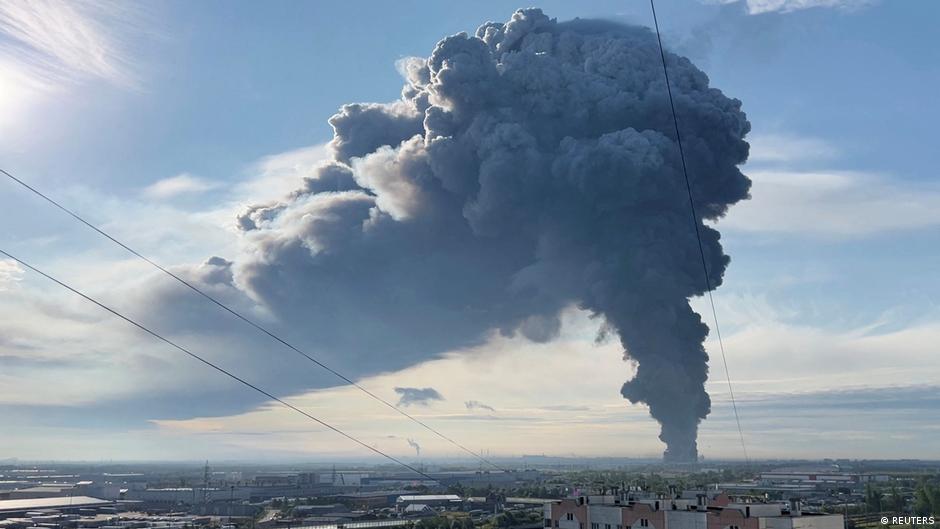
The Security Service of Ukraine (SBU) announced on August 4 that it had executed a 40-day operation targeting over 100 strategic sites in Russia and occupied Ukrainian territories, as well as striking more than 21,000 military targets on the frontline. The campaign, authorized by President Volodymyr Zelensky on June 25, aims to weaken Russia’s military and economic capacity to continue its aggression.
Operation Impact on Military and Economic Assets
According to the SBU’s report, the offensive struck key military-industrial enterprises, airbases, air defense systems, command posts, naval ships, and tankers affiliated with Russia’s shadow fleet. Additionally, the campaign targeted oil refineries, transportation, and military logistics infrastructure critical to Russia’s war effort.
More than 21,000 units of military equipment, weapons, and military infrastructure were reportedly destroyed, with nearly 5,000 Russian soldiers killed during the operation.
“The 40-day campaign was aimed at simultaneously weakening key elements of the Russian military machine,” the SBU said in its statement. “Efforts to reduce Russia’s military-economic potential will continue.”
A major focus of the campaign was the systematic degradation of Russia’s fuel and energy infrastructure. The SBU attacked 14 oil refineries, numerous oil depots, tank farms, pumping stations, oil terminals, and an offshore oil platform. Sanctioned tankers such as Blue, Louise 1, Banda, and Avero, along with two other cargo vessels, were also targeted during the operation.
Strategic Goals and Future Operations
President Zelensky approved the operation with Acting SBU Head Major General Oleksandr Poklad, who continues to coordinate ongoing and future strikes. The operation was initiated to exert pressure on Russia to cease hostilities and to compel the aggressor state toward peace negotiations.
On June 25, Zelensky publicly announced the launch of this pressure campaign, describing it as a strategic move to induce Russia to end the war. The day before, he pledged to create conditions that would force Russia to choose peace.
From a financial and strategic standpoint, the operation represents a concerted effort to disrupt Russia’s war-sustaining revenues derived from energy exports and industrial outputs, potentially impacting the aggressor’s long-term economic resilience.