UN Peacekeeping Personnel at 25-Year Low Amid Funding and Geopolitical Challenges, SIPRI Reports
UN peacekeeping forces declined to their lowest numbers since 2000, reflecting funding shortfalls and geopolitical tensions impacting global operations.
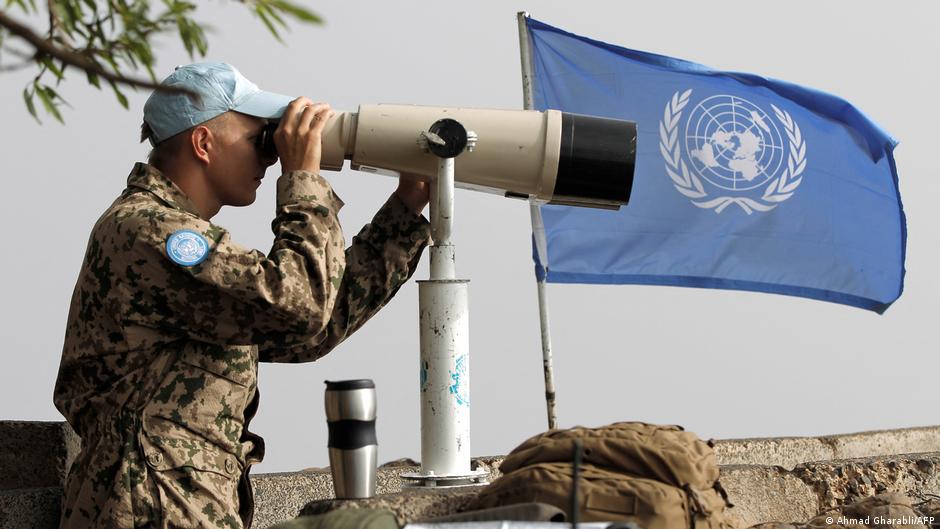
According to a recent report by the Stockholm International Peace Research Institute (SIPRI), the number of United Nations (UN) peacekeeping personnel worldwide has fallen to its lowest level in 25 years. As of December 31, 2025, only 78,633 international peacekeepers were deployed across global operations, marking a 49% reduction compared to 2016 and the smallest contingent since 2000.
Declining UN Peacekeeping Forces Amid Financial and Political Pressures
SIPRI attributes this significant decrease to a combination of geopolitical tensions, political pressure, and a critical funding crisis. The year 2025 saw the most substantial annual drop in personnel, with a 17% decline from the previous year. This decade-long downward trend threatens to diminish the effectiveness of multilateral conflict resolution efforts and the global standing of institutions like the UN.
"If this trajectory continues, we could witness a dramatic weakening of multilateral conflict resolution efforts and a near-total loss of relevance for institutions such as the UN," said Yair Van Der Lijn, Director of SIPRI’s Peace Operations and Conflict Resolution Programme.
Van Der Lijn warned that such developments could lead to an increase in conflicts worldwide, with potentially severe consequences for civilian populations as states deviate from established international norms.
In 2025, there were 58 active international peacekeeping operations across 34 countries or territories, down by four missions compared to 2024. Among the discontinued operations was the UN peacekeeping mission in Nagorno-Karabakh. Regionally, the majority of peacekeeping activities were concentrated in Sub-Saharan Africa and Europe (18 operations), followed by the Middle East and North Africa (14), the Americas (5), and Asia and Oceania (3). Nearly 73% of peacekeeping personnel were deployed in just five operations, four of which were in Sub-Saharan Africa.
Financial Shortfalls and Political Complexities Impacting Mission Continuity
The funding crisis remains a critical barrier. SIPRI highlights that leading donor countries either delayed or failed to make full contributions, resulting in a $2 billion shortfall in July 2025 alone. This deficit equated to 35% of the peacekeeping budget for 2024–2025, which totaled $5.6 billion. Consequently, the UN was compelled to significantly reduce personnel numbers in several peacekeeping missions.
Complicating matters further are the political dynamics within the UN Security Council. Veto threats and rigid demands from its permanent members have delayed or complicated renewals of mission mandates. For example, despite repeated ceasefire violations between Israel and Lebanon in 2024, the United States pushed for the conclusion of the United Nations Interim Force in Lebanon (UNIFIL) during mandate renewal talks in August 2025. The Security Council ultimately agreed to extend the mission only until December 2026.
Since 2014, no new peacekeeping mandates have been granted by the Security Council, underscoring growing challenges in sustaining UN-led operations. While regional organizations such as the African Union, ECOWAS, and OSCE have launched peacekeeping efforts, they face similar funding shortages and political obstacles, especially in conflict zones like Sudan and Ukraine.
Claudia Pfeiffer Cruz, Senior Researcher at SIPRI, emphasized the irreplaceable role of UN peacekeeping missions in global conflict resolution. "Regional organizations lack key capabilities required for successful, integrated peacekeeping and suffer from funding shortages and decision-making delays similar to those at the UN," she stated. Pfeiffer Cruz warned that as the UN’s conflict resolution work diminishes, a growing gap emerges that alternative approaches cannot fill.
International Commitment to Peacekeeping Remains, But Action Needed
Despite these challenges, SIPRI notes that international support for peacekeeping operations remains stable. At a UN Peacekeeping Ministerial forum held in Berlin in May 2025, over 130 UN member states participated in discussions on securing the future of UN peacekeeping underlining continued global interest.
"The collapse of the multilateral crisis resolution system is not inevitable," Pfeiffer Cruz affirmed. "There is clearly broad principled support for UN peacekeeping. However, to sustain effective multilateral conflict resolution, states must move beyond expressions of support and commit to predictable financing and establish the political groundwork necessary for effective missions."
The report underscores the urgent need for enhanced financial contributions and political consensus to stabilize and revitalize UN peacekeeping capabilities in an increasingly complex geopolitical environment.