U.S. Says Five Iranian Oil Tankers Destroyed After Missile Attacks
CENTCOM said the strikes targeted vessels tied to a multibillion-dollar shadow network funding Iran’s Revolutionary Guard and regional proxies.
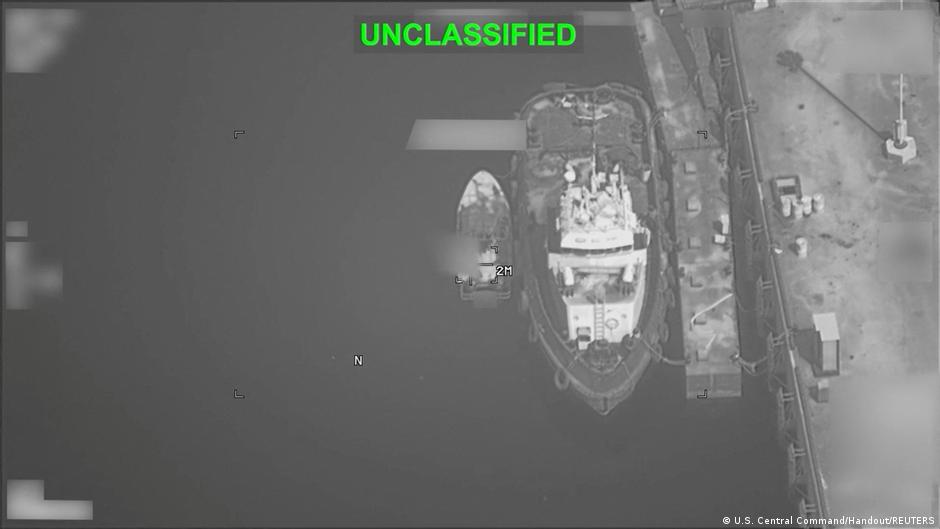
U.S. Central Command said it destroyed five Iranian oil tankers on Tuesday, September 8, after Iran’s Islamic Revolutionary Guard Corps twice attacked a U.S. Navy ship with ballistic missiles over the previous two days. The statement puts renewed focus on the financial infrastructure behind Tehran’s maritime oil operations, including vessels that Washington says are part of a multibillion-dollar shadow network used to fund the IRGC and its regional proxies.
According to CENTCOM, the U.S. Navy ship successfully evaded the attempted Iranian attacks and continued patrolling regional waters. No U.S. personnel were injured, the command said. The episode marks another escalation in a campaign centered not only on military assets, but also on oil logistics, sanctions exposure and the control of maritime routes critical to global energy markets.
CENTCOM said U.S. forces destroyed the IRGC-linked oil tankers M/T Kaviz, M/T Charminar, M/T Horizon 1 and M/T Riesco in the Gulf of Oman. A fifth tanker, M/T Derya, was struck near Kharg Island in the Persian Gulf. The command said American forces instructed crews to leave the vessels before they were hit and disabled.
U.S. forces instructed the crews to abandon the vessels before they were struck and disabled, according to CENTCOM.
Oil Flows and Shadow Financing Under Pressure
The financial significance of the strikes lies in CENTCOM’s claim that Iran used the tankers as part of a multibillion-dollar shadow network financing the IRGC and its regional representatives. Such networks are typically designed to move oil outside conventional commercial channels, limiting transparency around ownership, cargo flows, insurance and payment settlement. In this case, CENTCOM explicitly linked the targeted vessels to funding streams supporting the Revolutionary Guard and allied groups in the region.
For investors and energy market participants, the destruction of oil tankers in the Gulf of Oman and Persian Gulf adds operational risk to an already stressed shipping corridor. The source report does not provide cargo volumes, insured values, replacement costs or balance-sheet exposure for any companies connected to the vessels. It does, however, identify the assets as oil tankers and describes them as part of a large-scale shadow network, making the incident relevant to assessments of sanctions enforcement, maritime finance and the durability of Iranian oil export channels.
CENTCOM also said Tehran lacks the means to protect these ships. If accurate, that claim would point to a vulnerability in Iran’s off-book energy logistics, particularly where vessels operate near contested waters and strategic energy infrastructure. The destruction of five tankers follows a previous U.S. strike on September 5, when CENTCOM forces destroyed three Iranian oil tankers after the IRGC attempted to attack a U.S. aircraft carrier and a missile destroyer.
Taken together, the September 5 and September 8 incidents indicate that tankers themselves have become direct targets in the confrontation. That raises the potential cost of operating sanctioned or IRGC-linked shipping assets, especially if crews, counterparties, insurers or intermediaries judge the operational risk to be rising. The source article does not identify commercial owners, financing banks, insurers or charterers associated with the named tankers.
Hormuz Remains the Core Market Risk
The broader financial backdrop is the Strait of Hormuz, one of the world’s most important channels for oil shipments. The source article states that Hormuz is one of the main issues in the war involving the United States and Israel against Iran. Before hostilities began in late February, the strait was open to shipping. Today, both Iranian and U.S. armed forces claim control over it.
That uncertainty matters to energy markets because control, access and perceived security in the Strait of Hormuz influence shipping schedules, freight rates and oil supply expectations. The source text does not report any immediate market price reaction, production disruption or changes to quarterly earnings guidance from oil companies or shipping groups. Still, the military actions described directly involve oil transport assets and a chokepoint central to global crude flows.
The latest strikes follow a period in which the United States had not attacked Iran since late July. The source article says President Donald Trump explained that order as an effort to continue negotiations with Tehran over the future of the Strait of Hormuz, sanctions and Iran’s nuclear program. The pause ended on August 30, when the United States struck two Iranian missile launchers on Larak Island in the Strait of Hormuz.
Tehran later said it carried out retaliatory attacks against U.S. targets in the United Arab Emirates. According to the source article, dozens of drones attacked “American helicopters and personnel at Al Minhad base” in the UAE. Those claims add another layer of regional risk for military installations, logistics hubs and Gulf-based operations connected to the wider security environment.
For companies with exposure to oil shipping, Gulf infrastructure or sanctions-sensitive trade, the immediate reporting issue is not only the physical loss of vessels but the potential disruption to the financial architecture around maritime energy flows. Tankers used outside standard channels can create complex compliance, payment and ownership risks, while military strikes can quickly convert opaque operating exposure into realized asset losses.
CENTCOM’s announcement did not provide an estimate of the value of the destroyed tankers, the cargo aboard them, or the financial impact on the IRGC-linked network it described. It also did not report casualties among tanker crews. The command’s core claim is that the tankers were used to finance the IRGC and its regional proxies, and that U.S. forces disabled them only after warning crews to leave the ships.
The destruction of five vessels on September 8, following three tanker strikes on September 5, signals that oil logistics remain a central pressure point in the conflict. For financial reporting, the key unresolved questions are the scale of lost shipping capacity, the effect on Iran-linked oil revenue channels, and whether control claims over the Strait of Hormuz translate into measurable disruptions for global energy trade.