Yabloko Clears Novgorod Threshold, Preserving Ballot Access Asset
The party’s projected entry into the Novgorod regional legislature carries practical electoral value after losses in other regions.
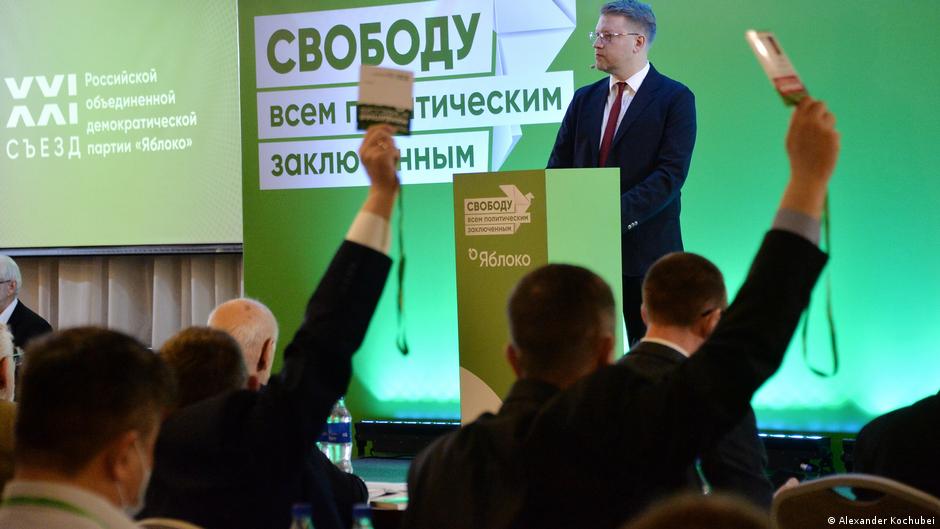
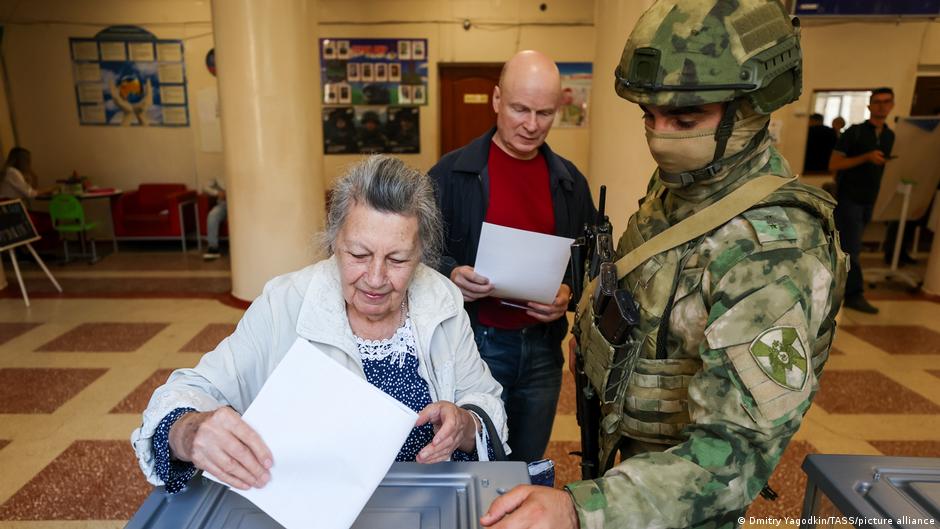
Russia’s liberal Yabloko party is projected to enter the Novgorod regional parliament, a result that carries significance beyond the distribution of seats in one regional legislature. According to data reported by Russia’s Central Election Commission after 96.86% of protocols had been counted, Yabloko received 6.2% of the vote in the unified district contest for the eighth convocation of the Novgorod Regional Duma.
The result places the party above the 5% threshold required to gain representation in the regional assembly. From a financial reporting and investor-relations perspective, the development is notable because regional parliamentary representation has a practical regulatory effect for the party’s future electoral operations: it allows Yabloko to continue taking part in State Duma elections without collecting voter signatures.
That status functions as a form of operational asset for a political organization. It reduces administrative burden, preserves access to future federal contests, and lowers the procedural cost of ballot participation. In a political environment where access rules can determine whether an organization is able to compete at all, the Novgorod result may help Yabloko retain an important compliance advantage.
Vote Share Improves From 2021 Result
Yabloko’s 6.2% share marks an increase from its performance in the previous election at the same level. In 2021, the party received 3.83% of the vote in the Novgorod regional contest. The latest preliminary count therefore represents a move from below-threshold performance to projected parliamentary entry.
The broader distribution of votes in the Novgorod Regional Duma election was led by United Russia, which received 38.37% according to the same data. The Communist Party of the Russian Federation followed with 14.54%, while the Liberal Democratic Party of Russia received 12.01%. New People received 9.87%, A Just Russia received 7.7%, and the Party of Pensioners received 5.55%.
Those figures place Yabloko among several parties clearing the threshold, but its result carries a distinct strategic implication. Unlike stronger parties with broader institutional access, Yabloko’s key gain is not only representation in Novgorod but the preservation of a pathway into future State Duma campaigns without a signature-gathering requirement.
“For the party, it has a quite practical significance: having a deputy in a regional parliament will allow Yabloko to continue participating in State Duma elections without collecting signatures,” a party source told DW on condition of anonymity.
The source said the preliminary result in Novgorod was welcomed by the party and emphasized that Yabloko previously had three factions in Pskov, St. Petersburg and Karelia, but its lists were removed there. Against that background, retaining or gaining representation in Novgorod becomes more important as a form of institutional continuity.
Campaign Conditions And Regulatory Pressure
The campaign took place under highly difficult conditions, according to the Yabloko source cited in the article. The entire party list on the ballot was marked with a label referring to “foreign agent” status because Anna Cherepanova, the party’s deputy chair and the list leader, had been recognized as affiliated with a “foreign agent.” Cherepanova herself was removed from the election because of an administrative case under Article 20.3 of Russia’s Code of Administrative Offenses.
The party source said that neither the ballot marking nor the removal of the list leader prevented Yabloko from showing what the source described as a good result. In operational terms, the result suggests the party was able to retain enough voter support to clear the qualifying threshold despite reputational, legal and procedural constraints around the campaign.
The Novgorod outcome also follows a separate legal setback at the federal level. On August 10, Russia’s Supreme Court removed Yabloko’s federal list from the State Duma election following a lawsuit by Rodina. Rodina had accused the party, among other things, of copyright violations and illegal payments for election campaigning. Despite the removal of the federal list, Yabloko candidates in single-mandate districts are still taking part in the vote.
For political organizations, ballot access rules can be viewed as a form of recurring compliance cost. A requirement to collect signatures consumes staff time, volunteer capacity, campaign funds and legal resources. Avoiding that requirement can materially change the economics of contesting an election, particularly for smaller parties with constrained organizational balance sheets.
Yabloko’s performance in Novgorod is therefore not simply a regional result. It helps determine whether the party can maintain a lower-cost route into national electoral participation. That makes the 5% threshold function somewhat like a covenant: clearing it preserves operational flexibility, while falling short could increase future procedural burdens.
The source article also notes Yabloko’s political positioning. Among Russian parties, Yabloko was the only one to oppose the war in Ukraine. Jürgen Hardt, the foreign policy spokesman for the CDU/CSU parliamentary group in the German Bundestag, previously told DW that by sidelining the party, Russian President Vladimir Putin had “excluded from the electoral process the last significant voice of opposition.”
While United Russia remains the dominant party in the Novgorod count, the financially relevant takeaway for Yabloko is the preservation of a valuable electoral-status position. With 6.2% after nearly all protocols counted, the party appears to have restored regional representation in a contest where the practical consequence is access, not only seats.