Zaporizhstal Damage Deemed Critical After Third Strike in a Month
The Metinvest-owned steelmaker remains fully halted as damage to production, energy and logistics assets deepens.
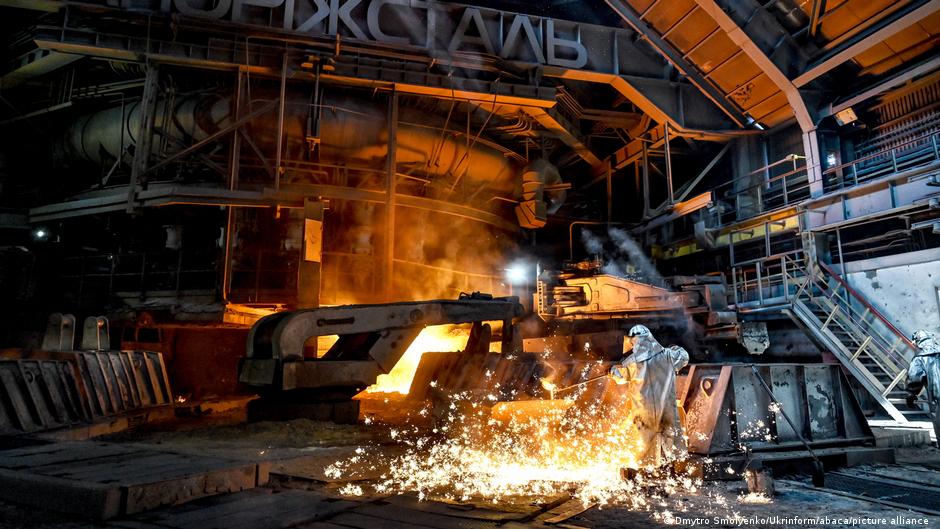
Zaporizhstal, one of Ukraine’s largest steel plants, has suffered what the company preliminarily described as “critical” damage after a third Russian missile strike in a month, extending a full production shutdown that began after an earlier attack on August 11.
The latest strike took place overnight into Saturday, September 12, when four ballistic missiles hit the production site in the Ukrainian city of Zaporizhzhia, according to a company press release issued the same day. The plant, part of Metinvest Group, had already suspended operations following previous attacks on August 11 and August 27, leaving management unable to provide a definitive timeline for restarting production.
Although the facility had been stopped before the September attack, at least four employees were present at the site and were injured. Three required hospitalization. The company said equipment in the blast furnace and open-hearth shops was damaged, along with the plant’s power system and logistics infrastructure.
“The scale of destruction is growing with each strike. It is still impossible to assess it finally, but preliminarily we classify the damage as critical,” said Oleksandr Myronenko, chief operating officer of Metinvest Group.
Zaporizhstal said emergency response work is continuing at the plant, while specialists inspect damaged facilities to clarify the nature and extent of the destruction. For investors and counterparties tracking Ukrainian steel supply, the central issue is no longer a short-term operational disruption but the potential impairment of a major industrial asset that has played an outsized role in the country’s metal output.
A Plant With National Output Weight
Zaporizhstal’s importance is clear from its 2025 production figures. According to company data, the plant produced almost 3.568 million tonnes of pig iron and 3.212 million tonnes of steel in 2025. In the same year, Ukrainian steelmakers overall produced 7.884 million tonnes of pig iron and 7.409 million tonnes of steel, according to industry association Ukrmetallurgprom.
That means the Zaporizhzhia plant accounted for more than 45% of Ukraine’s pig iron output and more than 42% of national steel production. Any prolonged shutdown therefore has implications beyond a single balance sheet. It affects domestic industrial supply, export capacity, logistics flows and tax receipts, while also pressuring related production sites that have already been operating at reduced capacity after the earlier attacks.
The first major missile attack on Zaporizhstal occurred overnight on August 11. Eight workers were killed and another 26 were wounded. Damage to equipment was severe enough for the steelworks to halt completely, while other production assets moved to lower operating rates. The second major strike followed on August 27, when, according to Zaporizhstal, five missiles hit the facility. No deaths or injuries were reported in that attack, but the blast furnace shop, energy and transport infrastructure, and open areas of the plant were damaged.
After the August 27 attack, Myronenko said production restart timelines existed “only in theory,” because the plant had barely cleared debris from the previous strike before another one occurred. The September 12 attack has now added further uncertainty to those restart assumptions and could force management to reassess repair planning, capital allocation and operational continuity across the group.
Financial Exposure and Fiscal Impact
For Metinvest, the damage raises questions around repair costs, asset recoverability, insurance or compensation mechanisms, workforce continuity and the availability of power and transport links required for any future restart. The source information does not provide an estimate of financial losses, capital expenditure needs or expected downtime, and the company said the final assessment of damage is not yet possible.
The plant is also a significant employer and taxpayer in Zaporizhzhia region. In May 2026, Zaporizhstal topped the list of the region’s largest employers, according to the company’s press service, which cited an annual ranking by Opendatabot, a service providing access to Ukrainian state data on individuals and legal entities. At that time, the plant employed more than 8,000 people.
Its fiscal contribution is also material. In 2025, the steelworks paid almost 2.7 billion hryvnias, or 52.34 million euros, in taxes to budgets at all levels. A prolonged shutdown may therefore weigh not only on corporate output but also on local and national revenue streams, particularly if production losses continue to accumulate and associated industrial activity remains constrained.
The latest strike leaves Zaporizhstal in a position where management must first stabilize the site, complete inspections and determine whether core production, power and logistics systems can be restored. Until that work is completed, the company has no firm basis for setting a restart date. From a financial reporting perspective, the repeated attacks point to a rising operational risk profile, with the September assessment of “critical” damage marking the most serious indication yet that the shutdown could become a longer-running drag on Ukrainian steel output.