Zelensky Says Russia’s Oil Sector Is Losing Capacity to Finance War
Ukraine’s president used his UN address to frame pressure on Russian energy revenues as central to limiting Moscow’s ability to prolong the conflict.
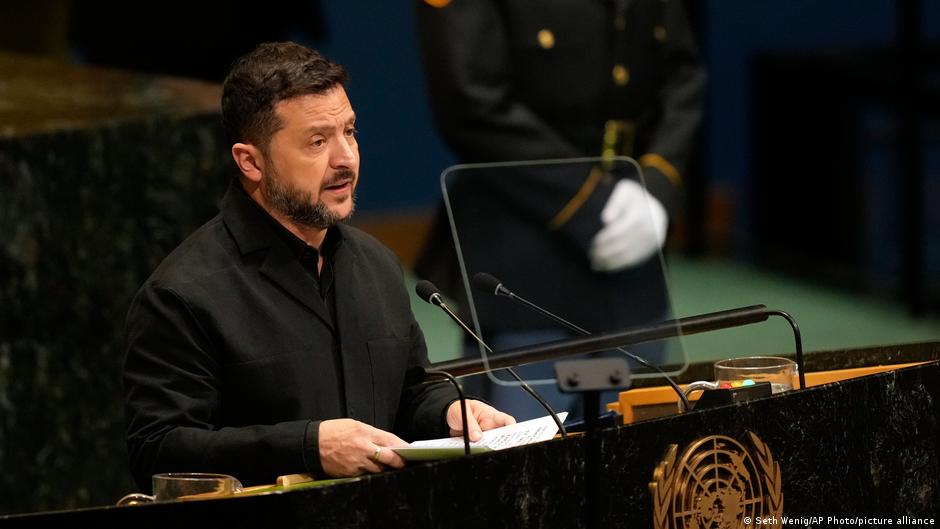
Ukrainian President Volodymyr Zelensky used an address to the United Nations General Assembly in New York on Wednesday, September 23, to argue that Russia’s capacity to finance its war is the central pressure point in the conflict, placing the country’s oil industry and energy infrastructure at the heart of his message to world leaders and investors tracking geopolitical risk.
Zelensky described Russian President Vladimir Putin as “patient zero” for what he called the global spread of the idea of war. Wherever that idea spreads, he said, it brings “only pain, instability, new risks and, of course, new crises.” His remarks were political in form, but they also carried a clear economic argument: that restricting Moscow’s revenue base is essential to shortening the war and reducing the wider market instability it generates.
“He must not be allowed to act and must not be given the opportunity to spread this evil further,” Zelensky said, referring to Putin.
The Ukrainian president said Russia’s oil industry, which he described as a source of national pride for Moscow, was for the first time in the country’s history operating “on its last legs.” He framed that assessment as a humiliating setback for a state that holds a permanent seat on the UN Security Council and has long taken pride in its oil exports.
For financial markets, the comments underscored how energy remains both a strategic target and a core balance-sheet issue in the war. Zelensky stressed that oil itself is not Ukraine’s objective, nor are gasoline, diesel fuel, refineries or ports. The target, he said, is Russia’s ability to pay for and extend the war.
“Our goal is Russia’s ability to finance this war and drag it out,” Zelensky said.
Energy Revenue as a War-Financing Metric
Zelensky’s framing places Russian hydrocarbon revenues in the same analytical category as military logistics and battlefield losses: a measurable constraint on Moscow’s ability to sustain operations. His remarks suggested that attacks and pressure on energy assets should be understood not only as military events, but also as interventions in the funding channels that support the Russian war effort.
The speech came as Ukraine continues to face Russian attacks on its own energy grid and heating infrastructure. Zelensky warned that if Russia continues targeting Ukraine’s power system and heating facilities, Kyiv would seek to ensure that Russia’s “General Frost” this winter “switches sides,” a reference to the possibility of retaliatory strikes.
That warning adds to the risk profile surrounding regional energy infrastructure ahead of the winter season. For governments, utilities and investors, the implication is that energy systems on both sides remain exposed to military and political escalation, with potential consequences for fuel supply, refining capacity, logistics and public finances.
Zelensky also cited a large casualty figure as part of his argument that Putin is sustaining an economically and militarily costly campaign. He said that from January through August, Russian armed forces lost 248,964 people on the battlefield in Ukraine. According to Zelensky, Putin is paying “248 people for every kilometer,” a formulation intended to question whether Russia’s leadership is acting rationally. He added that citizens of 47 other countries are fighting on the side of the Russian army and are also dying on the battlefield.
Although battlefield casualty figures are not conventional financial metrics, they influence the fiscal and economic calculus of war. High losses can imply sustained spending on mobilization, equipment replacement, compensation, recruitment and logistics. Zelensky’s comments effectively presented human losses and oil-sector stress as linked indicators of the cost of continuing the conflict.
Market Risk From Escalation and Technology
The Ukrainian president also warned that as soon as next year there is a real possibility that decisions on the battlefield could begin to be made by artificial intelligence, and not only by humans. “We need peace before we reach that point,” he said. The warning broadened the address beyond energy and battlefield costs into a discussion of technological escalation, a factor that could create new uncertainties for defense procurement, export controls and investor assessments of security risk.
Zelensky’s speech was delivered against the backdrop of an intensified Russian strike campaign. According to an analysis by AFP, the first 18 days of September saw more Russian strikes than any full month since the beginning of the war in Ukraine, with the exception of March 2022. That trend points to continued pressure on infrastructure and raises the likelihood of higher repair costs, emergency budget needs and further strain on Ukraine’s energy system.
At the same time, Russian Foreign Minister Sergei Lavrov told the UN Security Council that there would be no “pause” in hostilities. The statement reinforced the limited near-term prospects for a ceasefire and suggested that governments and companies exposed to the region may need to plan for continued disruption rather than a rapid de-escalation.
For the financial reporting audience, the key issue in Zelensky’s address was not only the political accusation against Putin, but the emphasis on war finance. The Ukrainian president portrayed Russia’s oil industry as a weakening asset base and energy revenue as a channel that determines Moscow’s capacity to continue the war. His comments linked military escalation, energy infrastructure, oil exports and fiscal endurance into a single narrative: that the conflict’s duration depends heavily on whether Russia can keep funding it.
The address also sharpened the connection between geopolitics and balance-sheet risk. If energy infrastructure remains a target, the financial consequences may extend across public budgets, refinery operations, transport routes, fuel markets and investor confidence. Zelensky’s message to the UN was therefore both a diplomatic appeal and a financial diagnosis: reducing Russia’s ability to monetize its energy sector is, in Kyiv’s view, central to limiting the war’s next phase.