EU Leaders Prep for Potential Talks with Russia Amid Ongoing Conflict
European Council President discusses readiness and strategic coordination for future negotiations with Russia.
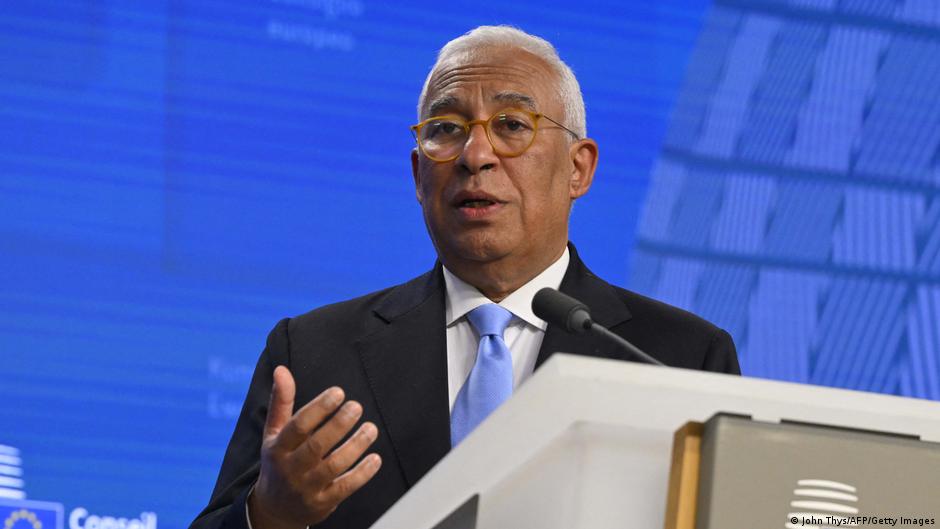
European Union leaders are actively preparing for the possibility of negotiations with Russian President Vladimir Putin, according to European Council President António Costa. Speaking at the European University Institute in Florence, Costa emphasized ongoing discussions with the heads of the EU's 27 member states to determine the best organizational approach and agenda should formal talks commence.
Strategic Coordination and Current Obstacles
"I am negotiating with the leaders of the 27 EU member states to define how best to organize ourselves and precisely what we need to discuss with Russia when the appropriate moment arrives," Costa stated. He acknowledged that while there is potential to engage in talks with Putin, there are currently no visible signs that Moscow is willing to participate in "effective" and "serious" discussions.
"There is potential for negotiations with Putin, but so far no one has seen signs of Russia's readiness to engage effectively."
The European Council President also clarified that the EU does not intend to obstruct ongoing negotiations led by the United States.
Recent developments highlight the complexity of these diplomatic efforts. At the EU summit held in Cyprus in late April, Ukrainian President Volodymyr Zelensky called on the European Union representatives to be prepared to contribute positively to any forthcoming negotiations. Ukrainian officials have echoed this sentiment, underscoring the need for closer coordination at the European level. They propose that the EU could take on a leadership role, representing "all Europeans" in dialogue with Russia.
The last significant diplomatic engagement between Europe and Russia occurred in early February 2026, when advisors to French President Emmanuel Bonn and Bertrand Buchwalter visited Moscow to discuss the EU’s potential involvement in peace talks aimed at ending the war in Ukraine. However, reports indicated that Kremlin officials rejected the French proposals. A source familiar with President Putin’s stance summarized it as: "We are ready for constructive dialogue if you are as well; if not, we are not interested."
Furthermore, in mid-March, reports surfaced citing sources who alleged that Putin's aide Yuri Ushakov used profane language when dismissing France’s negotiation proposals. Kremlin spokesperson Dmitry Peskov responded that the French delegation "brought no positive signals," and therefore, "there was nothing positive to hear in return." This underscores the current diplomatic impasse.
Impact of Regional Conflicts on Diplomacy
Complicating matters, the recent outbreak of conflict involving the United States and Israel against Iran has shifted the focus of key negotiators. Steven Witkoff, the US President’s special envoy, is scheduled to meet with Rustem Umerov, Secretary of Ukraine’s National Security and Defense Council, in Miami shortly. This will be their first meeting since February 28, following the escalation of the new Middle East conflict.
Previously engaged in peace negotiations concerning Ukraine, Witkoff and Jared Kushner, son-in-law of former President Donald Trump, have redirected their efforts toward negotiations with Tehran. Moreover, the heightened tensions in the Middle East have stalled planned trilateral talks involving Russia, the US, and Ukraine.
Despite these challenges, optimism remains from some Ukrainian officials. Kirill Budanov, head of Ukraine’s presidential office negotiating team, recently expressed that Moscow and Kiev are moving closer to a peace agreement, suggesting the resolution of the war may not require an extended timeframe. In early April, Budanov noted that although both sides had maintained "maximalist" positions during talks, they are gradually converging in search of compromise.
The unfolding diplomatic efforts highlight the delicate balance between geopolitical pressures and the pursuit of conflict resolution, with financial and political stability in the region dependent on the success of potential negotiations.