German EV Demand Jumps 80% as Domestic Carmakers Lose Ground
Chinese manufacturers are capturing a growing share of Germany’s expanding electric-vehicle market while local groups face pressure on profits.
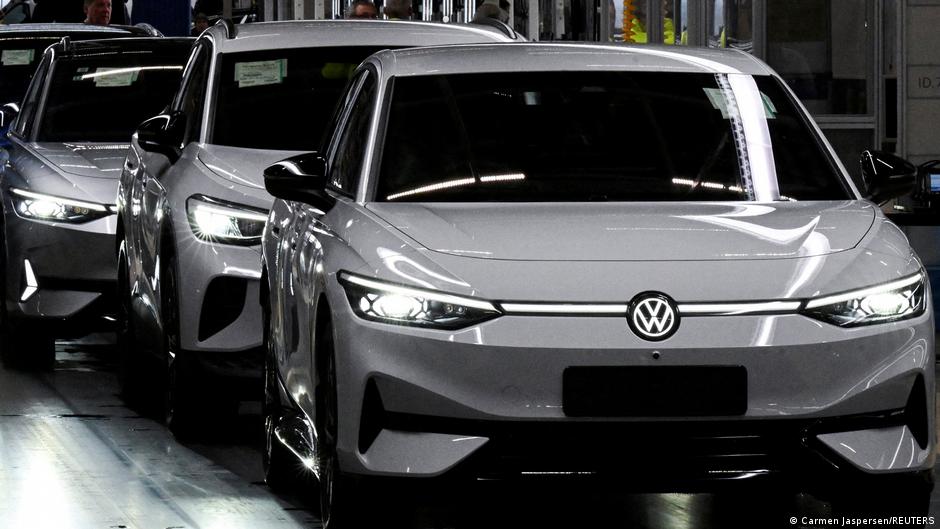
Germany’s electric-vehicle market accelerated sharply in October 2026, but the expansion is delivering uneven financial benefits across the automotive industry. Demand for fully electric cars increased by about 80% from the same period a year earlier, while German manufacturers continued to lose market share and profits.
Figures from Germany’s Federal Motor Transport Authority, known as the Kraftfahrt-Bundesamt or KBA, show that approximately 254,500 new passenger cars were registered during the month. About 94,000 of those vehicles were fully electric, representing roughly 37% of total registrations and an increase of around 80% compared with October 2025.
The registration data underline a rapid change in the composition of Europe’s largest automotive market. For investors, the central issue is not simply the growth of electric demand but which manufacturers are converting that demand into revenue, market share and improved financial performance.
Subsidies and energy costs reshape demand
Registrations of vehicles powered by internal-combustion engines, a category that also includes hybrid vehicles in the cited data, moved in the opposite direction. These models accounted for about 62,400 new registrations in October 2026, marking a sharp decline compared with October of the previous year.
High fuel prices and a government subsidy program for electric-vehicle purchases are among the principal factors behind the shift. The subsidy scheme was launched in May 2026, providing consumers with a stronger financial incentive to choose fully electric models during a period of elevated energy costs.
About 94,000 fully electric passenger cars were registered in Germany in October, approximately 80% more than a year earlier.
For manufacturers, subsidies can support sales volumes and help increase factory utilization, but they can also intensify competition by making a broader range of electric vehicles affordable to consumers. The effect on earnings therefore depends on pricing, manufacturing costs, product mix and the ability of each company to defend its market position.
The KBA figures provide registration volumes rather than company-level revenue, margins or profit data. Even so, the direction of the market has clear implications for quarterly reporting. Automakers with a rising share of electric registrations may be better positioned to expand sales, while groups losing share could face greater pressure to offer discounts, increase marketing expenditure or accelerate investment in new models.
Chinese brands increase their market share
Foreign manufacturers, particularly Chinese companies, are emerging as the leading beneficiaries of Germany’s growing appetite for electric cars. According to consulting firm EY, the market share held by Chinese manufacturers increased from 5.2% to 8.4%.
That 3.2-percentage-point expansion indicates that Chinese groups are gaining traction faster than the overall market. German manufacturers, by contrast, have been losing electric-vehicle market share from month to month, even as the total number of electric registrations rises.
This divergence is important for shareholders assessing the earnings outlook of German automotive groups. Strong domestic demand does not automatically translate into stronger balance sheets or higher profits when an increasing portion of sales is captured by overseas competitors. The competitive pressure comes as German automakers continue to report declining profits, according to the source article, although no company-specific earnings figures are provided.
Market-share losses may also complicate decisions on capital allocation. German manufacturers must finance electric platforms, battery supply chains and production capacity while competing against Chinese companies that are expanding their presence. If domestic groups cannot recover share, the returns generated by those investments could come under additional scrutiny from investors.
Investor focus shifts to conversion and margins
Upcoming financial reports will be judged not only on electric-vehicle delivery growth but also on whether companies can translate that growth into sustainable earnings. Investors are likely to examine average selling prices, operating margins, inventories, cash generation and spending on electric technology alongside headline registration numbers.
The October data show that Germany’s transition toward fully electric mobility is progressing rapidly. They also reveal a widening gap between market growth and the performance of domestic manufacturers. With Chinese producers increasing their share from 5.2% to 8.4%, Germany’s automakers face the financial challenge of protecting profitability while investing to regain ground in their home market.