Polish Opposition Leader Calls to Block Ukraine’s EU Accession Amid Rising Diplomatic Tensions
Jarosław Kaczyński urges Warsaw to halt EU negotiations with Kyiv, citing escalating bilateral conflicts and domestic political strategy.
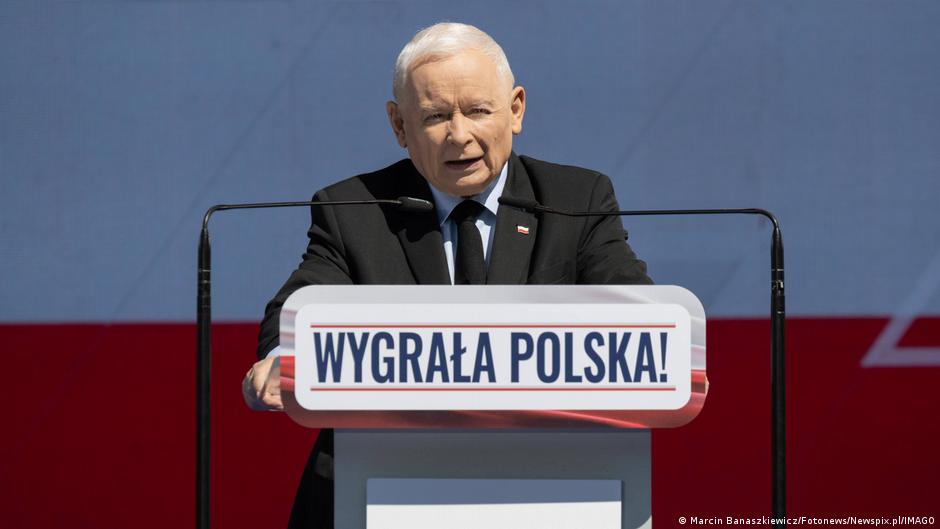
Jarosław Kaczyński, leader of Poland’s opposition national-conservative party Law and Justice (PiS), has publicly called on the Polish government to block negotiations on Ukraine’s accession to the European Union. This move comes amid escalating diplomatic tensions between Warsaw and Kyiv.
On June 27, Kaczyński criticized Ukraine’s leadership for intensifying the conflict with Poland, accusing Kyiv of "violent escalation" in what he refers to as a "war of orders" with Warsaw. Days earlier, he declared his intention to return a medal awarded to him by Ukraine, signaling his disapproval not of the Ukrainian people, but of its political elite.
Contrasting Polish Political Approaches to Ukraine
This hardline stance sharply contrasts with the approach of Poland’s Prime Minister Donald Tusk, who on June 25 inaugurated the Ukraine Recovery Conference 2026 in Gdańsk. The two-day summit culminated in the signing of 160 agreements totaling over €10 billion aimed at supporting Ukraine’s post-conflict reconstruction efforts.
Financial analysts observe that PiS’s position may be strategically aligned with the party’s preparations for the parliamentary elections scheduled for October 2027. By opposing Ukraine’s EU membership and highlighting concerns over the import of Ukrainian agricultural products, Kaczyński aims to attract the votes of Polish farmers and citizens increasingly wary of the economic and social costs associated with hosting Ukrainian refugees.
“Kaczyński’s call to block Ukraine’s EU talks reflects a blend of geopolitical tensions and electoral calculus aimed at consolidating domestic support.”
The diplomatic rift intensified following Ukrainian President Volodymyr Zelensky’s decision to name a military unit after the "heroes of the Ukrainian Insurgent Army (UPA)." In response, Polish President Karol Nawrocki revoked the Order of the White Eagle, Poland’s highest honor, from Zelensky.
This act triggered protests from several high-ranking Ukrainian officials, including Presidential Office head Kyrylo Budanov and Foreign Minister Andriy Sybiha, who renounced their Polish honors. President Zelensky also abstained from attending the Gdańsk conference, despite initially being scheduled to lead the Ukrainian delegation.
The Ukrainian Insurgent Army is a deeply divisive symbol: celebrated in Ukraine as freedom fighters, yet in Poland associated with the Volhynia massacre of 1943-1944, a tragic episode of ethnic violence. This historical discord underpins the current political and diplomatic frictions impacting EU enlargement discussions.
For investors and stakeholders monitoring Eastern Europe, these developments underscore the volatility of Poland-Ukraine relations and signal potential risks to EU integration timelines and regional economic cooperation. The politicization of historical narratives and domestic electoral considerations are shaping foreign policy decisions with significant financial and geopolitical repercussions.