Putin Says Armenia’s EU Accession Bid Would Mean Exit From EAEU
The dispute over Armenia’s EU ambitions sharpens geopolitical and trade risks that could affect market access, policy stability and cross-border economic ties.
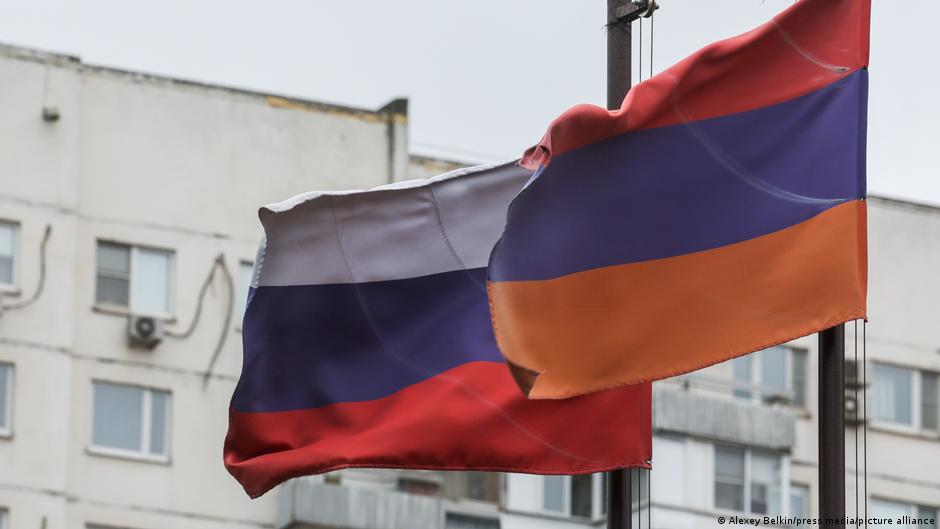
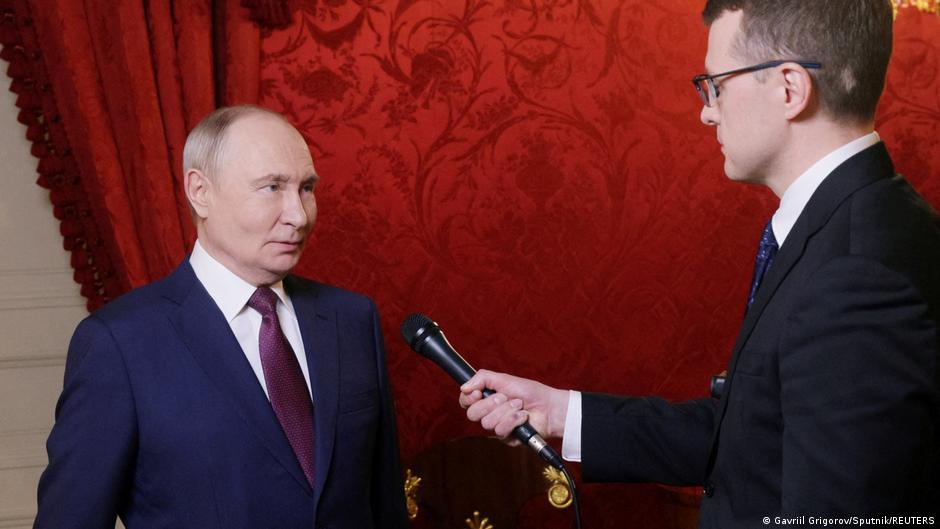
Russian President Vladimir Putin told Armenian Prime Minister Nikol Pashinyan that Armenia’s move toward applying for European Union membership would in practice amount to leaving the Eurasian Economic Union, a position that highlights the economic and trade stakes behind an increasingly political dispute.
The two leaders met on the sidelines of the Shanghai Cooperation Organisation summit in Bishkek. According to a Kremlin transcript published on Tuesday, September 1, the main focus of the talks was Yerevan’s plan to submit an application for EU membership. For investors and businesses, the exchange matters because Armenia’s positioning between the EU and the EAEU has implications for tariff regimes, market access, supply chains and the predictability of the country’s external economic policy.
Putin framed the issue as one of institutional incompatibility. He told Pashinyan that Armenia could not remain inside the Russia-led EAEU while formally beginning the process of joining another economic bloc.
“You said that you had not declared your withdrawal. The adoption of a law on starting the procedure of joining another economic organization effectively means a declaration of withdrawal from ours, because being there and there is incompatible. That is the problem.”
By the “other organization,” Putin was referring to the EU, and by “ours,” the Eurasian Economic Union. He again called for Armenia to hold a referendum on choosing between the EU and the EAEU, saying the authorities should ask the public directly.
Pashinyan rejected the argument that Armenia had breached any existing commitments. He said Yerevan had reviewed the treaty base governing ties between Russia and Armenia, as well as the legal framework operating within the EAEU, and had found no violations of Armenia’s obligations to either Russia or the EAEU. That distinction is significant from a financial reporting perspective because it suggests Armenia’s government sees its current legal and commercial commitments as still intact, despite a strategic shift in direction.
The Armenian prime minister added that the adoption in 2025 of a law on European integration had in effect ruled out a referendum on choosing between the EU and the EAEU. That suggests the government is treating the legislative path as sufficient to define policy, even as Moscow presses for a formal public vote.
Trade, policy and political risk
The dispute is not only diplomatic. It also points to a wider question over Armenia’s future economic alignment and the risk premium associated with that shift. Membership in the EAEU affects the framework for trade with Russia and other member states, while any eventual EU accession track would be governed by a separate and explicitly merit-based process. For companies, lenders and portfolio observers, the timeline and feasibility of Armenia’s European course remain uncertain, but the political signaling alone can alter expectations around regulation, customs treatment and bilateral economic relations.
Pashinyan said on August 24 that Armenia intended in the near future to begin the process of applying for EU membership. After that announcement, the European Commission said Armenia is now closer to the European Union than ever before, while also stressing that accession proceeds through a clearly defined process based on merit. That response leaves the door politically open, but it does not change the fact that accession is a long, rules-based process rather than an immediate commercial realignment.
Putin has previously argued that EU and EAEU membership cannot be combined. He also said that the so-called “Ukrainian scenario” began with Kyiv’s attempt to join the European Union. The repetition of that line raises the temperature around Armenia’s western pivot and may factor into how businesses assess sovereign and cross-border risk in the region.
In June, Pashinyan said there were no grounds for holding a referendum on joining the European Union. He was responding to a joint statement by the leaders of Russia, Belarus, Kazakhstan and Kyrgyzstan. The issue has therefore moved through several stages: regional warnings in June, Armenia’s renewed push toward the EU in August, and direct leader-level confrontation in Bishkek on September 1.
The broader backdrop includes pressure from Moscow ahead of Armenia’s parliamentary election on June 7. Before the vote, Russia increased pressure on Yerevan, including by banning imports into Russia of a number of Armenian products. That step underlined how quickly political disputes can spill into trade restrictions, a key concern for exporters, agricultural producers and any business exposed to Russian market demand. In the event, Pashinyan’s Civil Contract party won the election.
The September 1 meeting in Bishkek was the first face-to-face encounter between Pashinyan and Putin since those elections. The timing is notable because it brought unresolved political and economic tensions directly back onto the bilateral agenda after an electoral contest in which Armenia’s strategic orientation had become more contentious.
For financial audiences, the immediate takeaway is not a quantified balance-sheet impact but a rise in policy uncertainty around Armenia’s external economic model. Moscow is arguing that a move toward EU accession is tantamount to exiting the EAEU. Yerevan is maintaining that it remains in compliance with all current obligations. Until that contradiction is resolved, investors will be watching for signs of additional trade measures, legal reinterpretations or policy shifts that could affect Armenia’s operating environment.
At this stage, the issue remains centered on law, strategy and political signaling. But as the exchange in Bishkek showed, the consequences could extend well beyond diplomacy into the commercial architecture that shapes Armenia’s trade flows and its economic relations with both Russia and Europe.