Russia Adds StopTime Musicians Naoko and Alexander Orlov to Agent List
The designation introduces new compliance and disclosure risks for the musicians one year after their first administrative detention.
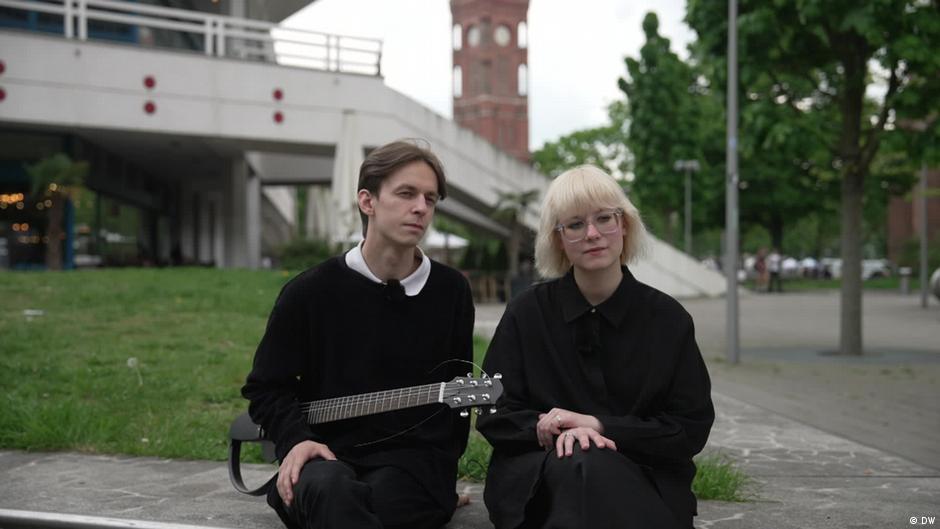
Russia’s Ministry of Justice has added 19-year-old singer Diana Loginova, known professionally as Naoko, and her husband, 23-year-old guitarist Alexander Orlov, to its register of “foreign agents,” a designation that can affect public communications, commercial relationships and the financial administration of creative work.
The two musicians are members of the street band StopTime. The ministry published the decision on its website on Friday, October 16, exactly one year after Loginova, Orlov and the group’s then-drummer, Vladislav Leontyev, received their first administrative detention orders.
In its stated justification, the ministry said Loginova had opposed the war in Ukraine, had “disseminated false information” about decisions and policies of the Russian authorities, and had interacted with people or organizations already designated as foreign agents. The ministry alleged that Orlov had, among other actions, “actively participated in the distribution of anti-Russian materials.”
The designation adds a new layer of regulatory exposure to the musicians’ activities after a year marked by repeated detentions and their departure from Russia.
The October 16 update also added the movement Malinovy Klin — Independent Kuban to the foreign-agent register. According to the authorities, the movement had, among other things, “called for the violation of Russia’s territorial integrity.”
Compliance risks for independent performers
Although the ministry’s decision concerns political and regulatory status rather than a set of corporate accounts, it has direct relevance from a financial-reporting perspective. Foreign-agent status in Russia is associated with compliance obligations that may influence how designated individuals document income, manage expenses, communicate with audiences and maintain relationships with counterparties. For independent artists, those requirements can become material operational considerations even when no revenue, profit or balance-sheet figures are publicly available.
The source material provides no financial statements, earnings data, sponsorship figures or performance revenue for Loginova, Orlov or StopTime. It therefore does not establish the size of any monetary impact from the designation. Nevertheless, the change in legal status represents a reportable risk factor for any business activity connected to the musicians, including concerts, digital distribution, audience-supported funding and contractual arrangements.
For promoters and other potential partners, the designation may also increase due-diligence and reputational considerations. From an investor-relations perspective, companies with exposure to designated performers would typically need to assess whether that relationship creates additional compliance costs, restrictions or disclosure requirements. No such corporate relationships or financial exposures were identified in the source.
Street performances and repeated detentions
StopTime began performing on the streets of St. Petersburg in spring 2025. Its concerts were announced on social media and included songs by Noize MC, Monetochka, Zemfira and the band Pornofilmy. Russia’s Ministry of Justice has designated all of those performers as foreign agents.
During one performance in October 2025, StopTime played Noize MC’s song “Swan Lake Cooperative.” A St. Petersburg court had classified the song as information prohibited in Russia in May of that year.
The first administrative case arose from a concert near the Ploshchad Vosstaniya metro station. Police said 70 people attended. Loginova, Orlov and Leontyev were found guilty of organizing a mass event that resulted in a disturbance of public order and were placed under administrative detention.
Immediately after the initial detention period ended, authorities drew up new reports against the band members. These successive cases, described as “carousel” protocols, kept the musicians in custody almost until the middle of November. After a third consecutive detention, Loginova and Orlov left Russia.
Leontyev remained in the country and consequently left StopTime. He had been part of the group until January 2026.
Limited visibility into financial impact
The absence of disclosed financial metrics means the designation’s effect cannot be quantified in the manner of a quarterly earnings report. There is no reported information on the group’s cash position, liabilities, income from performances or online platforms, or the cost of legal and regulatory compliance.
However, the chronology points to sustained operational disruption. The musicians moved from regular street performances to repeated administrative detention, followed by Loginova and Orlov’s departure from Russia and Leontyev’s exit from the band. The foreign-agent designation now formalizes an additional regulatory constraint, potentially affecting future planning and the way any income-generating activity is organized and reported.
For readers tracking financial and governance risks, the key development is not a reported change in earnings but a change in regulatory status. That status may shape StopTime’s ability to enter agreements, reach audiences and maintain predictable operations, while the lack of published financial data prevents a reliable estimate of the effect on revenue or costs.