Russia to Close Goethe-Institut Branches After Berlin Agreement Is Ended
Moscow says all three Goethe-Institut branches in Russia will shut after Germany moved to terminate the agreement governing the Russian House in Berlin.
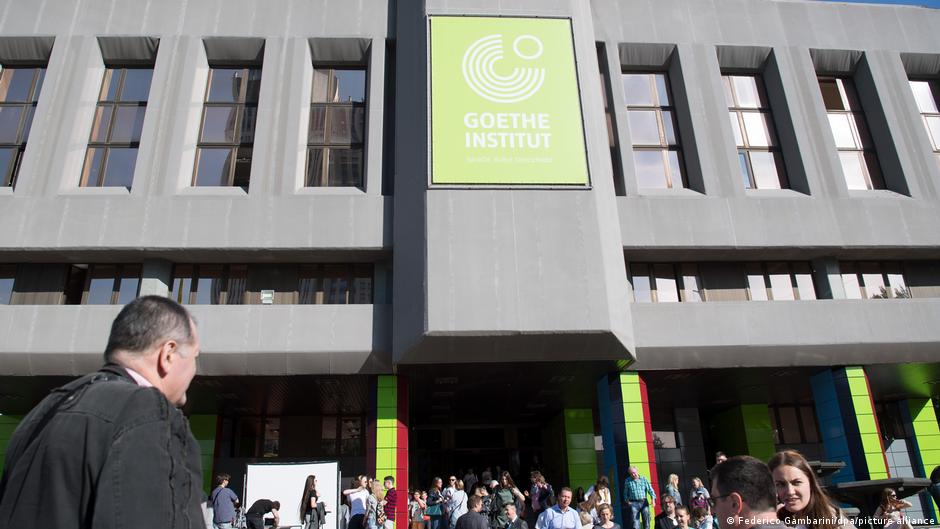
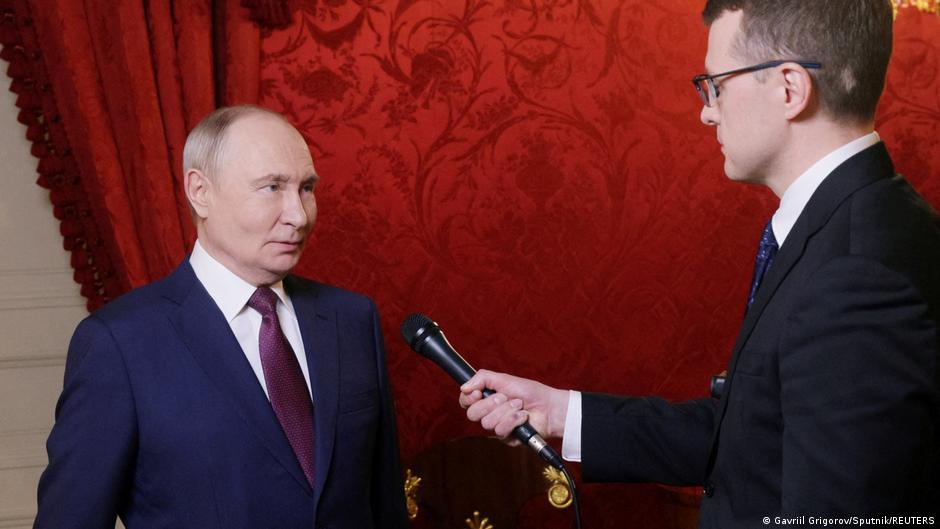
Russia will close all three branches of Germany’s Goethe-Institut in the country after Berlin decided to terminate its agreement with Moscow on the operation of the Russian House in Berlin, Russian Foreign Minister Sergei Lavrov said on Thursday, September 3, at the Eastern Economic Forum in Vladivostok.
For a financial reporting audience, the decision points to a further contraction in the operating footprint of state-linked and publicly supported cultural institutions working across the Russian-German corridor. While no financial figures were disclosed, the move implies the shutdown of three physical locations and the end of a framework that had continued to support Germany’s cultural presence in Russia despite the broader deterioration in bilateral relations.
The remarks were broadcast on the Russian Foreign Ministry’s YouTube channel. Lavrov said Germany’s decision to end the arrangement governing the Russian House in Berlin would trigger a reciprocal response affecting Goethe-Institut operations in Russia.
“Of course, they will be closed, after our cultural center was thrown out from there. Otherwise we would not respect ourselves,” Lavrov said.
Lavrov stated that the Germans had Goethe-Institut branches “in Moscow, in St. Petersburg and in Yekaterinburg.” However, according to the institute’s own data cited in the source material, its third branch in Russia is located not in Yekaterinburg but in Novosibirsk.
That distinction matters operationally because branch closures are location-specific events that can affect staffing, programming, contractual commitments and local administrative arrangements. Even without disclosed budget data, the announced shutdown represents a full withdrawal of the institute’s branch network from the Russian market under the existing framework.
Cultural presence ends as sanctions pressure broadens
Lavrov framed the German decision as a deliberate step that, in his words, clearly means the end of Germany’s cultural presence in the Russian Federation, which had remained in place despite what he described as the “Ukrainian vicissitudes” in Russia’s relations with the West. In practical terms, that characterization suggests Moscow sees the bilateral cultural architecture as no longer separable from the sanctions and security track of the relationship.
DW said it had approached Goethe-Institut management for comment. No response was included in the source text.
The announcement came a day after German authorities reported tougher sanctions against Russia, assigning responsibility to Moscow for a drone incident at Leipzig airport in August. German Interior Minister Alexander Dobrindt said the decision followed an examination of the drones’ settings and certain components that had also been used in other hybrid incidents.
From an investor-relations and policy-risk standpoint, the sequence is significant because it links the closure decision not to a standalone cultural dispute but to a wider sanctions escalation. That broadens the read-through for entities exposed to Russia-related compliance, cross-border operations or reputational risk tied to government responses.
As part of Germany’s countermeasures, the German government decided that by September 18 it will close the last Russian consulate general in the country, located in Bonn, and terminate the agreement on the activities of the Russian House in Berlin, German Foreign Minister Johann Wadephul said, according to the source. The same agreement also regulated the work of the Goethe-Institut in Russia.
That legal and administrative link is central to understanding the operating consequences. Once Berlin moves to terminate the agreement, the basis cited in the source for Goethe-Institut activity in Russia falls away as well. Moscow’s response, as described by Lavrov, therefore appears to be both political retaliation and a closure of the reciprocal institutional arrangement.
Germany also plans to tighten checks on Russian citizens entering the country and strengthen measures against Russia’s so-called shadow fleet, according to the source material. For markets, those additional steps signal that Berlin’s response extends beyond diplomacy and cultural policy into border control and maritime enforcement, both of which can carry broader implications for logistics, compliance costs and sanctions screening.
No balance-sheet impact, revenue guidance or program cost estimate was provided by either side in the source text. There was also no disclosure on timelines for shutting the Goethe-Institut branches in Moscow, St. Petersburg and Novosibirsk, beyond Lavrov’s statement that they “will be closed.” As a result, the immediate financial implications remain qualitative rather than quantified.
Still, the operating signal is clear. A network that had remained active in Russia despite years of geopolitical strain now faces closure, while Germany is simultaneously winding down remaining official Russian institutional presence under the same agreement. For stakeholders who track sovereign risk, institution-level access and the continuity of cross-border frameworks, the latest measures point to another step down in the bilateral relationship’s remaining infrastructure.
In that sense, the closure announcement is less about near-term earnings and more about the erosion of channels that once supported educational, cultural and administrative engagement between Europe’s largest economy and Russia. Even without published financial metrics, the decision marks the effective removal of another set of operating assets from an already constrained environment.