Saratov Refinery Halts Operations Following Drone Attacks Amid Ongoing Fuel Shortages
Saratov oil refinery suspended operations after Ukrainian drone strikes damaged key processing units, exacerbating Russia's fuel supply challenges.
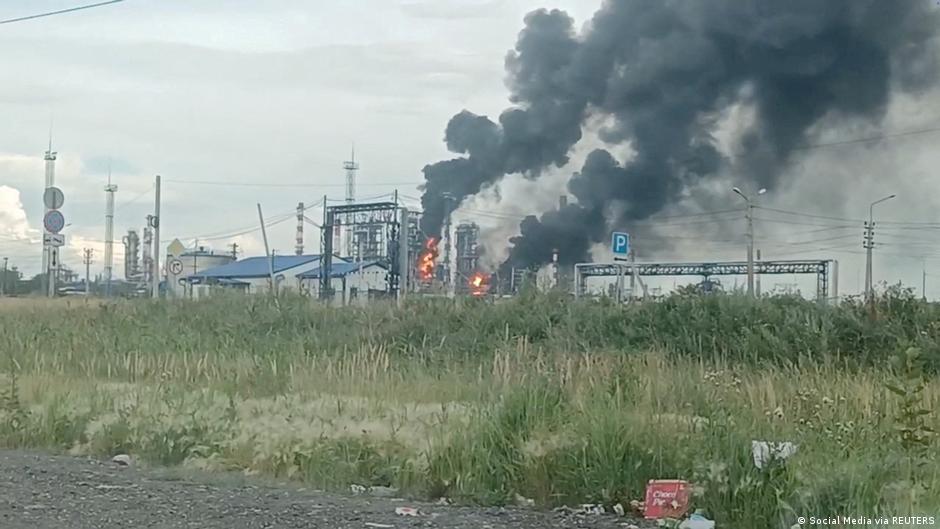
Russia's Saratov oil refinery has ceased operations for an indefinite period following damage sustained during recent Ukrainian drone attacks, Reuters reported on July 9. This development comes amid an ongoing fuel shortage affecting the country.
According to unnamed sources familiar with the situation, the Ukrainian unmanned aerial vehicles targeted the refinery's primary crude distillation unit (CDU-6), which had a processing capacity of up to 20,000 tons of crude oil per day. This unit was the only one of its kind at the Saratov facility.
The Governor of Saratov Oblast, Roman Busargin, confirmed on July 8 that civilian infrastructure objects were damaged in the attack, though he did not provide detailed information. The General Staff of Ukraine’s Armed Forces claimed that the Saratov refinery, owned by Rosneft, was the specific target on July 8. Since the full-scale conflict between Russia and Ukraine began, this refinery has been subjected to multiple assaults.
Rosneft declined to comment on the incident when contacted by Reuters.
Impact on Russia’s Refining Capacity and Fuel Supply
According to data compiled by Novaya Gazeta Europe, at least 13 Russian refineries have halted or partially suspended operations in the first half of 2026 due to Ukrainian drone attacks. These disruptions have effectively removed approximately 25% of Russia's total crude oil refining capacity and 30% of its gasoline and diesel production capacity from the market.
The duration of operational suspensions varies across facilities. For instance, the refinery in Kapotnya near Moscow, hit in mid-June, is not expected to resume full operations before December 2026.
"The ongoing attacks have significantly strained refinery capabilities, leading to fuel shortages affecting millions of Russian citizens," analysts note.
By early July, fuel shortages had impacted nearly 50 million Russians, or about 35% of the national population, as estimated by the Financial Times based on regional vehicle ownership statistics. In response, local authorities and fuel suppliers implemented gasoline sales restrictions across most Russian regions by July 8.
Regions such as the Transbaikal Territory, Penza, and Irkutsk Oblasts have declared states of "heightened readiness" amid the crisis. Additionally, the Russian government has banned diesel fuel exports from domestic producers until at least July 31. Unlike previous restrictions implemented at the end of January 2026, this export ban specifically targets producers.
Industry and Government Response
Russian Deputy Prime Minister Alexander Novak stated that oil refining companies have taken several measures to mitigate the impact of the attacks and the resulting shortages. These include maximizing utilization rates at operational refineries, releasing previously stockpiled fuel volumes into the market, shortening current maintenance periods, postponing planned repairs, and engaging smaller and medium-sized refineries to augment production capacity.
Despite these efforts, the cumulative effect of multiple refinery shutdowns poses significant challenges for Russia's fuel supply chain and may influence market dynamics in the coming months.