U.S. Army Secretary Driscoll Resigns After Dispute With Hegseth
Daniel Driscoll’s departure adds to leadership turnover at the Pentagon as disputes over military strategy, officer dismissals and procurement priorities intensify.
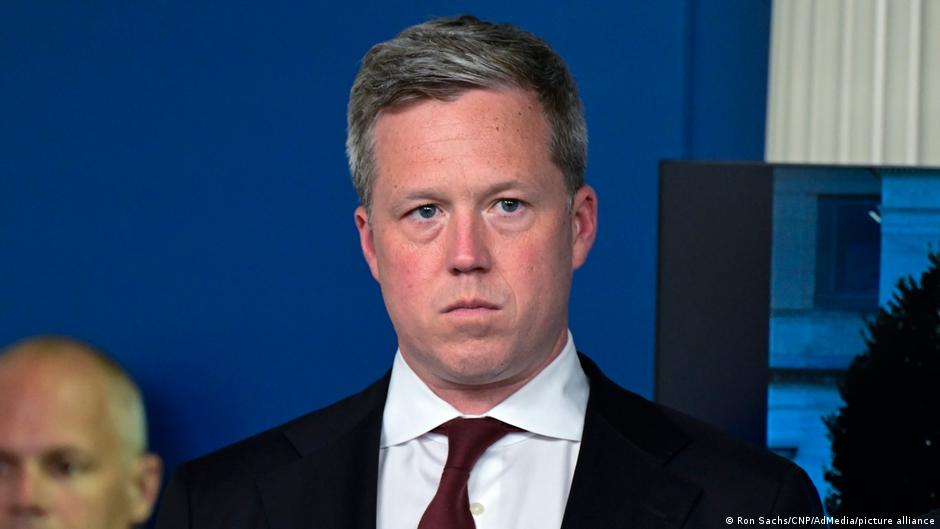
U.S. Army Secretary Daniel Driscoll has submitted his resignation to President Donald Trump after months of disagreements with Defense Secretary Pete Hegseth over the direction of the U.S. armed forces and the dismissal of several officers, according to reports published late Monday night into Tuesday, September 1. The development was first reported by The Wall Street Journal and was later carried by Reuters and the Associated Press, while NBC News, citing sources, said the White House had accepted Driscoll’s resignation.
Driscoll is expected to leave the Pentagon in the coming days, according to the published reports. For investors and analysts who track the defense sector, the resignation is significant less for any immediate budget action than for what it signals about governance, procurement priorities and decision-making stability across one of Washington’s largest spending institutions.
Leadership change inside the Pentagon can influence how procurement programs are framed, how readiness priorities are defined and how pressure is applied across the defense industrial base. Reuters noted that Driscoll, during his time in office, had advocated what it described as a “flexible approach,” supported the Army’s purchase of cheaper weapons and criticized large manufacturers. That stance made him a notable voice in debates over cost discipline and acquisition strategy at a time when military requirements, operational readiness and political priorities are all under close scrutiny.
Pentagon turnover and procurement implications
From a financial reporting perspective, Driscoll’s exit underscores management instability at the top of the Pentagon during Trump’s second presidential term. Reuters framed the resignation as another step in a broader leadership reshuffle at multiple levels of the Defense Department, recalling the April dismissal of Army Chief of Staff Randy George and several other senior military officials.
That pattern matters because senior personnel changes can affect program continuity, internal approvals and the speed at which strategic priorities translate into contract decisions. For listed defense companies and their investors, changes in the mix of priorities between lower-cost systems, traditional major platforms and readiness-oriented procurement can alter expectations around future order flow, margin profiles and government relations.
At issue in Driscoll’s reported dispute with Hegseth were not only broader questions about the trajectory of the armed forces, but also the firing of several officers. Such clashes at the top of the department can create uncertainty for stakeholders trying to assess the durability of procurement preferences or the balance of influence between civilian leadership factions. Even where total defense spending is unchanged, the allocation of funding can matter materially for contractors exposed to different categories of systems and services.
“Minister Driscoll effectively advanced President Trump’s ‘Make America Strong Again’ agenda in the Department of the Army, demonstrating outstanding leadership during historic military operations and restoring priority to combat readiness and the destructive power of weapons, assisting negotiations between Russia and Ukraine, and in many other areas.”
That statement, attributed by The Wall Street Journal and AP to White House principal deputy press secretary Anna Kelly, presents the administration’s public assessment of Driscoll’s tenure even as his departure points to a breakdown in alignment with the Pentagon’s top leadership.
The Wall Street Journal had previously reported on August 21 that Driscoll was planning to resign at the end of the year because of the conflict with the defense secretary. At that time, Reuters said his departure would leave the Army without a Senate-confirmed leader while the United States sought to end the war against Iran that had begun alongside Israel nearly six months earlier. The earlier reporting gave markets and policy watchers advance notice that tensions had already moved beyond routine internal disagreement.
For Fin Report readers, the most relevant takeaway is that defense governance risk often emerges through personnel decisions before it is visible in budget documents. A secretary favoring cheaper weapons and criticizing large producers could have influenced the shape of future Army procurement, especially if translated into pressure on pricing, competition and acquisition reform. His exit raises questions about whether that line of thinking will lose force, be absorbed into broader Pentagon policy or trigger a new contest over spending priorities.
Leadership profile and investor relevance
Driscoll has held the post of Army secretary since February 2025. He is also a friend and former classmate of Vice President J.D. Vance. In November 2025, he was appointed as President Trump’s new special envoy for Ukraine, replacing Keith Kellogg. Those roles gave him both political proximity and policy visibility, making his resignation more than a routine personnel change.
Although the source material does not identify a successor or specify immediate program-level consequences, the timing of the resignation is likely to sharpen focus on investor relations messaging from major defense contractors. Companies may face renewed questions from shareholders and analysts about exposure to shifts in Army modernization plans, the balance between premium systems and lower-cost alternatives, and the resilience of order pipelines if acquisition preferences move with leadership turnover.
There is also a broader institutional issue. When high-ranking officials leave amid internal conflict, markets often treat the event as a signal about execution risk rather than a direct hit to revenue assumptions. In the Pentagon context, that can mean uncertainty over procurement pacing, delays in approvals or changing guidance to the industrial base. Defense names with heavier dependence on Army priorities may therefore draw closer attention in coming reporting cycles, even absent any immediate revision to top-line federal spending.
For now, the factual picture remains centered on Driscoll’s decision to resign after months of conflict with Hegseth, the White House’s acceptance of that resignation as reported by NBC News, and the broader pattern of senior-level turnover inside the Pentagon. But the financial angle is clear: management instability in a system as large as the U.S. defense establishment can have downstream consequences for procurement strategy, contractor positioning and investor expectations well before those effects appear in formal budget lines.