U.S. senators urge Trump to drop Russian diesel deal over war-financing risk
A bipartisan group says easing sanctions on Russian diesel would offer little fuel-price relief while strengthening Moscow’s war funding.
A bipartisan group of 12 U.S. senators is pressing President Donald Trump to abandon a proposed diesel arrangement with Russian President Vladimir Putin, warning that the transaction would weaken sanctions pressure while providing the Kremlin with additional resources to continue the war in Ukraine.
The senators, led by Democrat Richard Blumenthal, sent Trump a letter on Tuesday, October 13, urging him to cancel what they described as a diesel deal with Moscow. The appeal places the issue squarely in the realm of economic policy, sanctions enforcement and energy-market risk: the lawmakers argue that U.S. consumers are unlikely to see meaningful relief from high fuel prices, while Russia would gain fresh revenue from renewed access to global diesel trade.
According to the letter, a copy of which Blumenthal posted on X, Congress and the American public support ending the war in Ukraine, which over four and a half years has taken hundreds of thousands of lives. But the senators said any peace must be reached “on fair terms,” rather than through measures that ease financial pressure on Moscow.
“This deal is a gift to our adversary and a betrayal of our allies; it must be cancelled,” the senators said in the letter.
Sanctions, revenue and fuel-price expectations
The lawmakers said removing U.S. sanctions on Russian diesel exports would “only provide Putin with additional funds to finance his war machine” and allow Russia to continue attacks on Ukrainian civilians. Their argument turns on the financial mechanics of the proposed arrangement: diesel exports would create a new channel of hard-currency revenue for Russian companies and, by extension, for the Russian state at a time when sanctions policy is intended to restrict Moscow’s financing options.
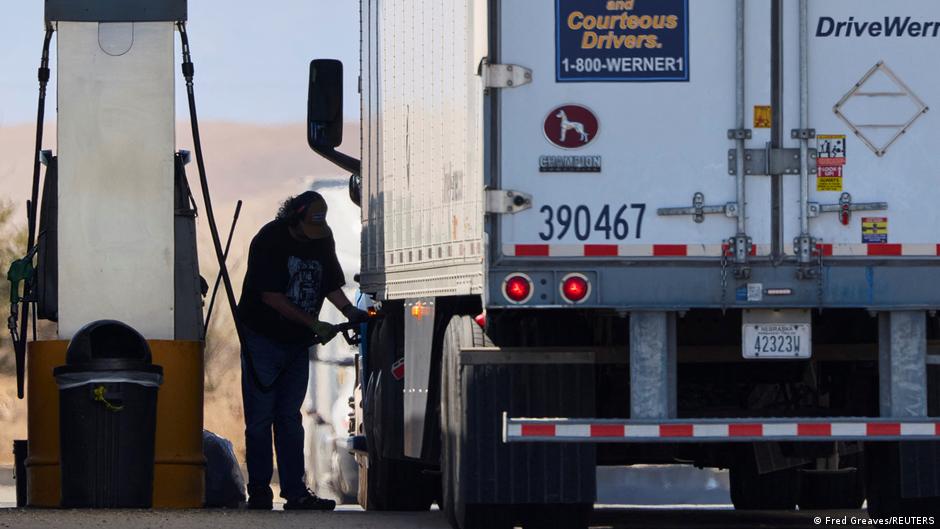
For U.S. households, the senators suggested the balance of benefits and costs is unfavorable. American families are under pressure from elevated fuel prices, but the signatories said they are unlikely to feel a substantial improvement from the return of Russian diesel to the world market. In effect, they contend that the policy would deliver limited consumer-price upside while creating a clear strategic and financial benefit for the Kremlin.
The letter therefore calls on Trump to increase, rather than reduce, economic pressure on Russia and on countries that play a central role in enabling the continuation of the war, particularly China. The senators urged the president to use powers granted under Lindsey Graham’s sanctions legislation concerning Russia and Iran.
The appeal was also sent to Secretary of State Marco Rubio and Treasury Secretary Scott Bessent, underscoring that the matter touches both foreign policy and the Treasury Department’s sanctions architecture. For investors and energy-market participants, the dispute highlights the uncertainty surrounding sanctions exemptions, commodity flows and the political durability of any transaction involving Russian supply.
Bipartisan signatures and shipment schedule
The letter was signed by six Democratic senators: Richard Blumenthal, Jeanne Shaheen, Richard Durbin, Sheldon Whitehouse, Jack Reed and Christopher Coons. They were joined by six Republicans: Mitch McConnell, Thom Tillis, Susan Collins, Alan Stuart Armstrong, Lisa Murkowski and John Cornyn.
The senators’ intervention follows Trump’s October 9 statement on Truth Social, where he described a phone call with Putin as “extremely successful.” Trump said the two leaders had agreed on shipments of Russian diesel fuel “to the American and world market.” According to Trump’s statement, Russian companies would “immediately” ship more than 300,000 tonnes, followed by another 500,000 tonnes in November and 1 million tonnes “immediately after that,” apparently in December. He also said that, depending on the condition of refineries, a further 3 million tonnes could follow, though the period for that additional volume was not specified.
The U.S. Treasury Department, for its part, issued a general license suspending the application of U.S. sanctions on Russian diesel fuel until April 2027. That license is central to the senators’ concern: it creates a regulatory opening for flows that sanctions had previously restricted, with direct implications for counterparties, shipping, insurance, payments and compliance departments involved in energy trade.
Russian state television program “Vesti” reported on October 12 that the first batch of Russian diesel had departed St. Petersburg for the east coast of the United States and that the vessel was expected to arrive within 48 to 72 hours. If completed, the shipment would mark an early test of how quickly the new license can translate into physical supply, and how forcefully Congress may push back against the administration’s sanctions relief.
From a financial reporting perspective, the controversy creates several unresolved questions for companies exposed to refined-products markets. The source text does not provide pricing terms, counterparties, payment structures or the accounting period over which the possible additional 3 million tonnes would be delivered. Without those details, the immediate earnings impact for refiners, traders, shippers or fuel distributors remains unclear. What is clear from the senators’ letter is that the proposed arrangement has become a balance-sheet and policy issue as much as a diplomatic one: lawmakers are challenging whether a potential increase in diesel supply justifies reopening a revenue stream to Russia.