US Signals Sanctions Will Stay Until Ukraine War Ends, Reuters Reports
Treasury Secretary Scott Bessent told Russian Finance Minister Anton Siluanov that Moscow should not expect sanctions relief before the war in Ukraine is over.
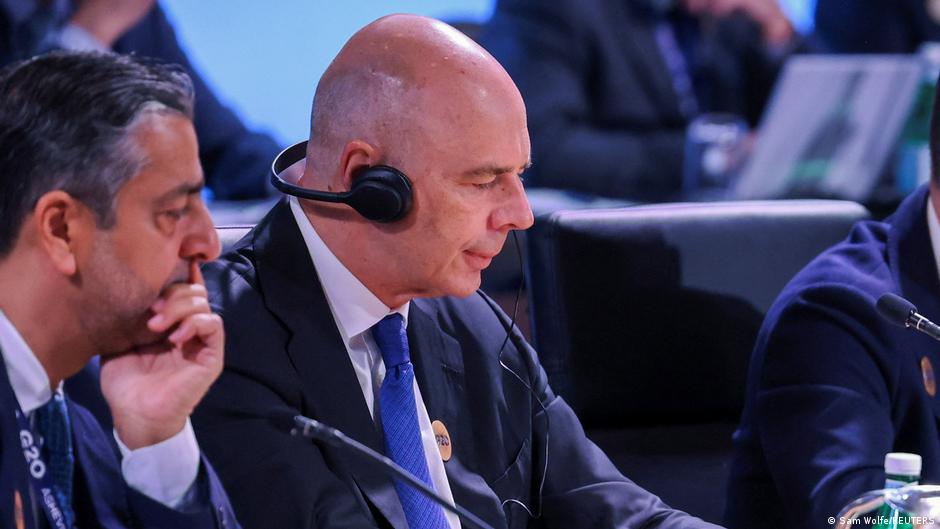
U.S. Treasury Secretary Scott Bessent told Russian Finance Minister Anton Siluanov that Russia should not expect any easing of U.S. economic pressure until the war in Ukraine has ended, according to Reuters, citing a source familiar with the ministers’ bilateral exchange on the sidelines of the G20 meeting of finance ministers and central bank governors in Asheville, North Carolina.
For financial markets and corporate stakeholders, the message amounts to a clear policy signal: sanctions relief is not being positioned as a near-term negotiating tool, and broader economic engagement between Washington and Moscow will remain constrained while the conflict continues. Reuters reported that Bessent also indicated Moscow should not expect agreements on other issues before the end of the war in Ukraine.
The remarks are relevant for investors tracking Russia-related risk, sovereign finance, banking sector exposure and the outlook for cross-border financial channels. They also reinforce the likelihood that sanctions will remain a central variable in assessing Russian state finances and the operating environment for any companies with residual links to the market.
Diplomatic message carries financial weight
The exchange took place during the gathering of G20 finance chiefs and central bank leaders hosted in the United States. According to Reuters, the content of the conversation suggested the U.S. side wanted to remove any expectation in Moscow that economic pressure might be relaxed before the conflict is resolved.
That stance matters well beyond diplomacy. In practical terms, sanctions policy affects access to capital, payment infrastructure, investor confidence and the scope of any future financial normalization. Even without new measures being announced, a firm U.S. message that existing pressure will not be softened can influence expectations around funding conditions, asset valuations and the timing of any reopening in financial relations.
Russia should not expect weaker economic pressure or agreements on other issues before the war in Ukraine is over, Reuters reported Bessent as telling Siluanov.
The meeting itself also drew criticism from European officials, according to the report. European governments are currently working on strengthening sanctions against Russia because of the war, and Siluanov’s participation in the event caused unease among some of them.
German Finance Minister and Vice Chancellor Lars Klingbeil described the very fact of Siluanov being received at such a meeting as an “alarming signal.” Speaking to journalists, Klingbeil said he had warned colleagues from other European countries that he would boycott the traditional group photograph if Siluanov were included.
He said there could be room for clear criticism and direct discussion, but that a joint photo would go too far at this stage. According to Klingbeil, representatives of other European countries joined his position, and the picture was ultimately taken without the Russian minister.
Klingbeil also told reporters that during the general morning session of participants he had told Siluanov that the war in Ukraine must end and reaffirmed Berlin’s support for Kyiv.
Finance ministries offered different public accounts
The episode is also notable from an investor-relations standpoint because the public messaging around the Bessent-Siluanov contact differed in emphasis.
On the evening of August 31, Russia’s Finance Ministry published a press release saying Siluanov and Bessent had held a meeting on the sidelines of the G20 session of finance ministers and central bank governors. The statement said the ministers discussed issues of Russian-American interaction “on the financial track” as well as cooperation within the Group of 20.
That formulation suggested a more procedural and institutional agenda, centered on bilateral financial communication and multilateral coordination. Reuters’ account, by contrast, framed the conversation as a blunt warning that economic pressure would remain in place until the war ended.
For market participants, the contrast underlines the importance of official U.S. signaling over diplomatic optics. Treasury-level statements and readouts often shape assumptions about sanctions enforcement, compliance risk and the medium-term environment for any financial counterparties exposed to Russia-related business. Even when no immediate policy change follows, language from senior officials can reset expectations.
On the same day, August 31, CNBC reported on its website, citing the U.S. Treasury, that Bessent discussed U.S. President Donald Trump’s “peace plan” for Ukraine with Siluanov in Asheville. That adds another dimension to the encounter, indicating the meeting touched not only on financial interaction and G20 matters, but also on the administration’s diplomatic framework for the conflict.
Still, the Reuters account points to a hard boundary from Washington: progress on wider economic questions is not being separated from the war itself. From a financial reporting perspective, that is the central takeaway. Any assumptions of near-term sanctions relief would appear inconsistent with the message delivered by the U.S. treasury secretary, as described by Reuters’ source.
The implications extend to sovereign planning, external financing expectations and the policy assumptions embedded in corporate and banking disclosures. Sanctions remain one of the key non-market drivers affecting Russia’s economic outlook. A signal that they will stay in force until the end of the war preserves a high level of policy uncertainty for companies, lenders and investors assessing exposure.
It also sharpens the policy divide inside the G20 setting, where finance officials are formally convened to discuss economic and monetary issues, but where the war in Ukraine continues to shape participation, protocol and the interpretation of even routine bilateral contacts.
For now, the message emerging from Asheville is that financial engagement remains subordinate to geopolitics. Until the war ends, according to Reuters’ account of the Bessent-Siluanov exchange, Moscow should not expect relief from U.S. economic pressure, and that is likely to remain the baseline assumption for analysts following sanctions risk and Russia-related financial developments.